






How Do Utilities Test Electric Meters in the Field?
The short answer
Utilities test meters in the field for four reasons: scheduled in-service programs, customer high-bill complaints, verification of CTs and PTs on transformer-rated services, and revenue protection. In each case, a technician compares the meter against a portable reference standard, using the customer’s own load, a test source (phantom load or synthesized load), or a portable test system the meter plugs into. This guide from Radian Research walks through each.
Four reasons utilities test in the field
1. In-service and periodic testing. State utility commissions require utilities to show that meters stay accurate in service, usually through sample or periodic testing programs. ANSI C12.1, the Code for Electricity Metering, sets the accuracy classes meters are held to, and sample programs commonly draw on ANSI Z1.4 and ANSI Z1.9 sampling tables. Some of that testing happens in the shop; much of it happens at the meter.
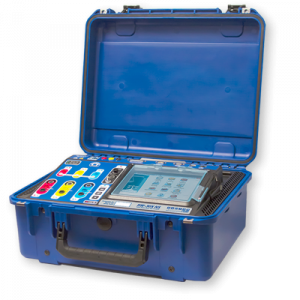
2. High bill complaints. When a customer questions a bill, the utility checks the meter’s accuracy, often with the customer watching. The test has to be quick, portable, and clearly traceable. The RADIAN RM-17 is built for this: a 7 lb residential meter test system with a true internal watthour standard at ±0.05% and paperless result storage.
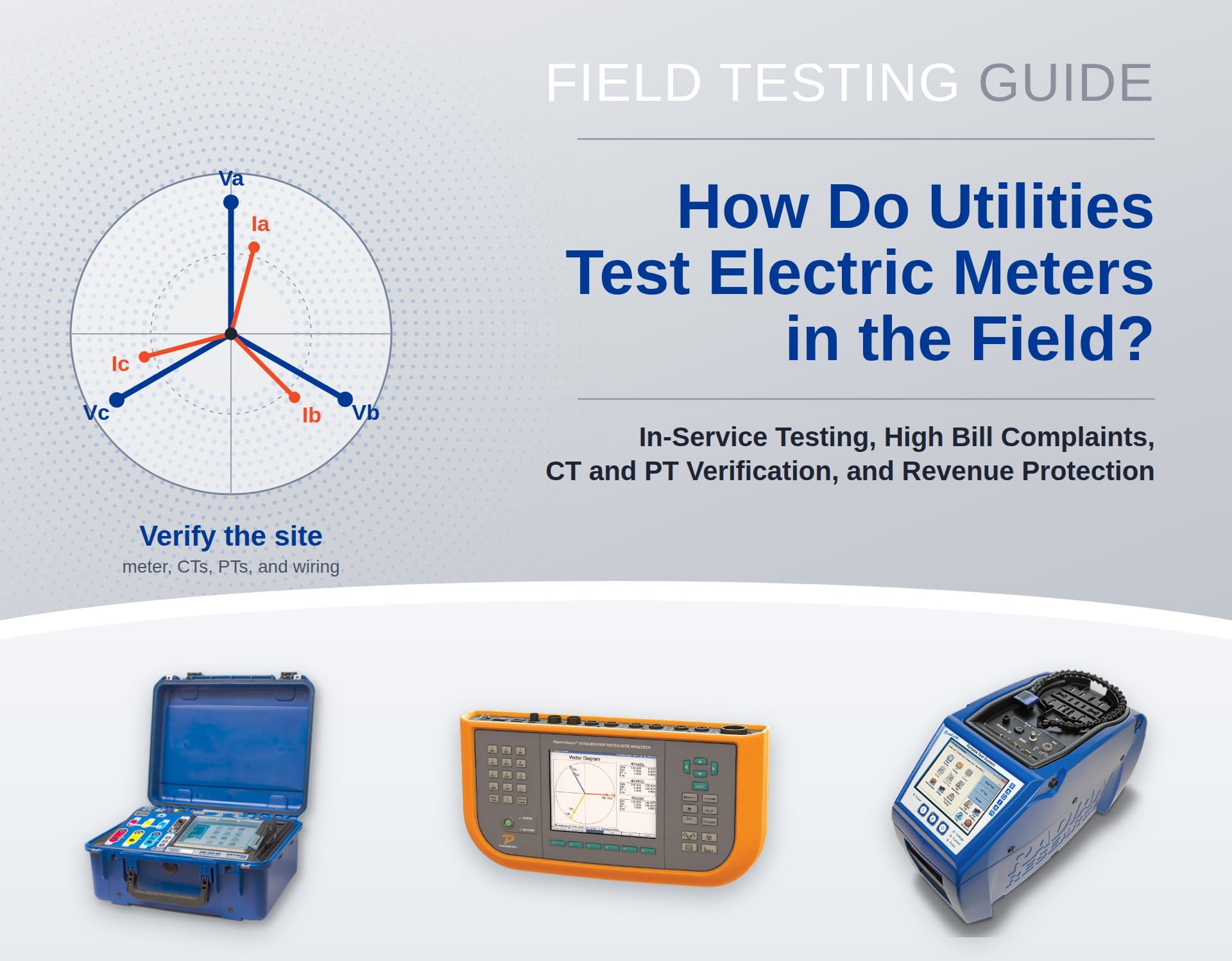
3. CT and PT site verification. On transformer-rated services, the meter is only one part of the measurement. A meter can be perfectly accurate and still bill wrong if a current transformer’s ratio, burden, or polarity is off, or if the site is wired incorrectly. Field testing checks the whole installation, not just the meter.
4. Revenue protection. Many losses don’t live in the meter. They live in the installation: a mis-wired CT, an overloaded secondary, a cracked test switch, or deliberate tampering. Site testing finds them. Our white paper, Revenue Protection Through Field-Based Meter Site Analysis, explains where these errors hide and what they cost.
Three ways to load the meter
A meter test needs current flowing through the meter. In the field, there are three ways to get it:
- Customer load. The meter stays in service and is tested under the load the customer is actually drawing. This is the most realistic test, and the customer stays in service. The trade-off is that the load is whatever the site happens to be doing at that moment, which may be too low or too variable for a clean result.
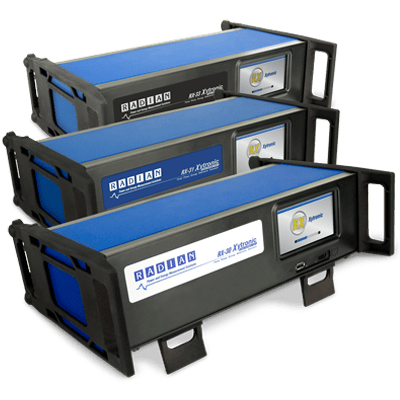
- A test source. A portable source supplies current through the test switch, so the meter can be tested at defined test points regardless of what the customer is drawing. Phantom load testing uses a kit such as the UTEC 430. Synthesized load comes from a source that creates the voltage and current digitally, such as the Powermetrix 335V (paired with the Powermetrix 6618A) or the built-in sources in the RADIAN RW-30X / RW-31X.
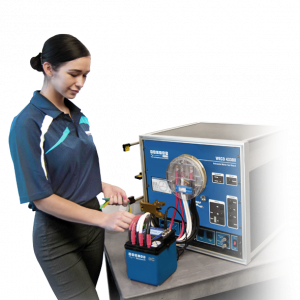
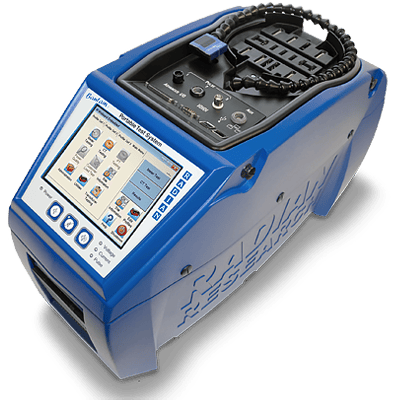
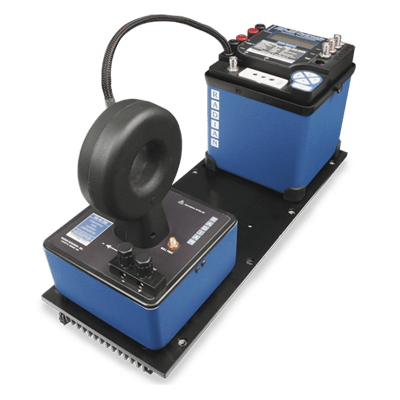
- A portable test system. The meter is removed and plugged into a portable test system, such as the RADIAN Bantam Plus, which tests it at full load, light load, and power factor, in the field or the shop.
What a typical site test looks like
Every utility has its own procedure, and safety practices come first. A typical transformer-rated site test follows these steps:
- Connect. Voltage leads go to the meter or test switch, and current probes or direct connections go on each phase.
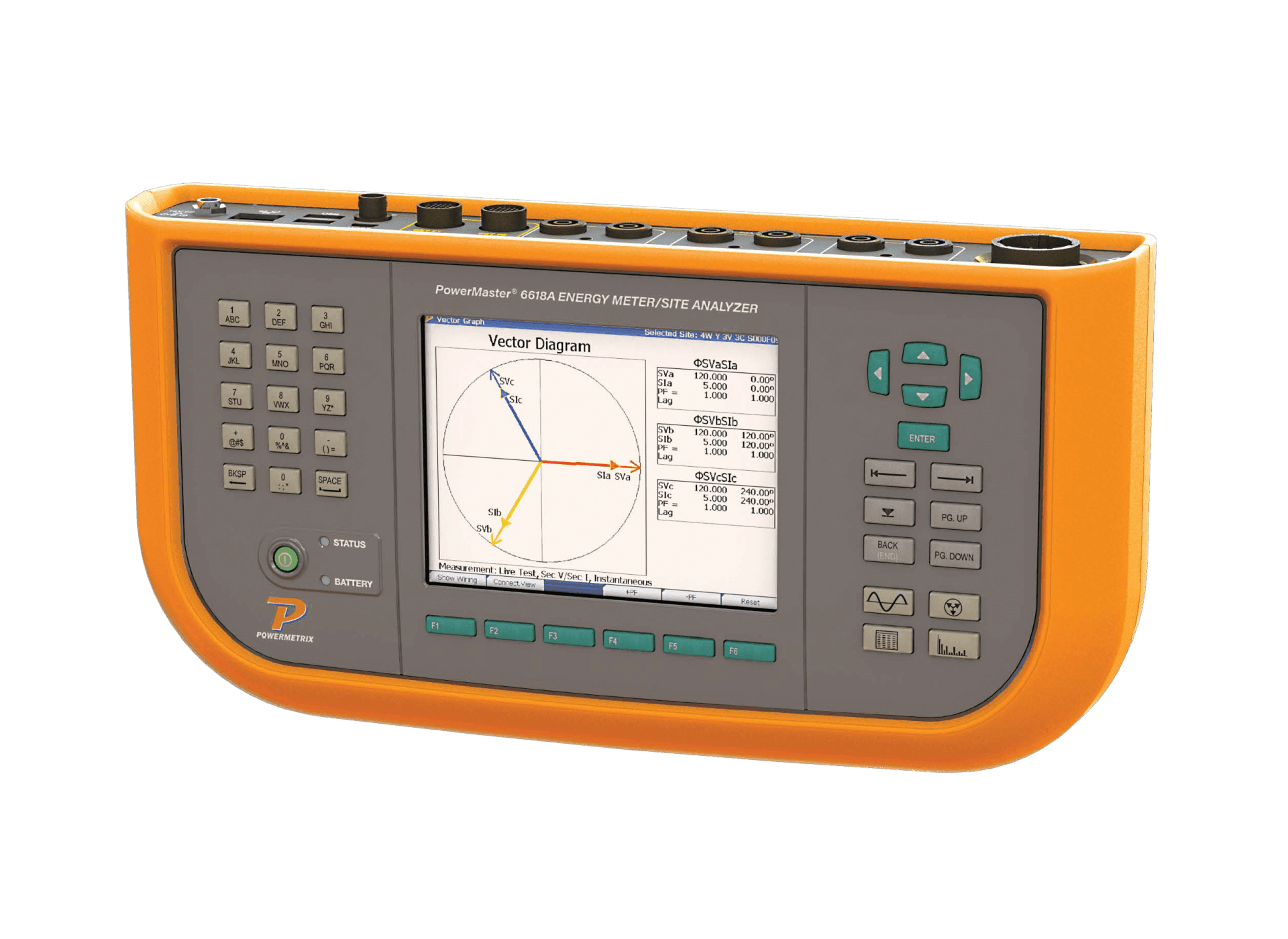
- Verify the wiring. A vector diagram shows phase angles and rotation, which reveals crossed phases, reversed CTs, and missing potentials.
- Test the meter. The analyzer compares the meter against its internal reference standard at the test points, using customer load, phantom load, or synthesized load.
- Check the CTs and PTs. Ratio, burden, and polarity tests confirm the instrument transformers are doing their job.
- Record the results. Test data and site details are saved with the meter’s record, so the next visit starts with history.
Accuracy in the field
Field equipment has to hold its accuracy in heat, cold, and on distorted waveforms from inverters, chargers, and electronic loads. The widely used rule is that test equipment should be at least four times more accurate than the meters it tests. For class 0.5 and 0.2 meters, ±0.05% or ±0.04% field equipment meets that rule; class 0.1 meters call for ±0.02%.
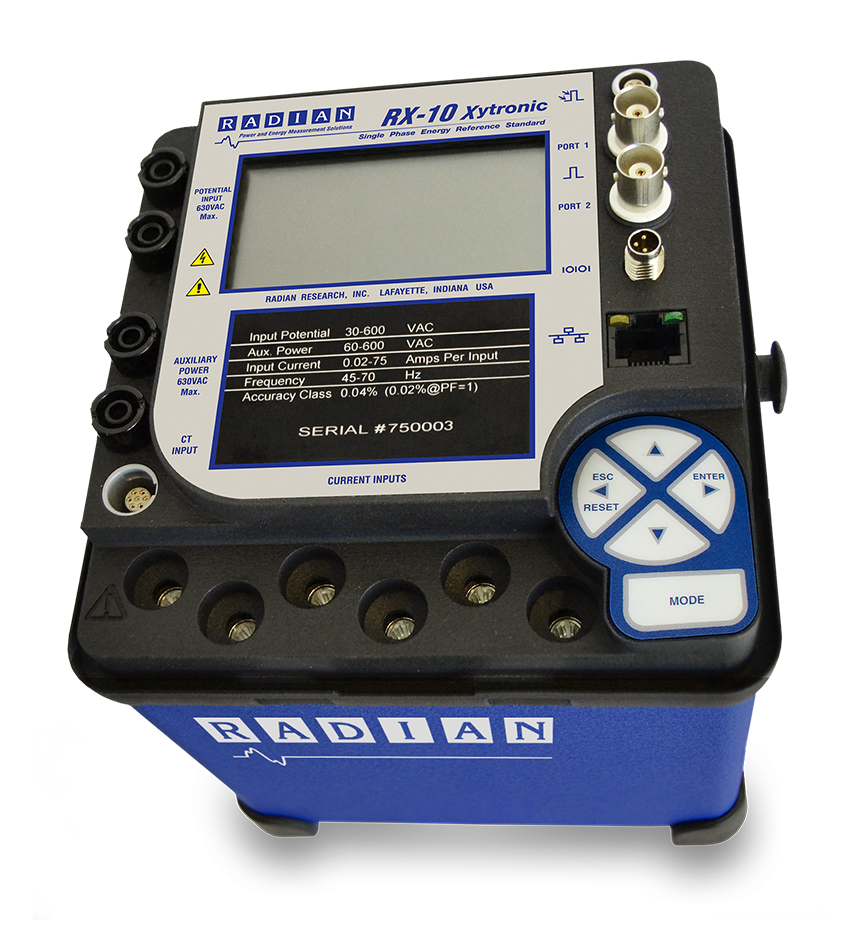
RADIAN Dytronic and Xytronic measurement technology holds its accuracy on non-sinusoidal waveforms, so a field test means the same thing as a test in the shop. Our white paper, How Accurate Does Meter Test Equipment Need to Be?, covers the accuracy ratio in detail.
Match the tool to the job
| Job | Tool |
|---|---|
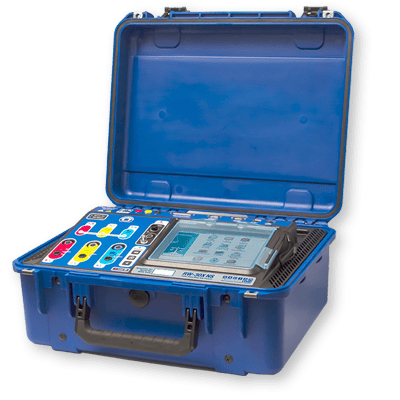
| Full site analysis of installed meters, CTs, and PTs, in service | RADIAN RW-30X / RW-31X meter site analyzers |
| Handheld three-phase site testing | Powermetrix 6618A (±0.05%) or Powermetrix 3302 (±0.05%) |
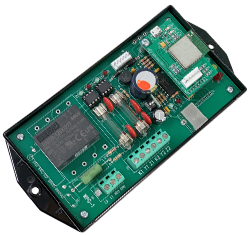
| Synthesized load for the 6618A | Powermetrix 335V |
| Portable meter testing, in the field or the shop | RADIAN Bantam Plus |
| High bill complaint testing of residential meters | RADIAN RM-17 |
| Phantom load site testing with a RADIAN reference standard | UTEC 430 portable meter test kit |
| Non-interruptive CT and PT testing | UTEC 505 transformer analyzer |
| CT burden checks | UTEC 585 CT burden tester |
See every field tool on our Field Testing Equipment page.
Frequently Asked Questions
Can you test a meter without removing it from the socket?
Yes. Meter site analyzers such as the RW-30X and RW-31X test installed meters in service, under the customer’s actual load, and verify the CTs and PTs at the same time.
What is the difference between phantom load and synthesized load?
Both let a technician test a meter at defined test points when the customer’s load is too low or too variable. Phantom load testing uses a portable kit such as the UTEC 430. Synthesized load comes from a source that creates the voltage and current digitally, such as the Powermetrix 335V or the built-in sources in the RW-30X / RW-31X.
What is the difference between a meter test and a site analysis?
A meter test checks the meter’s accuracy. A site analysis checks the whole installation: the meter, the CTs and PTs, the burden, and the wiring. On transformer-rated services, most errors are found in the installation, not the meter.
How accurate does field test equipment need to be?
At least four times more accurate than the meters it tests: ±0.05% or ±0.04% for class 0.5 and 0.2 meters, and ±0.02% for class 0.1 meters.