





What Does a 0.1% Metering Error Cost a Utility Each Year?
The short answer
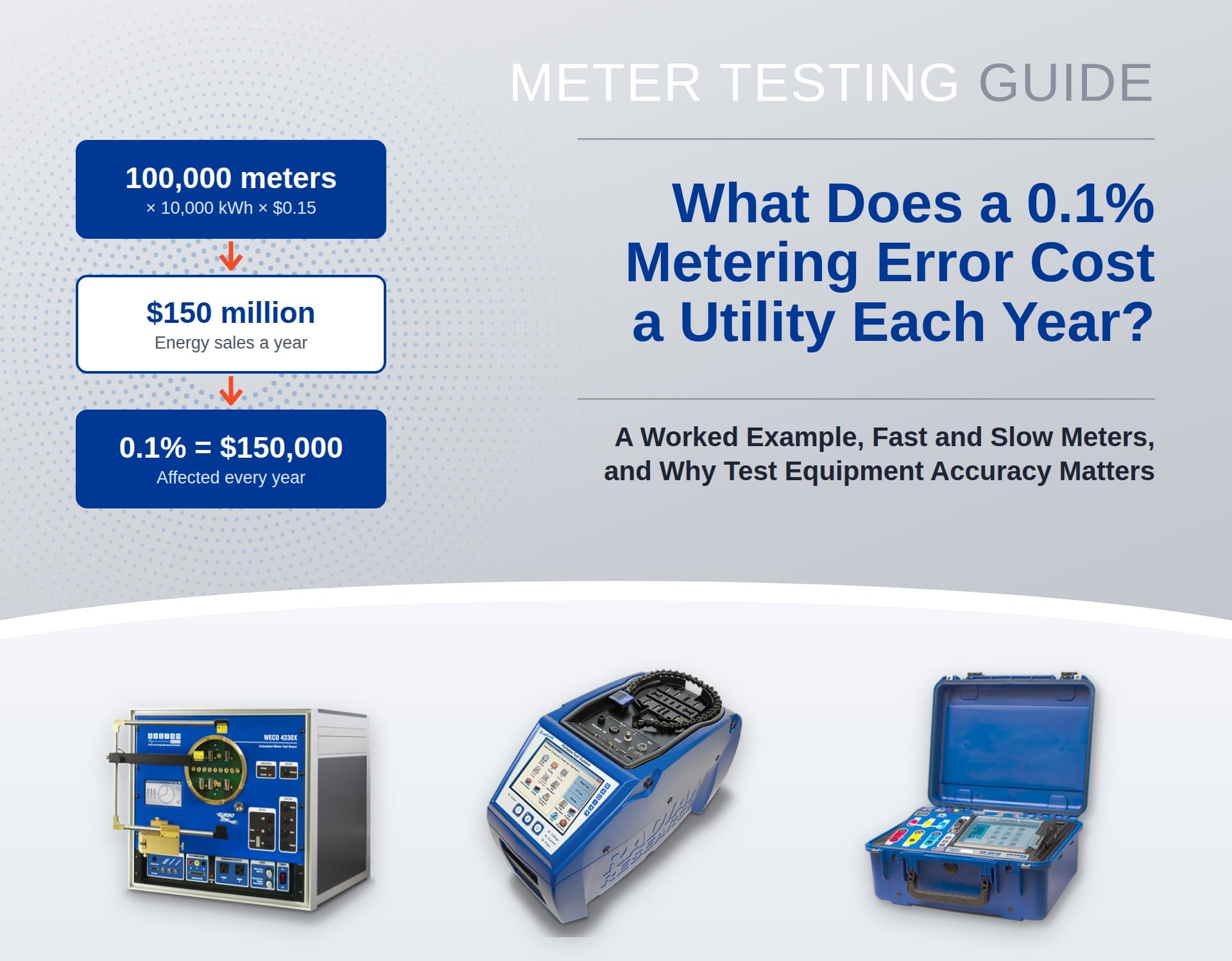
For a utility with 100,000 residential meters, each using 10,000 kWh a year at $0.15 per kWh, a 0.1% average metering error affects about $150,000 a year. That is $1.50 per meter. It sounds small on one bill, but it repeats on every meter, every year, until the error is found.
The worked example
Start with the energy the utility sells:
- 100,000 meters × 10,000 kWh a year = 1 billion kWh a year
- 1 billion kWh × $0.15 per kWh = $150 million a year in energy sales
Every 0.1% of average error moves 1 million kWh, or $150,000 a year:
| Average meter error | Energy affected each year | Revenue affected each year | Per meter, per year |
|---|---|---|---|
| 0.1% | 1,000,000 kWh | $150,000 | $1.50 |
| 0.5% | 5,000,000 kWh | $750,000 | $7.50 |
| 1.0% | 10,000,000 kWh | $1,500,000 | $15.00 |
Your numbers will differ. Try your own meter count, usage, and price in the Meter Error Cost Calculator.
Slow meters and fast meters both cost money
The direction of the error changes who pays:
- A meter that reads slow under-bills. The utility delivers energy it never collects for, and the loss is quiet. No customer calls to report a bill that is too low.
- A meter that reads fast over-bills. Customers pay for energy they didn’t use. That leads to complaints, refunds, and questions from the regulator, and it costs trust that is harder to win back than the money.
Either way, the error lasts until a test finds it. A meter that reads 0.1% slow for five years before its next test affects five years of revenue, not one.
Why errors this small matter
Kilowatthours are the billing metric, so every percent of meter error is a percent of the bill. Modern revenue meters are built to tight limits. For example, meters in the 0.2 accuracy class must stay within ±0.2% under test conditions. That class is defined in ANSI C12.1, which replaces ANSI C12.20, although many utilities still refer to C12.20. An error of 0.1% is half of that whole allowance.
That is why the equipment that tests meters has to be far more accurate than the meters themselves. If the test equipment is off by 0.1%, it can pass a meter that is 0.1% off, or fail a good one, and no one will know.
When the error is in the test equipment
A meter error affects one customer. An error in a reference standard affects every meter tested against it.
Because of that, an error in the test equipment is multiplied across every meter it approves, for as long as those meters stay in service. The Meter Error Cost Calculator has a second tab, “Test equipment drift,” that works out what that means with your own numbers.
This is what traceability and regular recalibration protect against. A standard with a current, documented calibration back to NIST is your evidence that the meters it approved are right. For more, see What Does NIST Traceability Mean for Meter Testing? and How Often Should Reference Standards Be Recalibrated?
How to keep the number close to zero
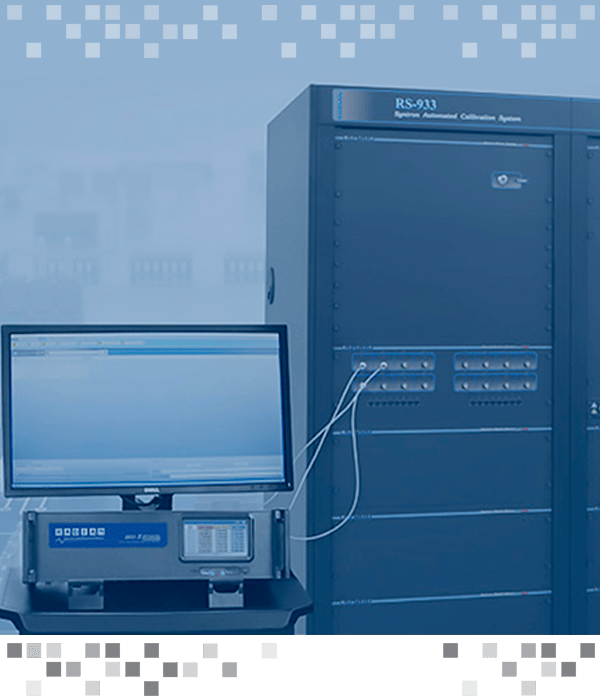
- Test meters against accurate, traceable equipment. Your test equipment should be much more accurate than the meters it tests, and its calibration should trace to NIST.
- Keep your reference standards in calibration. Radian Research recommends a yearly calibration, or more often if your regulator requires it. RADIAN Calibration Services offers NIST-traceable calibration, with ISO/IEC 17025 accredited calibration as an option.
- Check standards between calibrations with a standards compare, so drift is found in weeks, not years.
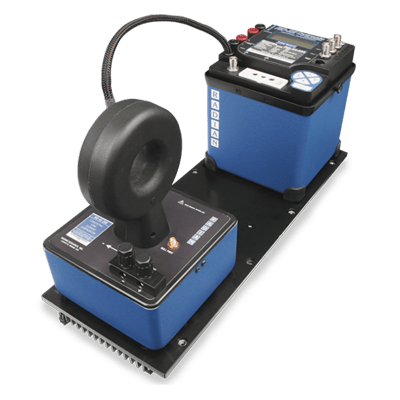
- Test energy, not just power. Energy is what the bill is based on. Use a watthour reference standard to test energy meters, not a power meter. See What Is a Watthour Reference Standard, and How Does It Work?
- Keep the records, so each meter test ties back to a calibrated standard.
For how accuracy travels from NIST to every billing meter, see Why Accuracy Matters.
Frequently Asked Questions
How much does a 0.1% metering error cost?
For 100,000 meters using 10,000 kWh a year at $0.15 per kWh, about $150,000 a year, or $1.50 per meter. The Meter Error Cost Calculator works it out for your own numbers.
Is a slow meter or a fast meter worse?
Both cost money. A slow meter loses revenue quietly. A fast meter over-bills customers, which leads to complaints, refunds, and regulatory attention.
How long does a metering error last?
Until a test finds it. That is often years, which is why the yearly cost is multiplied by the time until the next test.
Why does a test equipment error cost more than a meter error?
Every meter tested against a standard inherits its error. An error in the standard is carried by every meter it approves, for as long as those meters stay in service.
How do utilities keep metering error low?
By testing meters against accurate, NIST-traceable equipment, recalibrating reference standards on schedule, checking them between calibrations, and keeping records that tie each test to a calibrated standard.