





Product Highlights
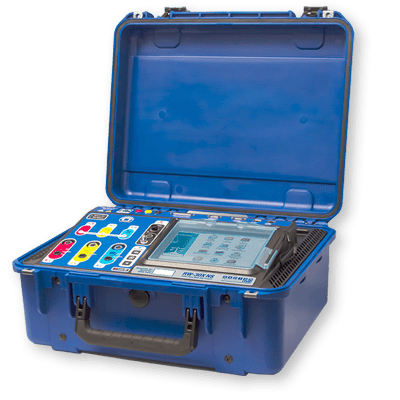
The RD-22 provides ±0.005% (50 ppm) energy accuracy, delivering a refined accuracy class suited for advanced calibration, metrology, and precision measurement applications. As a single-phase reference standard, it supports high-confidence verification and calibration tasks where minimized uncertainty and consistent performance are essential.
Voltage accuracy is 0.0025% (25 ppm) and direct AC current accuracy is 0.0035% (35 ppm) at TCAL, offering tightly controlled measurement capability across the supported operating ranges. Long-term drift is managed through a stability specification of 0.0003% (3 ppm) × √month, maintaining reliable performance over extended periods. For energy measurements, the temperature coefficient is 0.0005%/°C (5 ppm/°C), ensuring predictable behavior with environmental variation.

FEATURES
- Power and Energy accuracy: ±0.005% (50 ppm)
- Voltage accuracy: 0.0025% (25 ppm)
- Current accuracy: 0.0035% (35 ppm)
- DC to AC transfer accuracy: 0.005%
- Stability: 0.0003% (3 ppm) × √month
- Single-phase reference standard

Trusted by Leading Laboratories and Institutions Worldwide
- True DC to AC transfer. Calibration mode inputs accept external DC voltage and DC current primary references, so the RD-22’s internal reference can be calibrated directly, with ±0.005% DC to AC transfer accuracy.
- Dytronic measurement technology. A RADIAN-designed integrating analog to digital converter and a hermetically sealed reference set.
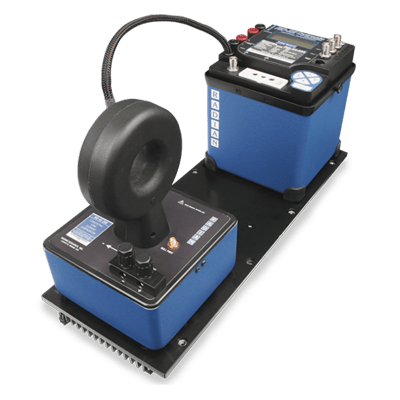
- Concentric core current comparator. An electronically compensated, autoranging external current comparator whose shielded inner core is highly insensitive to conductor position.
- Repeatability of ±0.00001% (100 parts per billion) for a 15-minute test.
Which Laboratory Standard Is Right for You?
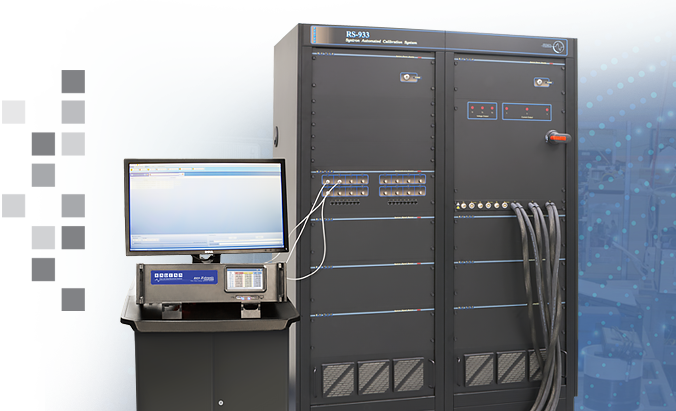
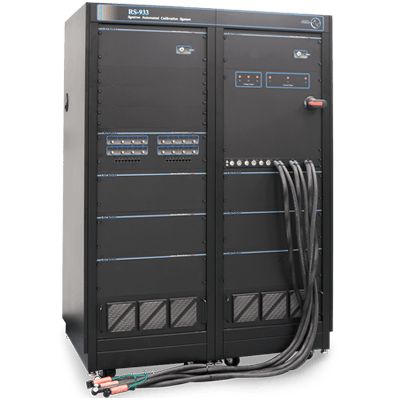
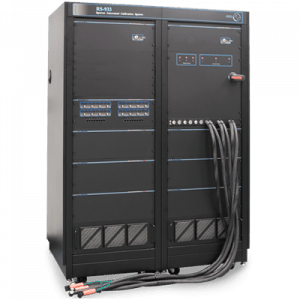
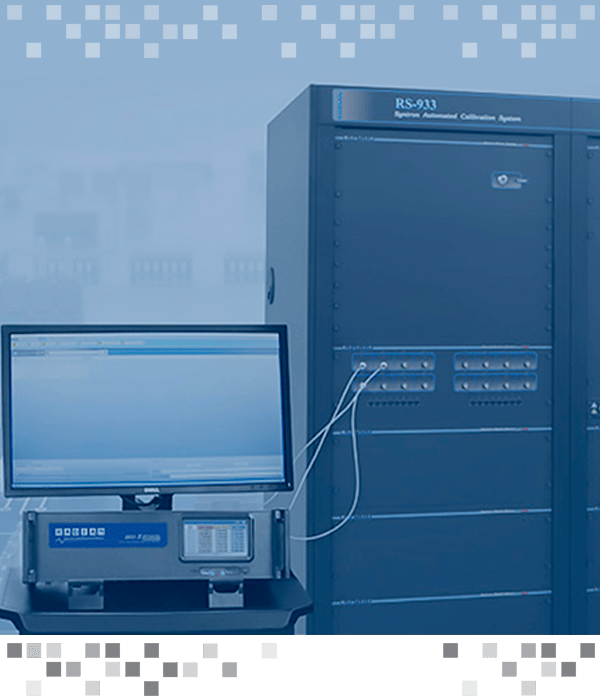
The RD-22 and the RD-22 Ultra Stable are single-phase primary transfer standards that carry traceability into your lab. The RADIAN RS-933 is a sourcing standard for calibrating in-house. It can’t be shipped to NIST for calibration testing, so an RD-22 is recommended as the transfer standard that carries traceability to it.
| Model | Energy accuracy | Best for |
|---|---|---|
| RADIAN RD-22 | ±0.005% | Calibration labs and metrology programs that need a primary transfer standard |
| RD-22 Ultra Stable | ±0.002% | The most demanding metrology and research labs, at 120 V or 240 V and 5 A |
| RADIAN RS-933 | Down to 50 ppm (0.005%) | In-house calibration as a sourcing standard, with an RD-22 carrying traceability |
Technical Specifications
Accuracy
| RD-22 | |
|---|---|
| Power and energy | ±0.005% (50 ppm) at key calibration points; ±0.01% worst case anywhere in the operating range (any voltage, current, or power factor) |
| Voltage | ±0.0025% (25 ppm) |
| Current | ±0.0035% (35 ppm) |
| Phase angle | 0.003° |
| DC to AC transfer | ±0.005%, using the RR-TAD option with external DC voltage and current references |
| Repeatability | ±0.00001% (0.1 ppm) for a 15-minute test |
Accuracy is stated in percent of reading, not percent of scale, and holds at any power factor from −1 to 1. Power and energy accuracy applies to tests of 1 second or longer.
Stability and Temperature
| RD-22 | |
|---|---|
| Stability | 0.0003% (3 ppm) × √month |
| Temperature coefficient, energy | 0.0005%/°C (5 ppm/°C) |
| Specified temperature | 23 °C ±2 °C |
| Extended operating range | 18 °C to 30 °C |
| Humidity | 0% to 95%, non-condensing |
| Warm-up | 60 minutes |
Harmonics and Measurement
| RD-22 | |
|---|---|
| Harmonic analysis (option) | To the 50th harmonic; accuracy ±0.030% for the 1st to 23rd and ±0.075% for the 24th to 50th |
| Frequency | 45 Hz to 65 Hz |
| Phase angle range | 0° to 360° |
| Power factor | −1 to 1, with no effect on accuracy |
| Metrics | Wh, VARh, VAh, Qh, watts, VARs, VA, volts, amps, Vh, Ah, V²h, A²h, phase angle, power factor, frequency, and minimum and maximum values |
| Voltage input | 40 V to 600 V, autoranging |
| Current input | External concentric core current comparator (non-galvanic), autoranging from 0.2 A to 125 A or 0.2 A to 200 A, by option |
Automation and Interfaces
| RD-22 | |
|---|---|
| RS-232 | 8-pin RJ-45 jack for PC communication (PCSuite available) |
| Pulse output (port 2) | BNC, open collector, up to 2.1 MHz (200 ns minimum pulse width); selectable Wh, VARh, or VAh; 0.00001 Wh/pulse by default |
| Pulse and gate input (port 1) | BNC, 200 ns minimum pulse width, 20 Hz maximum repetition rate |
| Port 3 | Three-phase synchronization or analog sense |
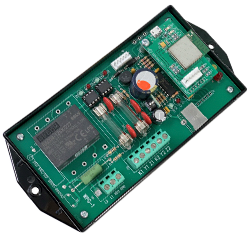
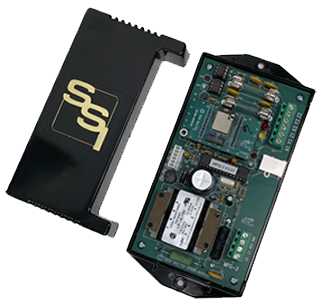
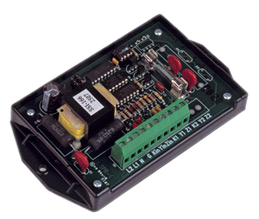
| Meter pickup input | Direct connection for RR-DS, RM-1H, or RR-KYZ pickups, with a built-in comparator |
| Display and keypad | 4-line by 16-character backlit LCD with a five-button keypad |
Physical, Safety, and Calibration
| RD-22 | |
|---|---|
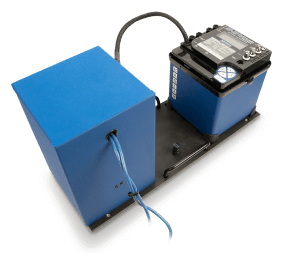
| Auxiliary power | External converter, 120 V or 240 V input, supplying 24 V DC to the standard to minimize 50/60 Hz interference |
| Size | RD-22: 190.5 mm high × 139.7 mm wide × 139.7 mm deep (7.5 × 5.5 × 5.5 in); platform: 19 mm × 152.4 mm × 508 mm (0.75 × 6 × 20 in) |
| Weight | RD-22, current comparator, and platform: 5.45 kg (12 lb); auxiliary power converter: 1.36 kg (3 lb) |
| Isolation and withstand | Complete isolation of input, output, power, case, and control; dielectric withstand 2.3 kVrms (60 Hz, 60 seconds); surge withstand IEEE 472 and ANSI C37.90 |
| Calibration | Software only, with no physical adjustments; 50 Hz or 60 Hz calibration available |
| Recommended calibration interval | 365 days |
| Traceability | Traceable to the SI through NIST, with ISO/IEC 17025 accredited calibration from RADIAN Calibration Services |
| ISO/IEC 17025 calibration uncertainty | RADIAN’s accredited capability for watt-hours: ±0.0009% (9 ppm) at unity power factor and ±0.0016% (16 ppm) at ±60° phase angle, over 120 V to 600 V, 0.2 A to 200 A, 50 Hz to 60 Hz, and 5 to 1,000 second tests (A2LA certificate 3784.01) |
| Calibration documents | Sample calibration report (ISO/IEC 17025) and ISO/IEC 17025 scope |
RADIAN RD-22 FAQ
What is the RD-22 operating range?
How accurate is the RD-22 across its range?
How often should the RD-22 be recalibrated?

Why would a lab use more than one RD-22?
How is the RD-22 different from the RD-22 Ultra Stable?




Related Resources
Strength in Numbers: Reducing Uncertainty with Three RD-22 Primary Transfer Standards
Strength in Numbers: Reducing Uncertainty with Three RD-22 Primary Transfer Standards
Can't Find What You're Looking For?