






How Accurate Does Meter Test Equipment Need to Be?
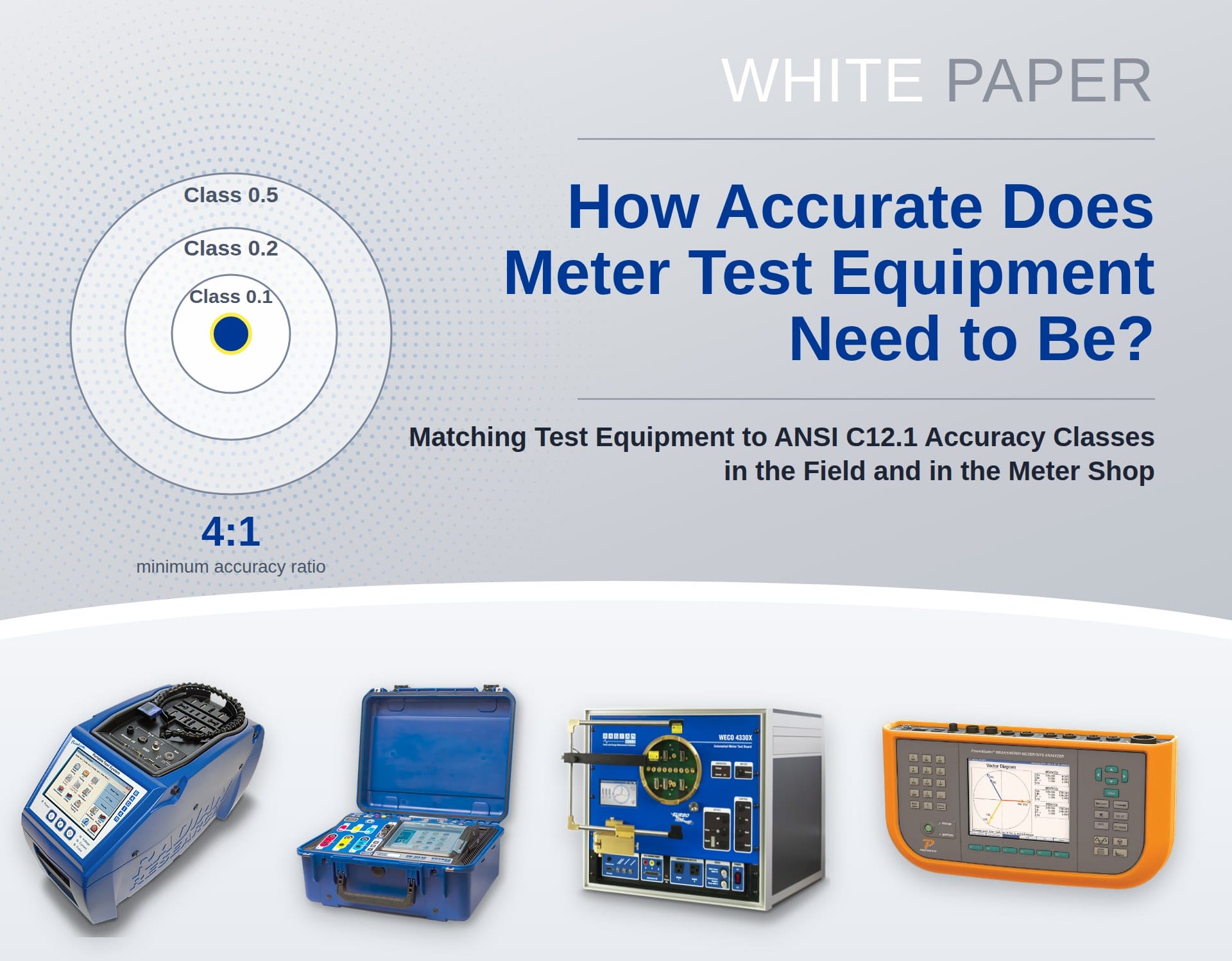
How Accurate Does Meter Test Equipment Need to Be?
Matching test equipment to ANSI C12.1 accuracy classes, in the field and in the meter shop
Every meter test result carries two errors: the meter’s and the test equipment’s. This white paper from Radian Research explains how accurate test equipment needs to be for each ANSI C12.1 accuracy class, and how field and shop conditions change the choice.
Executive Summary
Every meter test result carries two errors: the meter’s and the test equipment’s. When the test equipment’s error is small compared with the meter’s accuracy class, a pass means pass and a fail means fail. When it isn’t, good meters get pulled and bad meters stay in service.
The widely used rule is a ratio of at least 4:1: test equipment four times more accurate than the meter it tests. Applied to the accuracy classes in ANSI C12.1, that rule points to specific equipment:
- Class 0.5 and 0.2 meters: test equipment at ±0.05% or ±0.04% meets the rule.
- Class 0.1 meters: test equipment at ±0.02% or better is needed.
- The highest ratios: ±0.01% equipment, in a temperature-controlled meter shop.
This paper explains the accuracy classes, the 4:1 rule and its limits, how field and shop conditions change the choice, and what to put in a specification or RFP.
1. Start with the Meter’s Accuracy Class
ANSI C12.1, the Code for Electricity Metering, sets the accuracy classes that meters are tested against, including 0.5, 0.2, and 0.1. A class 0.2 meter, for example, must register within ±0.2% at its test points.
These classes used to sit in a separate standard, ANSI C12.20. The 2022 edition of C12.1 merged C12.20 into it, so C12.1 is now the single code for meter accuracy. Many state utility commissions write C12.1 directly into their metering rules, so the accuracy class is not just a design figure; it is the line a meter shop has to hold. Our white paper, ANSI C12.1-2026 Compliance Testing, covers what the latest edition asks of the meter shop.
Meter shops typically test at full load, light load, and a lagging power factor. The test equipment has to hold its accuracy at each of those points, not just at unity power factor and full load.
2. The 4:1 Rule
The rule comes from metrology practice: the uncertainty of the measurement standard should not exceed 25% of the tolerance of the device being tested. That is a ratio of 4:1. Applied to meter classes:
| Meter class | Meter limit | Test equipment needed (4:1) | RADIAN options (ratio) |
|---|---|---|---|
| 0.5 | ±0.5% | ±0.125% or better | 0.05% (10:1), 0.04% (12.5:1) |
| 0.2 | ±0.2% | ±0.05% or better | 0.05% (4:1), 0.04% (5:1), 0.02% (10:1) |
| 0.1 | ±0.1% | ±0.025% or better | 0.02% (5:1), 0.01% (10:1) |
Two things stand out. A ±0.04% instrument covers class 0.5 and 0.2 meters with room to spare. Class 0.1 meters need ±0.02% or better, and a 10:1 ratio on class 0.1 needs ±0.01%.
3. Accuracy Ratio vs. Uncertainty Ratio
The table above uses the test accuracy ratio (TAR): the meter’s tolerance compared with the test equipment’s published accuracy. It is quick to calculate and easy to put in a specification.
The test uncertainty ratio (TUR) is stricter. It compares the meter’s tolerance with the uncertainty of the whole test, which includes the standard’s accuracy plus everything else that affects the result:
- The standard’s drift since its last calibration
- Temperature at the test site
- Connections, leads, and current probes
- Waveform distortion at the site
- Repeatability of the test itself
In practice the TUR is always lower than the TAR. That is the case for buying above the minimum: an instrument that just meets 4:1 on paper can fall below 4:1 once real conditions are counted.
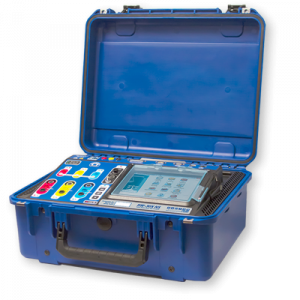
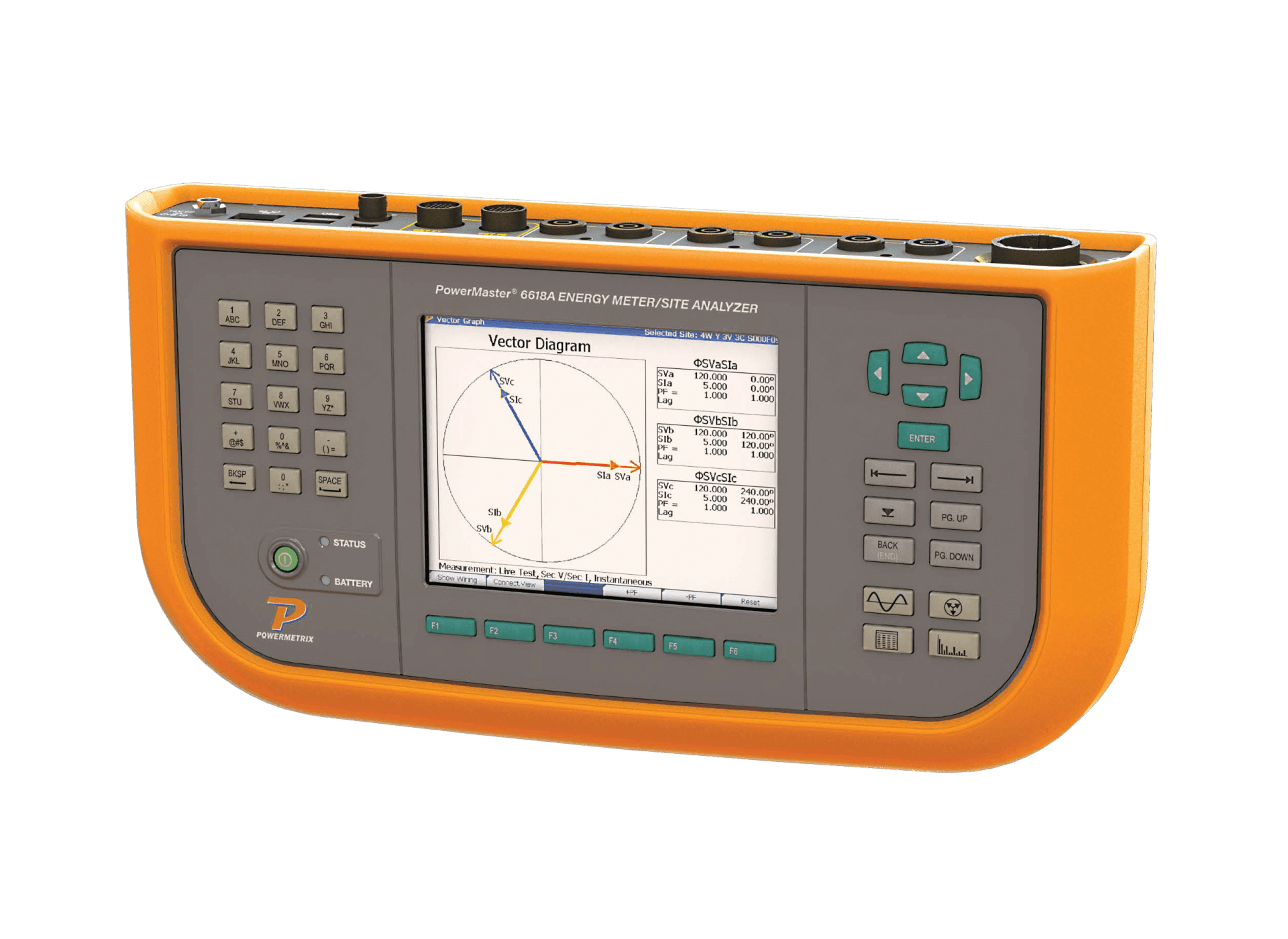
One example is current probes. The Powermetrix 6618A is ±0.05% on its direct current inputs. With current probes, its accuracy is ±0.10% plus the probe’s error, so probe-based tests suit class 0.5 meters.
4. A Worked Example
A class 0.2 meter tests at +0.17% at full load. Is it in class?
| Test equipment | Range the true error could fall in | In class (±0.2%)? |
|---|---|---|
| ±0.05% | +0.12% to +0.22% | Can’t say |
| ±0.04% | +0.13% to +0.21% | Can’t say |
| ±0.02% | +0.15% to +0.19% | Yes |
At 4:1 and 5:1, a result of +0.17% sits in a gray zone. The meter might be in class; it might not. At 10:1, the answer is clear.
Every meter shop meets this problem at the edges of the class. The usual answer is a guard band: a tighter internal pass limit so that borderline meters are retested or pulled. A higher accuracy ratio narrows the gray zone, so fewer meters land in it, and fewer good meters are retested or removed.
5. In the Field: Conditions Set the Limit
Field testing happens in heat, cold, and everything in between. Field equipment has to hold its accuracy across that range, often on distorted waveforms and at sites that can’t be taken out of service.
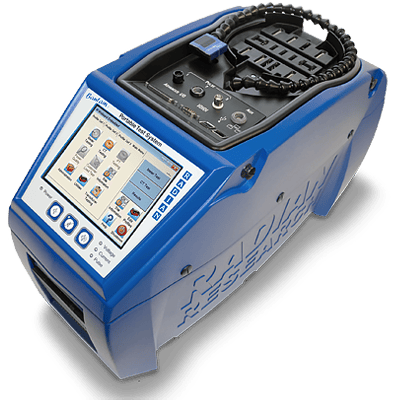
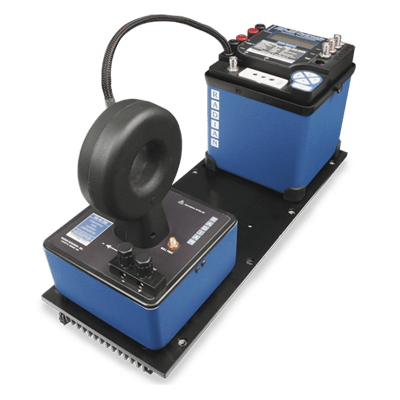
- RADIAN Bantam Plus: tests meters in the socket, in the field or the shop. The RB-20 has a built-in RADIAN reference standard at ±0.04%; the RB-21 at ±0.02%.
- Powermetrix 6618A: battery-operated, handheld three-phase site testing at ±0.05% on its direct current inputs. With current probes, ±0.10% plus the probe’s error.
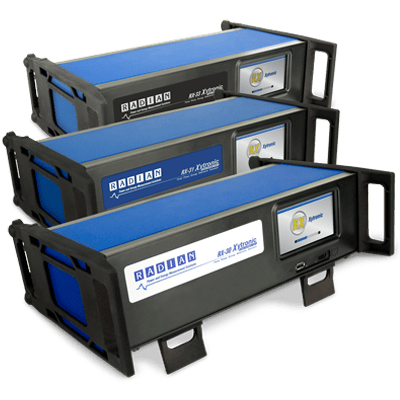
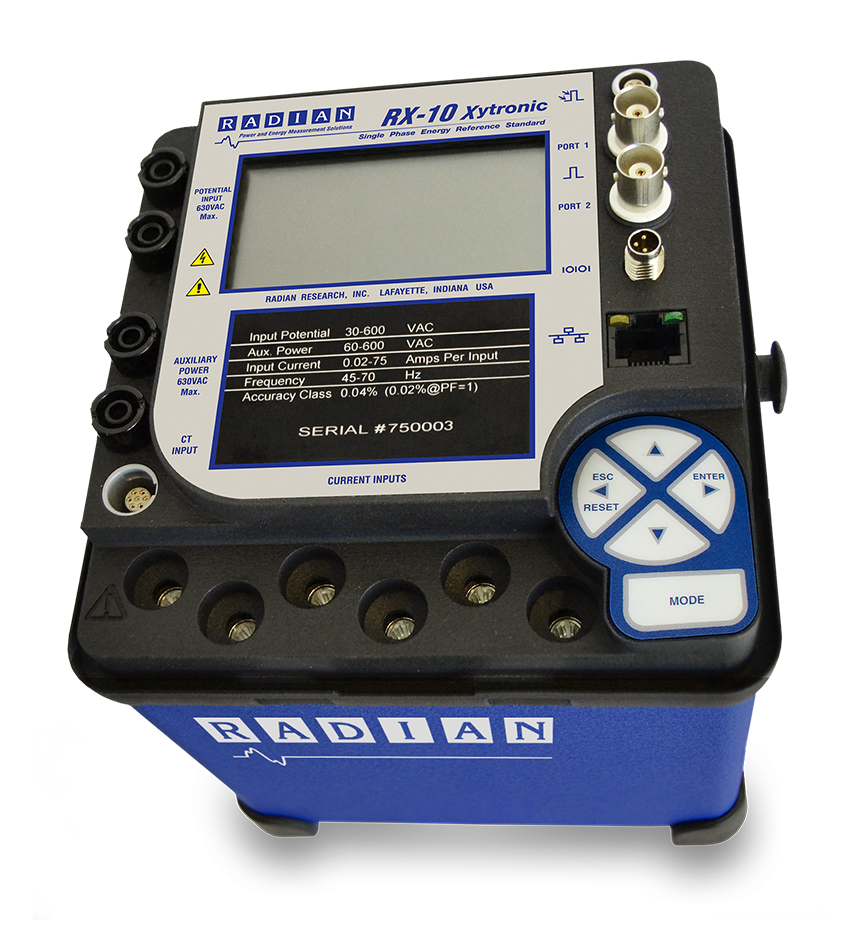
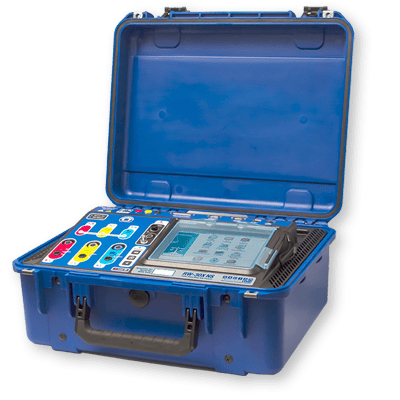
- RADIAN RW-30X / RW-31X: complete meter site analysis, including CT testing. The RW-30X uses an RX-30 at ±0.04%; the RW-31X uses an RX-31 at ±0.02%. Both reference standards are rated from −20 to 65 °C.
For class 0.5 and 0.2 meters, any of these meets the 4:1 rule. For class 0.1 meters in the field, choose a ±0.02% model: the Bantam Plus RB-21 or the RW-31X.
6. In the Meter Shop: Control the Conditions, Raise the Ratio
In the shop, temperature, waveform, and connections are under your control. That opens up the highest accuracy.
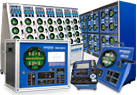
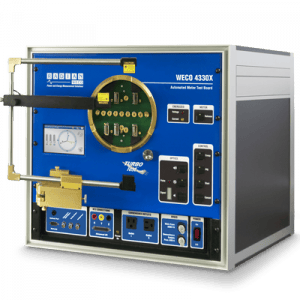
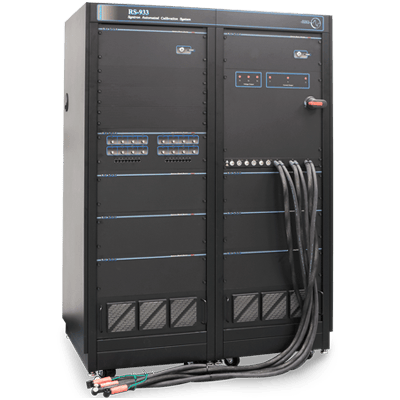
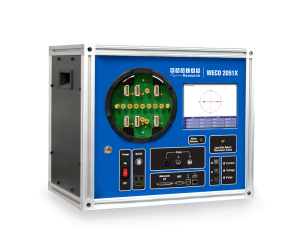
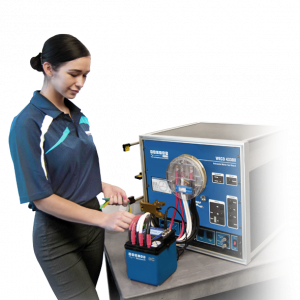
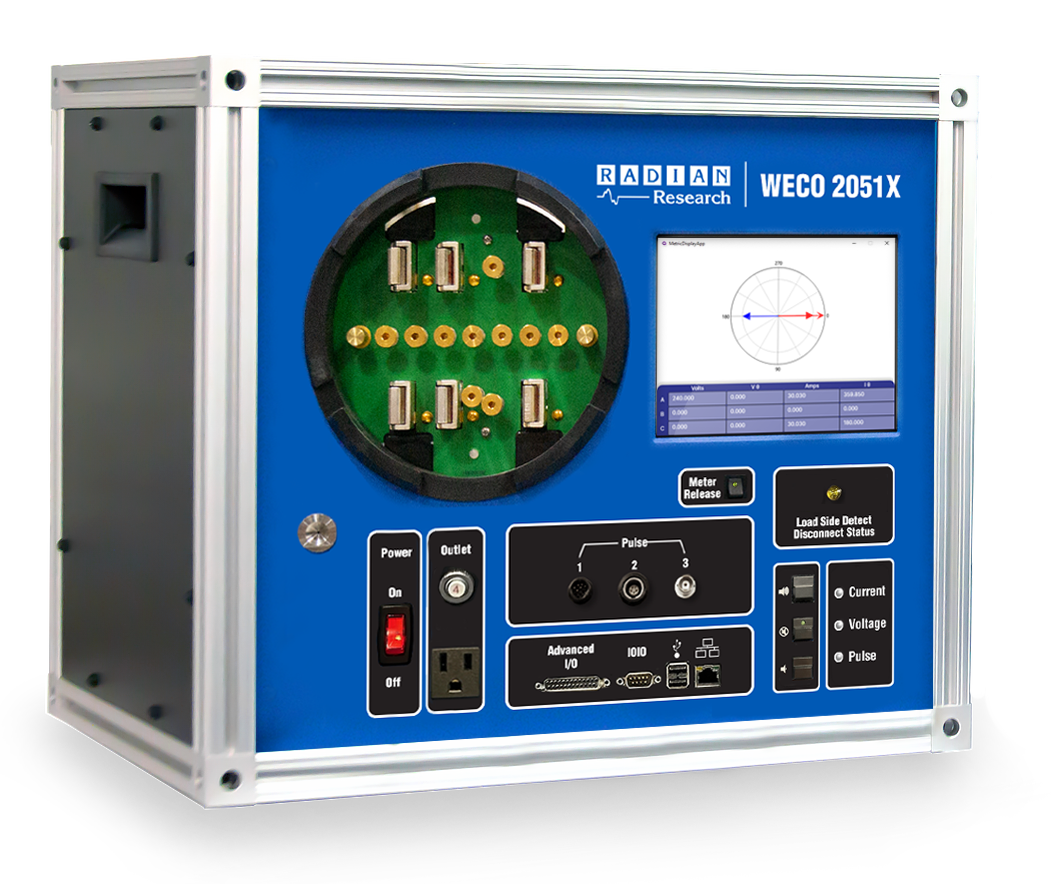
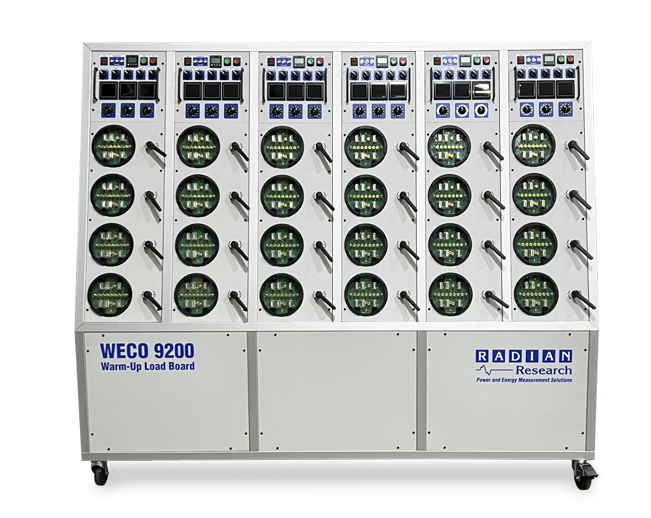
- WECO 4050X, 4150X, and 4330X: true three-phase testing, onboard optics, and a removable RADIAN reference standard with a choice of ±0.04%, ±0.02%, or ±0.01% accuracy.
- The ±0.01% option is for temperature-controlled environments. The RADIAN RX-33 reference standard is rated from 0 to 40 °C, compared with −20 to 65 °C for the RX-30 and RX-31. In a controlled shop, it gives a 10:1 ratio on class 0.1 meters.
- A removable standard can go out for calibration and come back without moving the test board.
Drift matters here too. Every standard drifts between calibrations, which slowly erodes the ratio. Starting with margin keeps the shop above 4:1 until the next calibration. RADIAN RX reference standards are calibrated on a one-year interval, traceable to NIST through RADIAN’s ISO/IEC 17025-accredited laboratory.
7. Working Backward: A Buying Checklist
Start from the meters you need to test and work back to the equipment:
- List the meter classes you test today and expect to test over the equipment’s life. Class 0.1 sets the tightest requirement.
- Set the ratio. 4:1 is the minimum; 10:1 on your tightest class removes most gray-zone results.
- Pick the location. Field equipment needs its accuracy across the full outdoor temperature range; shop equipment can use the tighter ±0.01% option in a controlled environment.
- Ask for accuracy at every test point: full load, light load, and lagging power factor, not just unity.
- Ask what changes the accuracy: current probes, temperature, and waveform distortion.
- Ask for traceability: a calibration certificate from an ISO/IEC 17025-accredited laboratory, traceable to NIST, with the calibration interval stated.
- Plan for calibration: can the standard be removed and sent out without taking the test system out of service?
The same checklist works as the accuracy section of an RFP.
8. Conclusion
The meter’s accuracy class sets the requirement; the 4:1 rule turns it into a number; and the test location decides which equipment can hold that number. For most programs, ±0.04% covers class 0.5 and 0.2 meters in the field and the shop. Class 0.1 meters call for ±0.02% in the field and ±0.02% or ±0.01% in the shop.
Buying above the minimum is not about the specification sheet. It is about keeping pass and fail clear at the edges of the class, through a year of drift, in real field conditions. To see why accuracy matters to revenue, visit Why Accuracy Matters.
About Radian Research
Radian Research, Inc., headquartered in Lafayette, Indiana, is a 100% employee-owned company that has manufactured precision electricity measurement and test equipment for electric utilities, meter shops, and calibration laboratories for more than 35 years. Over 300 million meters produced in the past 30 years are referenced to a RADIAN standard. RADIAN’s instruments are traceable to NIST through the company’s own ISO/IEC 17025-accredited metrology laboratory.
Frequently Asked Questions
What accuracy should my meter test equipment have?
At least four times better than the meter’s accuracy class: ±0.125% for class 0.5, ±0.05% for class 0.2, and ±0.025% for class 0.1.
Is a 0.04% or 0.05% field tester accurate enough?
Yes, for class 0.5 and 0.2 meters. The Powermetrix 6618A’s ±0.05% applies to its direct current inputs; with probes, add the probe’s error. For class 0.1 meters, use a ±0.02% model such as the Bantam Plus RB-21 or the RW-31X.
When do I need 0.01% accuracy?
When you want a 10:1 ratio on class 0.1 meters. The ±0.01% option on the WECO 4050X, 4150X, and 4330X is intended for temperature-controlled meter shops.
What is the difference between TAR and TUR?
The test accuracy ratio compares the meter’s tolerance with the test equipment’s published accuracy. The test uncertainty ratio compares it with the uncertainty of the whole test, including drift, temperature, and connections, so it is always lower.
Which standard sets meter accuracy classes?
ANSI C12.1, the Code for Electricity Metering. The former ANSI C12.20 was merged into C12.1 in the 2022 edition.