






Product Highlights
The 585’s microprocessor samples the CT secondary current just before and just after the burden is added, so changing service load doesn’t cloud the result. The burden is applied for a controlled time, however long the button is held, which protects the internal burden elements.
Before every test, the 585 checks for over-current, over-temperature, low battery, and continuity of the CT secondary path through the tester. If the continuity check fails, it blocks the test and alerts the user, which helps prevent an open CT secondary. The unit won’t turn on until the connection lead is attached.

Features
- Before-and-after CT secondary current with the calculated percent change, plus minimum, maximum, and present current.
- ANSI burdens of 0.1, 0.2, 0.5, 1.0, 2.0, 4.0, and 8.0 ohms, combinable into 121 more values up to 15.8 ohms.
- Rated to 20 A, measuring 0.1–20 A at ±1% of full scale (±2% with burden added).
- Pre-test safety checks for over-current, over-temperature, low battery, and secondary-loop continuity.
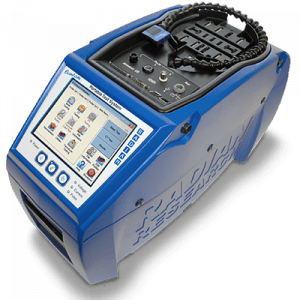
- Handheld (7.5 × 4.3 × 3.9 in, about 5 lb) with a backlit display, six AA batteries, and a soft carry bag.

Time-Controlled CT Burden Testing
- Connect the 585 to the test switch with its connection lead and safety probe. The unit powers up only once the lead is attached.
- Select a burden with the front-panel switches, one ANSI value or a combination.
- Push Add Burden. The 585 applies the burden for a controlled time and samples the current before and after.
- Read the result: the before and after current and the percent change, then decide whether the CT’s output drop is acceptable.
Which UTEC CT Tester Fits the Job?
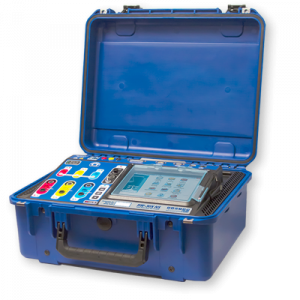
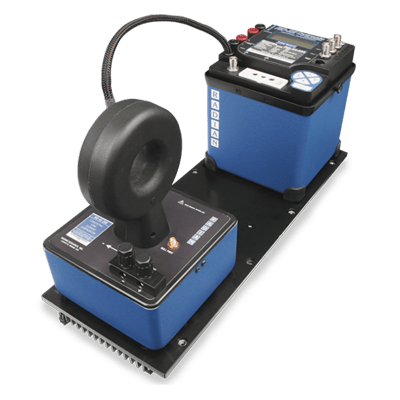
Both UTEC testers check CTs in service, without interrupting the customer. The UTEC 585 is a handheld burden tester for fast checks. The UTEC 505 adds CT admittance, ratio, and phase angle testing, plus optional CT and PT burden testing and CT demagnetization.
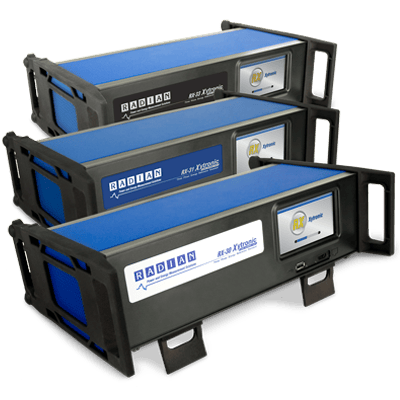
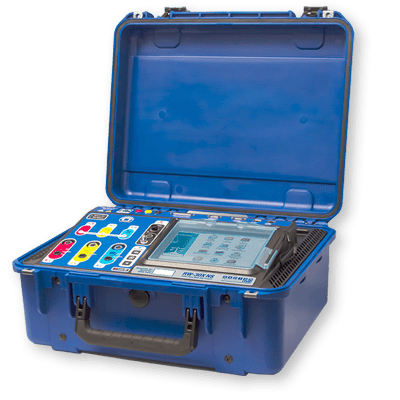
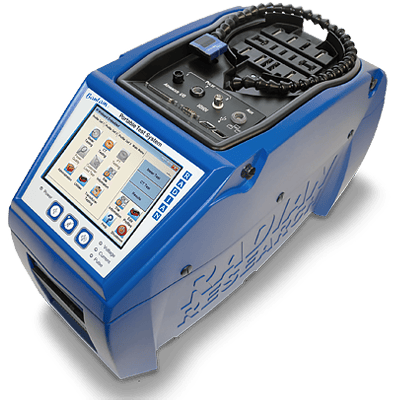
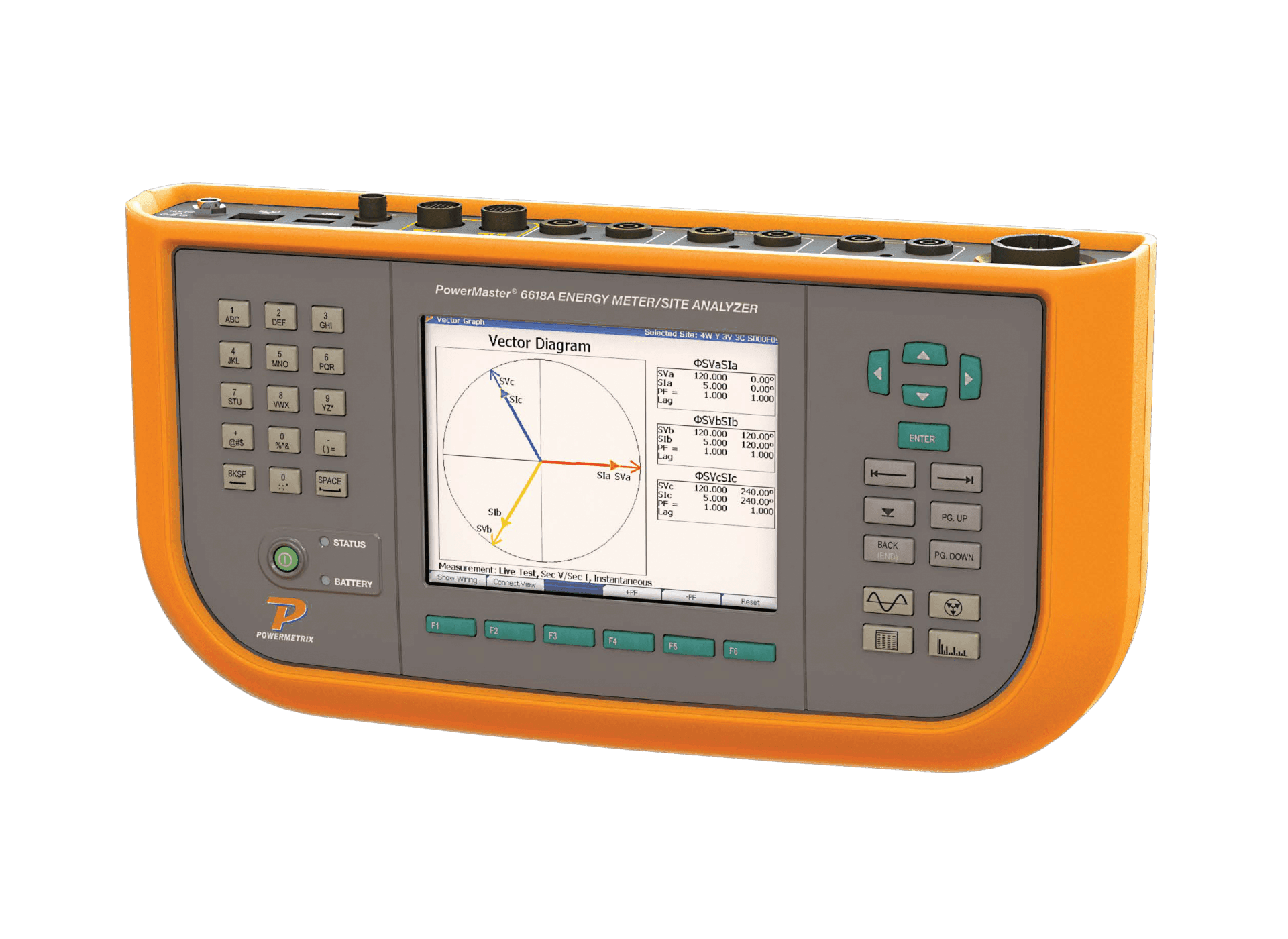
For complete meter site analysis that includes CT and PT testing, see the RADIAN RW-30X and RW-31X or the Powermetrix 6618A.
| UTEC 585 | UTEC 505 | |
|---|---|---|
| Tests | CT burden | CT admittance, ratio, and phase angle; service voltage, current, and phase angle; CT and PT burden and CT demagnetization (option) |
| Current | 0.1–20 A secondary | 0.1–25 A secondary; 10–3,000 A primary with clip-on probes |
| Burdens | ANSI 0.1–8.0 ohms, combinable up to 15.8 ohms | ANSI 0.1–8.0 ohms; PT burdens 25–175 VA (option) |
| Power | Six AA batteries | Rechargeable battery or line power |
| Data | Before, after, and percent change on screen | Stores 13 site test records for download |
| Best for | Quick burden checks at the test switch | Complete in-service CT and PT analysis |
UTEC 585 FAQ
What does a CT burden test show
A burden test adds a known resistance to the CT secondary loop and measures how much the secondary current drops. A small drop means the CT can carry its burden and stay accurate; a large drop points to a CT that may under-register at the meter.
Which burdens can the UTEC 585 apply
The 585 provides the ANSI standard burdens of 0.1, 0.2, 0.5, 1.0, 2.0, 4.0, and 8.0 ohms. Turning on more than one switch combines them, for 121 more values up to 15.8 ohms.
How does the 585 help prevent an open CT secondary
Before each test, the 585 checks that the CT secondary path through the tester is continuous. If the check fails, it stops the test and alerts the user. It also checks for over-current, over-temperature, and low battery.
What does the 585 connect to
The 585 connects to the meter's test switch through an optional connection lead with a Superior or Westinghouse test switch safety probe. Specify the probe type when ordering.
When should I choose the UTEC 505 instead
Choose the UTEC 505 Transformer Analyzer when you need more than a burden check: CT admittance, CT ratio, primary-to-secondary phase angle, and service voltage and current, with optional CT and PT burden testing and stored test records.


Related Resources


Can't Find What You're Looking For?