





Product Highlights
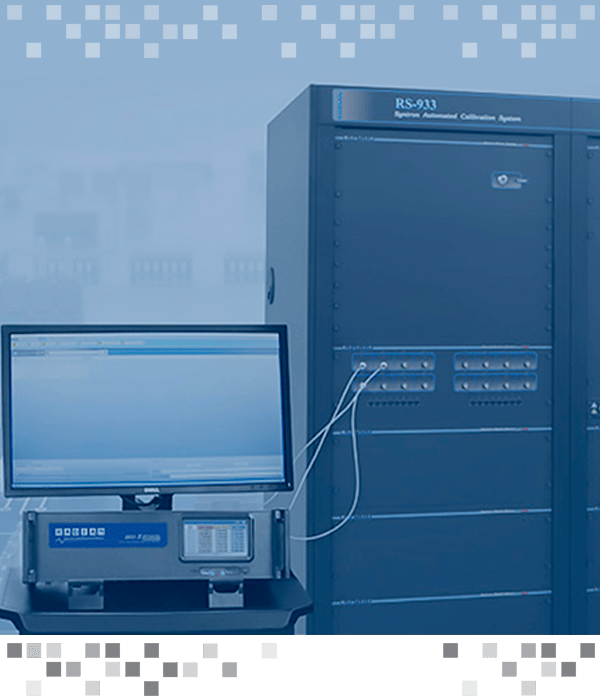
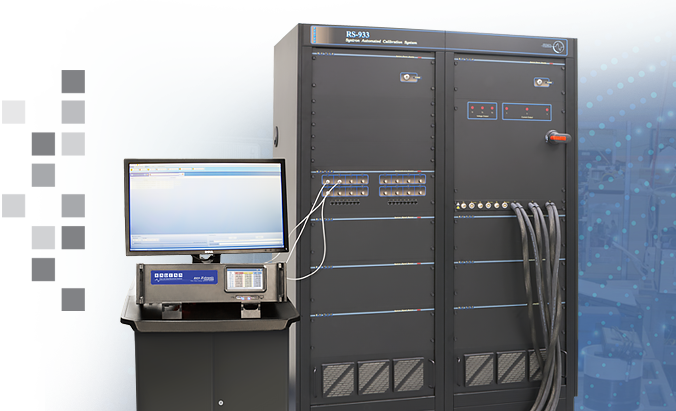
The RS-933 automates the calibration of watthour reference standards and other power and energy instruments. Test sheets run in sequence without an operator, and results are calculated, saved, and exported automatically. That frees lab staff for other work and makes every calibration follow the same procedure.
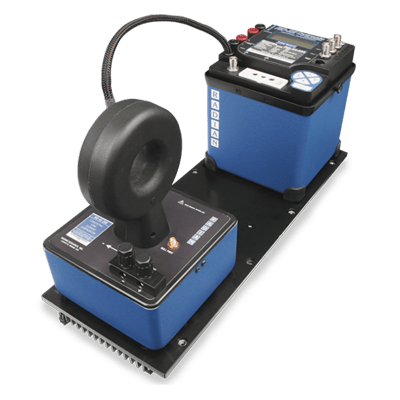
Because the RS-933 is a sourcing standard, the voltage and current it generates are the reference, so it calibrates devices on its own. For labs that want fewer steps between NIST and their own measurements, the RADIAN RD-22 portable lab reference can be used with the RS-933 to reduce the layers in the traceability chain.

Features
- Wide output range (1 mA – 200 A): one output covers the full current range, so leads never need to be reconfigured between test points.
- Low-current testing: the 1 mA minimum supports starting-load testing of meters and standards.
- Multi-channel data collection: 8- or 16-channel configurations collect pulse and serial data from several devices under test in the same run.
- User-defined and harmonic waveforms: set independent voltage and current harmonics through the 64th in the RS-933 Control Software.
- Direct-drive current output: above 200 mA, improves stability, repeatability, and settling time without measurement feedback.
- Broad measurement set: active, reactive (including multiple VAR-hour methods), and apparent energy and power, plus voltage, current, phase angle, power factor, and frequency.
- Automated testing and results: Test Groups run test sheets in sequence, unattended, and results are calculated, saved, and exported to CSV.
- Network control: a TCP/IP interface lets any authorized local or remote terminal control the system or access data.
- Optional RD-22 portable lab reference: use it with the RS-933 to reduce the layers between NIST and your lab.
- Traceable accuracy: backed by RADIAN's ISO/IEC 17025 accreditation and traceability to NIST.
Delivering Traceable Calibration Standards
- Connect the devices under test to the voltage and current outputs, and their pulse or serial outputs to the data collection module.
- Set up the test. Assign channels and load a test sheet in the RS-933 Control Software, or build one with your own test points and waveforms.
- Run it. The system steps through every test point. Test Groups can run several test sheets in sequence, unattended, even outside working hours.
- Review and export results in percent error or percent registration. Results are saved to the database and export as CSV files.
The RS-933 is the reference for the run, so no separate reference standard is needed. Labs that use a RADIAN RD-22 portable lab reference with the system can shorten their traceability chain to NIST.
Configure the RS-933 for Your Lab
Every RS-933 shares the same Syntron source, ±0.005% power and energy accuracy, RS-933 Control Software, and output range up to 630 V. Three choices set the configuration: phases, maximum current, and data collection channels. Every new system includes setup and training and carries a two-year warranty.
Already running an RS-600 or RS-703A system? Upgrade paths are available. Contact RADIAN for details.
| Choice | Options | Choose based on |
|---|---|---|
| Phases | Single-phase (931) or three-phase (933) | Whether you calibrate single-phase or three-phase standards and meters |
| Maximum current | 120 A or 200 A | The highest current your test points require |
| Data collection | 8 or 16 channels | How many devices you connect in one run |
| Reference | Optional RADIAN RD-22 portable lab reference | Whether you want to reduce the layers between NIST and your lab |
RS-933 FAQ
What can the RS-933 calibrate
The RS-933 calibrates watthour reference standards, including RADIAN and other makers' standards, along with revenue and energy meters, power meters, digital multimeters, ammeters, phase meters, panel meters, and power quality meters. It is also used for evaluation testing of solid-state meter designs.
How accurate is the RS-933
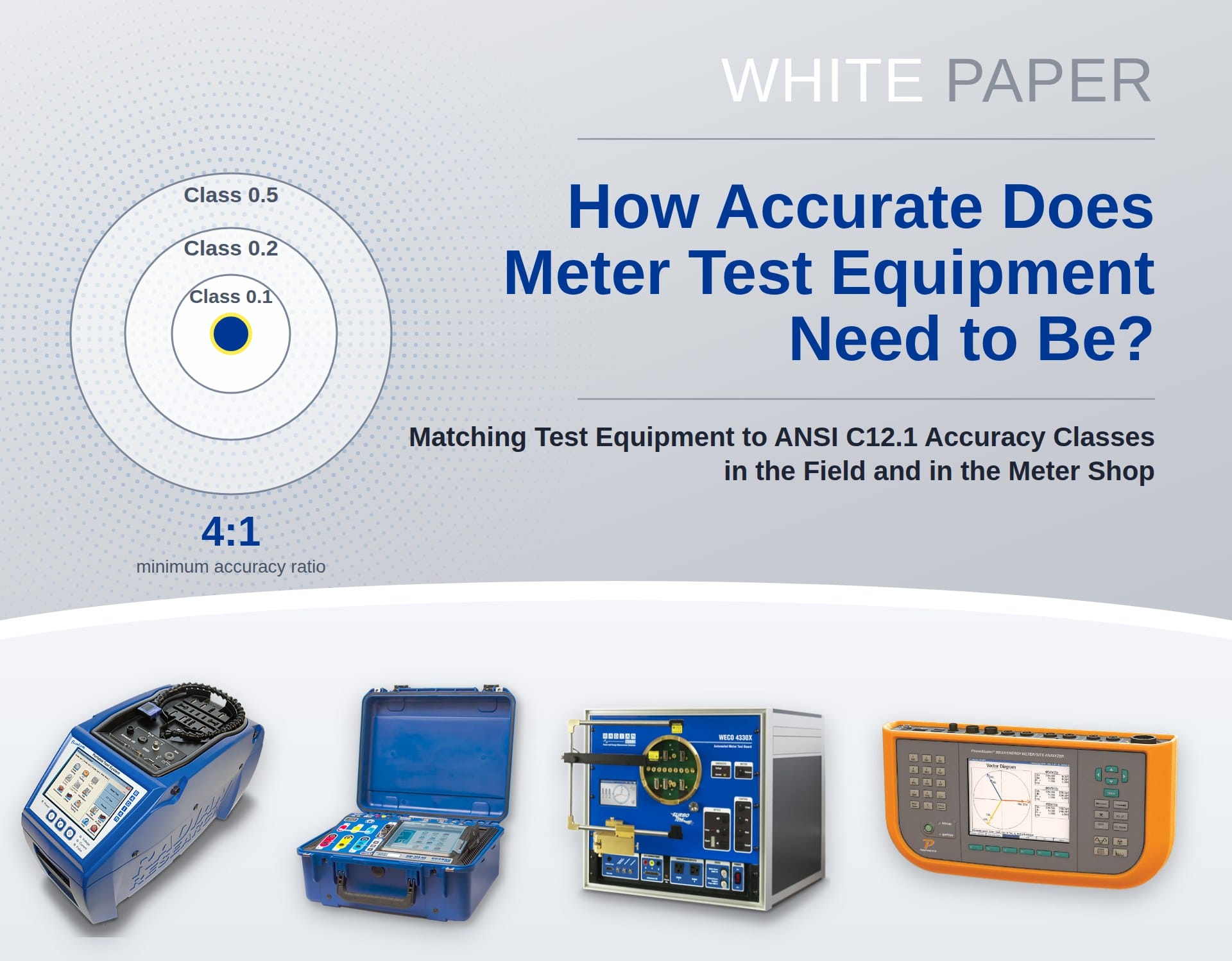
Power and energy accuracy is ±0.005%, voltage ±0.0043%, current ±0.0063%, and phase ±0.003°. Accuracy is stated as percent of reading across the entire voltage and current range from 18 °C to 28 °C (23 °C ±5 °C), and it includes stability, power factor, and test system error. Accuracy is traceable to NIST, with a 365-day recalibration interval. Learn more in How Accurate Does Meter Test Equipment Need to Be?
Does the RS-933 need an RD-22 to test
No. The RS-933 is a sourcing standard: its Syntron source generates the reference quantities, so it calibrates devices on its own. The RADIAN RD-22 is a portable lab reference that can be used with the RS-933 to reduce the layers between NIST and your lab. Primary references of DC voltage, resistance, and time can also be tested against the RD-22 for labs that perform a DC to AC transfer.
Can I upgrade an existing RS-600 or RS-703A system
Yes. Upgrade configurations bring RS-600 and RS-703A systems up to RS-933 capability in single-phase or three-phase, 120 A or 200 A. A data collection upgrade to 16 channels is also available. Upgrades require a return to the factory and a new computer platform. Contact RADIAN to plan an upgrade.
What does my lab need to install an RS-933
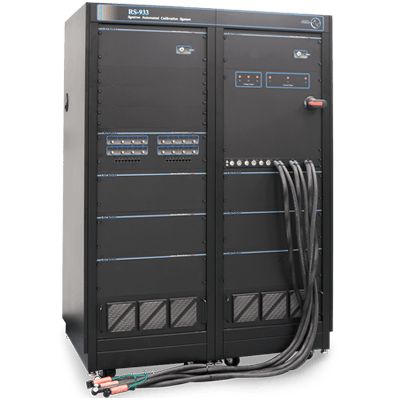
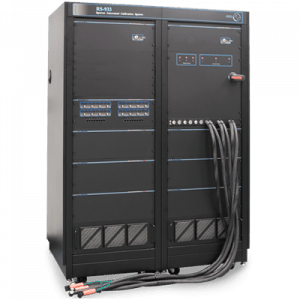
Plan for a 240 VAC, 30 A circuit and floor space for a cabinet 63 in high, 47 in wide, and 25.5 in deep (775 lb base system). For specified accuracy, the lab should hold 23 °C ±5 °C, and the cooling modules need 6 in of clearance front and rear. A Windows PC runs the RS-933 Control Software. Every new system includes setup and training from RADIAN and carries a two-year warranty.


Related Resources

Can't Find What You're Looking For?