













Can We Calibrate Our Reference Standards In-House?
The short answer
Yes. A utility lab can perform two kinds of work on its own reference standards: a standards compare and a calibration without adjustment. Both depend on the lab holding a higher-accuracy reference standard with its own traceability to NIST, a written procedure, and records that will stand up to an audit.
Calibration with adjustment is performed by RADIAN Calibration Services. If a standard needs to be brought back toward nominal, it comes to RADIAN.
Three terms, three different jobs
| Term | What it does | Who performs it |
|---|---|---|
| Standards compare | Runs two standards side by side on the same voltage and current and confirms they still agree within your procedure’s limit. It shows whether a standard has moved since its last calibration. | Your lab, or RADIAN |
| Calibration without adjustment (recalibration) | Measures the standard against a higher-accuracy reference at defined test points, documents the as-found results and traceability, and confirms the standard is within its specifications. Nothing in the standard is changed. | Your lab, or RADIAN Calibration Services |
| Calibration with adjustment | Measures the standard, adjusts it, and documents the results. | RADIAN Calibration Services |
An ISO/IEC 17025 accredited calibration also states the measurement uncertainty for each test point. RADIAN Calibration Services offers 17025 accredited calibration as an option.
What your lab needs
- A higher-accuracy reference standard. It should be at least four times more accurate than the standard you are comparing or calibrating (the 4:1 rule). See How Accurate Does Meter Test Equipment Need to Be?
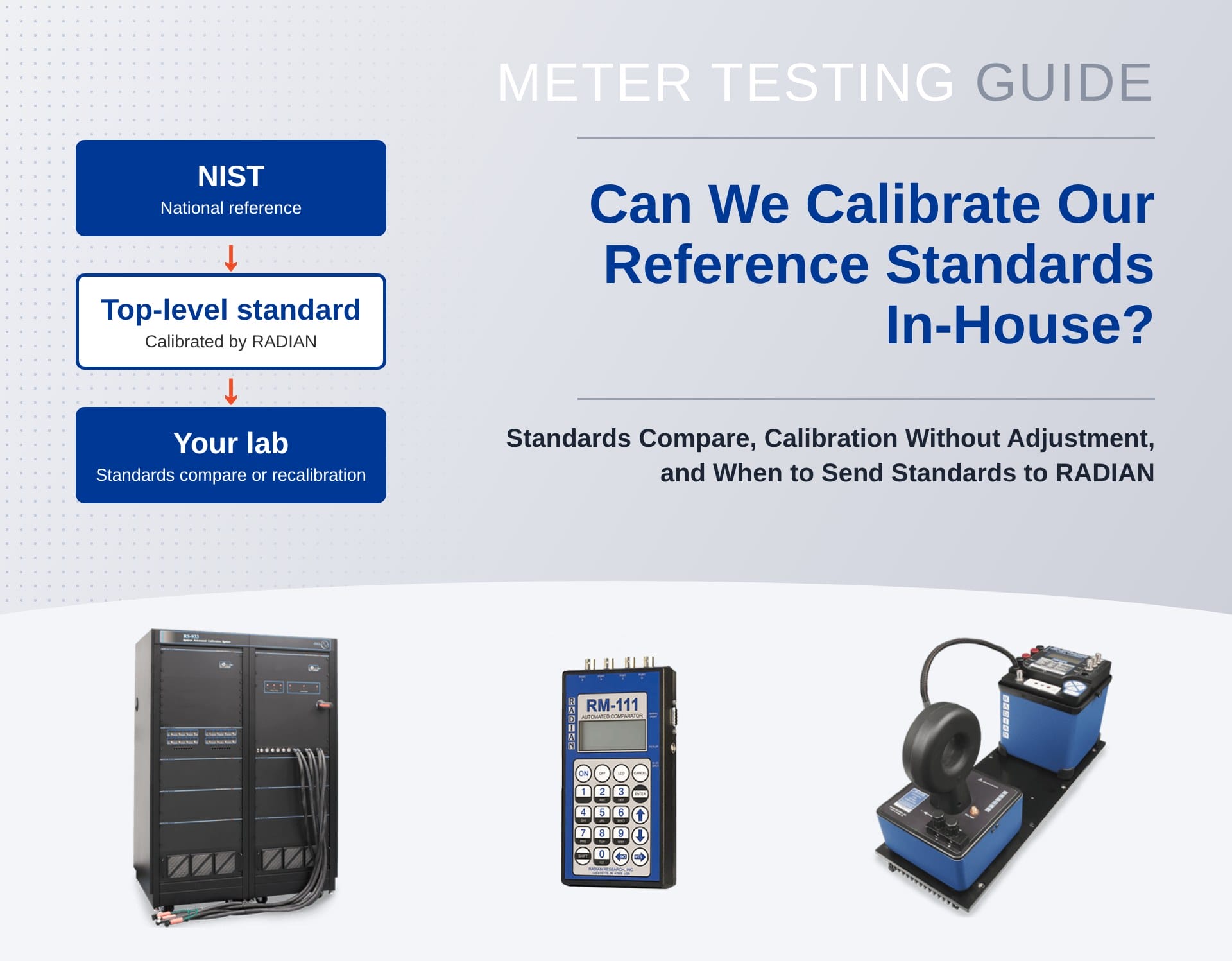
- Traceability for that reference. Your top-level standard needs its own calibration from an accredited lab, so every result below it traces to NIST. See What Does NIST Traceability Mean for Meter Testing?
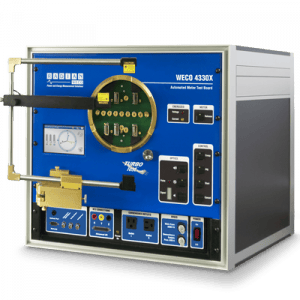
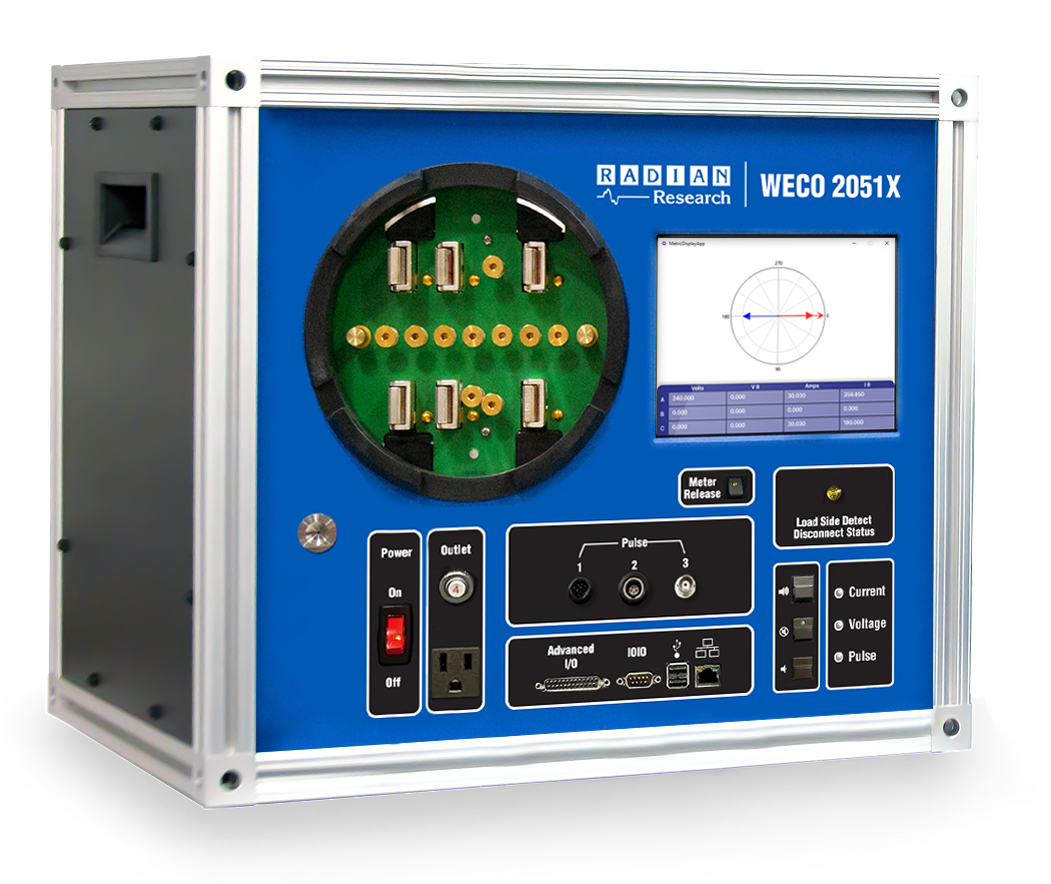
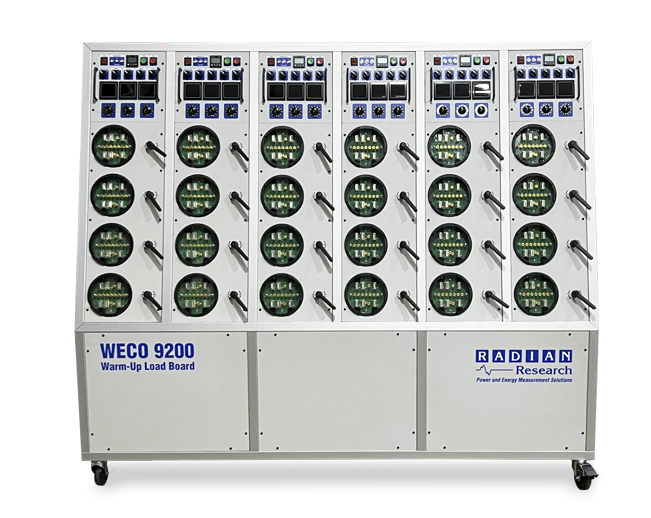
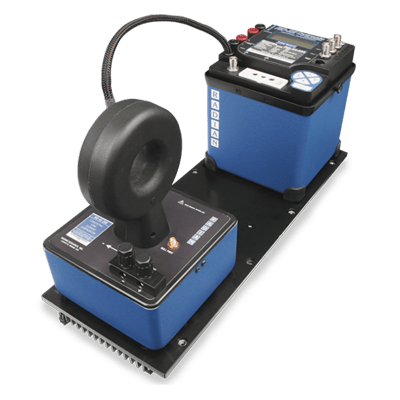
- A way to apply the same signal to both standards. A Test Board, a Universal Standards Compare Adapter, or an automated calibration system.
- A written procedure. Test points, acceptance limits, and what happens when a standard is out of tolerance.
- Records. Who performed the standards compare or calibration, when, with which reference, and the results. WATT-Net stores standards compare results with the rest of your test data.
Three common setups
| Setup | What it does | RADIAN equipment |
|---|---|---|
| Standards compare at the Test Board | Compares the standard inside a Test Board with an external reference standard | Universal Standards Compare Adapter with a RADIAN RX standard, and the automated Standards Compare test in WATT-Net |
| Bench standards compare | Compares up to three standards and a device under test, averaging the references | RADIAN RM-111 automated comparator |
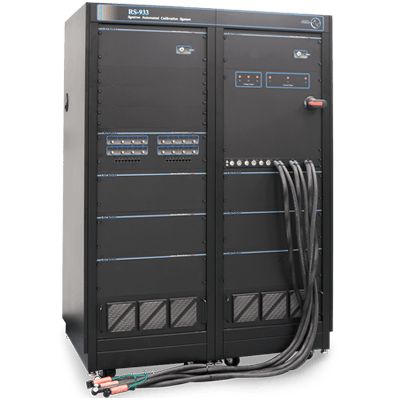
| In-house calibration lab | Sources voltage and current and performs calibration without adjustment at many test points | RADIAN RS-933 automated calibration system, with an RD-22 to carry traceability into the lab |
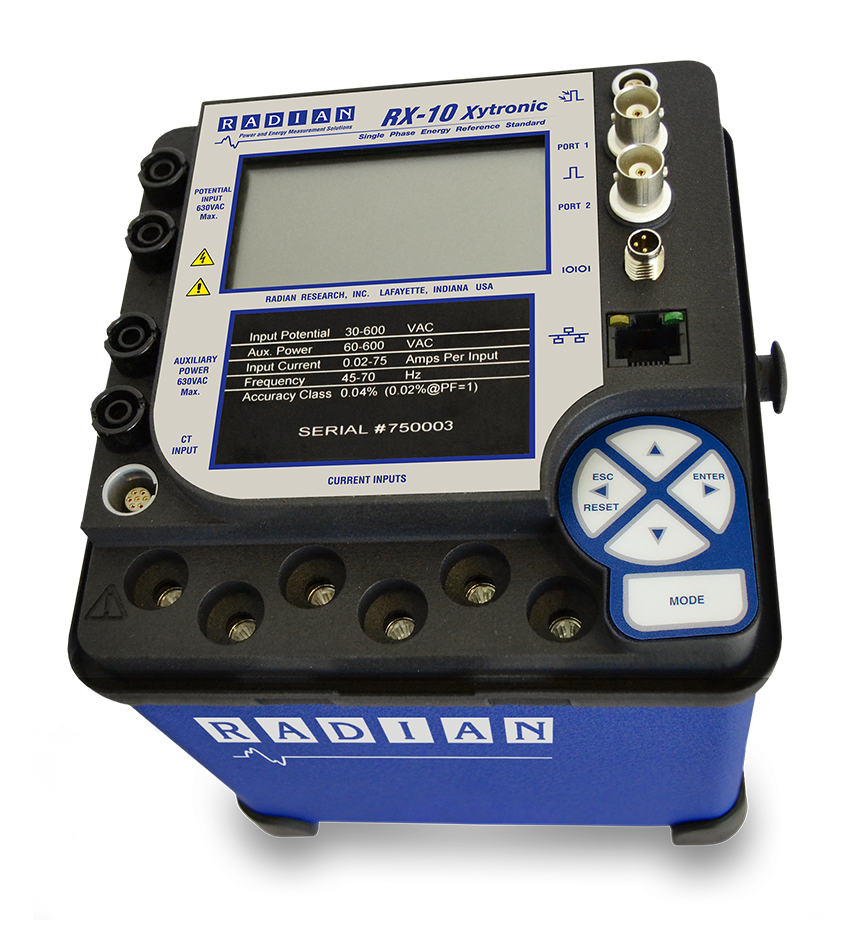
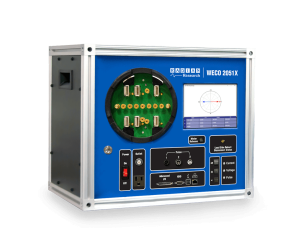
Example: the RX-10 inside a WECO 2051X can be recertified through RADIAN Calibration Services, or by utilizing an RX-15 with a standards compare adapter.
Why RADIAN Calibration Services gives the best accuracy
Every step between NIST and your standard adds uncertainty. RADIAN’s chain is NIST, then the RADIAN Transfer Standards (RTS, a bank of three RD-22s), then the RS-933 lab standard, then your standard. That is the fewest steps away from NIST a commercial calibration offers, and fewer steps means lower uncertainty and better accuracy for your standard.
RADIAN Calibration Services can also provide ISO/IEC 17025 accredited calibration, which states the measurement uncertainty for each test point. A calibration performed in-house does not come with an accredited uncertainty statement unless your own lab is accredited.
A lab with its own RS-933 and an RD-22 calibrated by RADIAN keeps its own chain short as well, adding one controlled step rather than several. The Strength in Numbers white paper explains why RADIAN uses three RD-22s.
When to send a standard to RADIAN
- For your top-level standard. Something has to anchor the chain. Calibrating it at RADIAN puts it the fewest steps from NIST and gives it the best accuracy.
- When a standard needs adjustment. If a standards compare or a calibration without adjustment shows a standard is out of tolerance, RADIAN Calibration Services can perform a calibration with adjustment.
- When a standard has been dropped or repaired, or shows a change you can’t explain.
- When you need stated measurement uncertainties. RADIAN Calibration Services provides ISO/IEC 17025 accredited calibration with an uncertainty for each test point, which a regulator or customer may require.
- When you don’t have the time or staff to run and document an in-house program. RADIAN Calibration Services offers on-site calibration, which needs no RMA, and a typical 3 to 5 day turnaround in its lab, with expedited service available for a fee.
How often
RADIAN recommends calibrating reference standards once a year. Regulators may require more often, and some utilities recalibrate every three months. A standards compare between calibrations shows whether a standard has moved, which helps a lab meet a shorter interval. See How Often Should Reference Standards Be Recalibrated?
Frequently asked questions
Can we calibrate our own reference standards?
Yes. Your lab can perform a standards compare or a calibration without adjustment, as long as you hold a higher-accuracy reference with its own NIST-traceable calibration, follow a written procedure, and keep records. Calibration with adjustment is performed by RADIAN Calibration Services.
What is the difference between a standards compare and a calibration?
A standards compare confirms that two standards still agree. A calibration without adjustment measures a standard against a higher-accuracy reference at defined test points and documents its traceability. Calibration with adjustment also adjusts the standard. An ISO/IEC 17025 accredited calibration states the measurement uncertainty for each point.
Is recalibration the same as calibration without adjustment?
Yes. Recalibration documents how the standard is performing now and confirms it is within its specifications. It does not change the standard.
What if a standard is out of tolerance?
Send it to RADIAN Calibration Services, which can perform a calibration with adjustment.
Why calibrate at RADIAN instead of in-house?
RADIAN Calibration Services is the fewest steps away from NIST, which gives your standard the lowest uncertainty and the best accuracy. RADIAN can also provide ISO/IEC 17025 accredited calibration with a stated uncertainty for each test point, and can perform calibration with or without adjustment.
Does the RS-933 need an RD-22 to work?
No. The RS-933 is a sourcing standard and runs on its own. An RD-22 is recommended because it can be shipped for calibration and carries traceability into your lab.
How accurate does our in-house reference need to be?
At least four times more accurate than the standard you are comparing or calibrating. This is often called the 4:1 rule.
Will our regulator accept in-house calibration?
That depends on your regulator. Check your commission’s rules for calibration intervals and the records it expects to see.
Can RADIAN calibrate other manufacturers’ standards?
Yes. Non-RADIAN AC energy reference standards can be calibrated without adjustment (verification only), and ISO/IEC 17025 accredited calibration is available as an option.