






Percent of Reading vs. Percent of Scale: Why Accuracy Specs Matter
The short answer
An accuracy specification can be stated two ways:
- Percent of reading: the allowed error is a percentage of the value being measured. At 2 A, ±0.02% of reading allows ±0.0004 A.
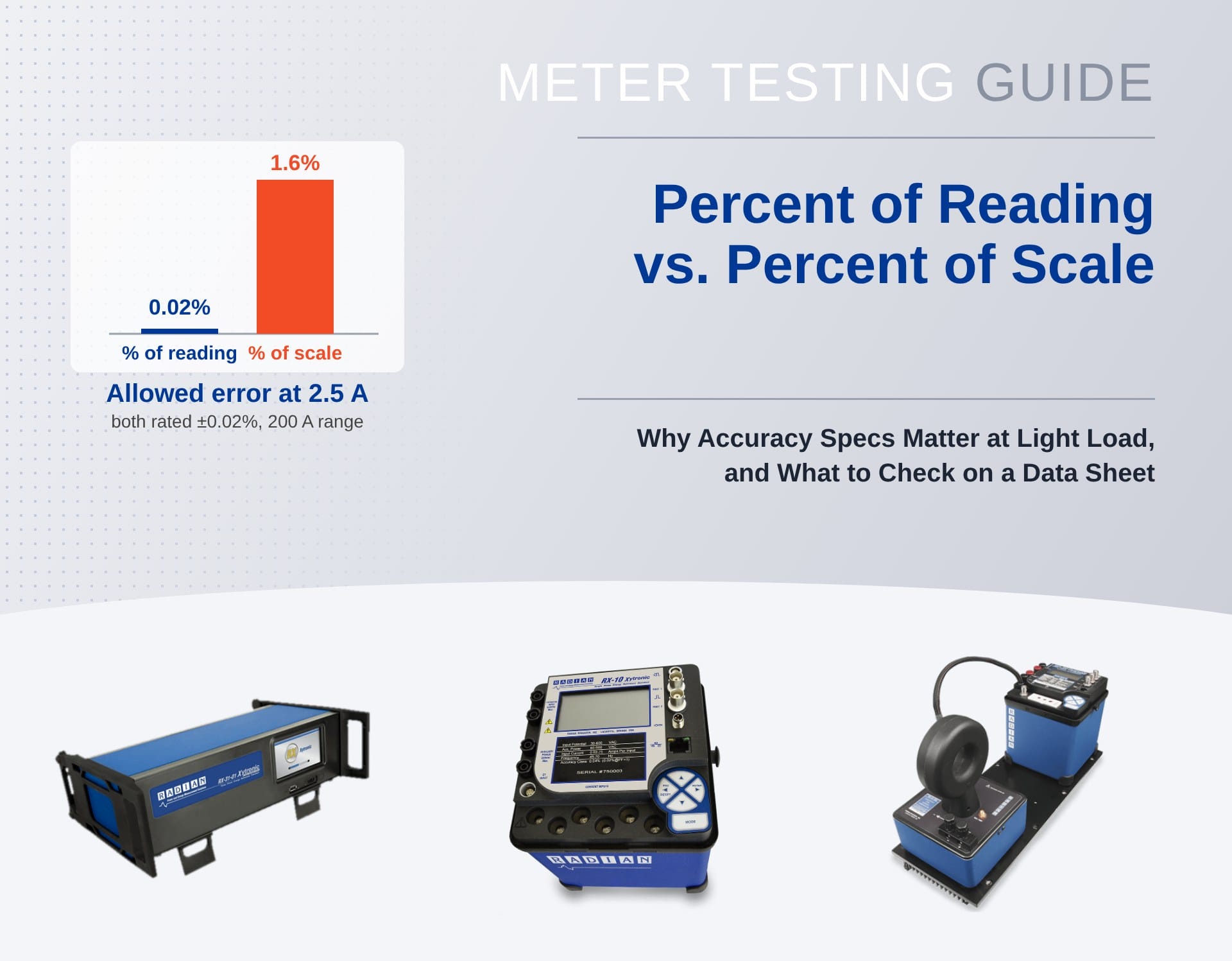
- Percent of scale: the allowed error is a percentage of the instrument’s full-scale range. At 2 A on a 200 A range, ±0.02% of scale still allows ±0.04 A, which is ±2% of the 2 A reading.
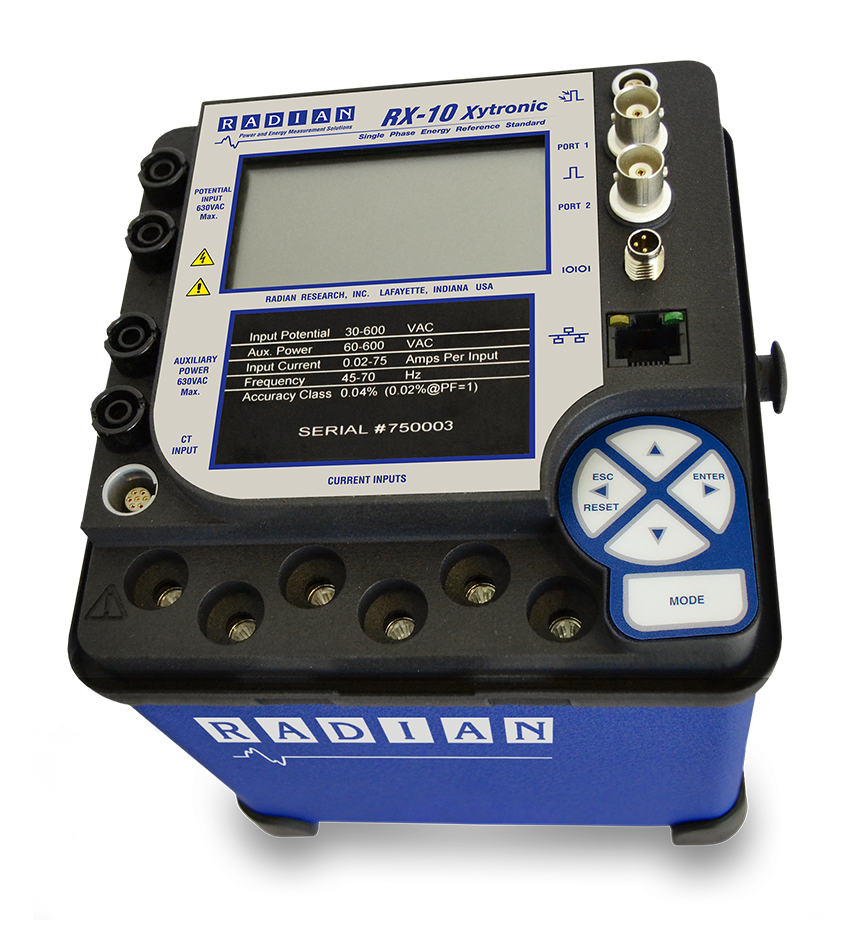
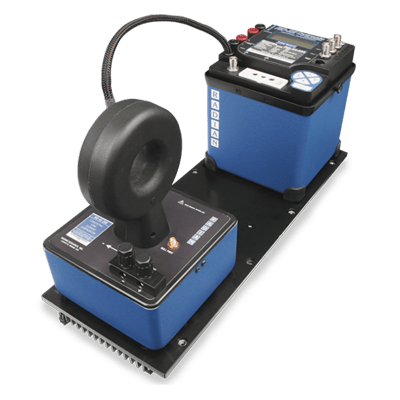
The two can look identical on a data sheet and perform very differently at light load, where many meter tests are run. RADIAN reference standards from Radian Research state accuracy in percent of reading.
A worked example
Take two instruments, each rated ±0.02%, on a 200 A range:
| Test current | ±0.02% of reading | ±0.02% of scale (200 A) | Percent-of-scale error as a share of the reading |
|---|---|---|---|
| 200 A | ±0.04 A | ±0.04 A | ±0.02% |
| 30 A | ±0.006 A | ±0.04 A | ±0.13% |
| 2.5 A | ±0.0005 A | ±0.04 A | ±1.6% |
| 0.5 A | ±0.0001 A | ±0.04 A | ±8% |
At full scale, the two are the same. At the currents used for light-load meter tests, the percent-of-scale instrument may no longer be accurate enough to test the meter at all.
Why this matters for meter testing
Meter tests run across a wide range of current. A light-load test may be a small fraction of full load, and ANSI C12.1 holds the meter to its accuracy class at those points too. The standard you test against has to stay accurate there, with the usual 4:1 margin over the meter. See How Accurate Does Meter Test Equipment Need to Be?
If the standard’s accuracy is stated in percent of scale, that margin can disappear at exactly the test points where meters are most likely to drift.
Ranges matter too
Many instruments use several current ranges, each with its own full scale. Two questions follow:
- Which range is in use? A percent-of-scale figure on a high range can be much worse than the same figure on a low range.
- What happens at range changes? Switching ranges can add a step in error or require the operator to pick the right tap.
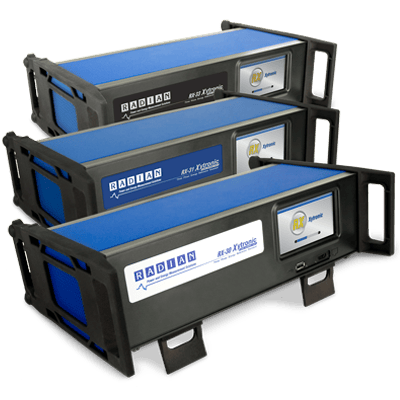
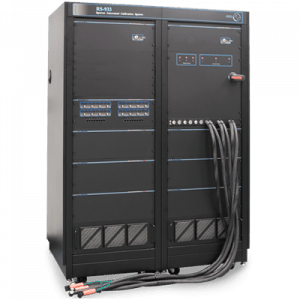
The RADIAN RX-33, RX-31, and RX-30 measure current from 1 mA to 200 A on one range, so there is no range switching across the full span. The RADIAN RX-15, RX-11, and RX-10 use autoranging inputs from 20 mA to 225 A.
What to check on a data sheet
- Is accuracy stated in percent of reading or percent of scale? If it doesn’t say, ask.
- Over what range does the figure apply? Look for current, voltage, and power factor limits, and any change at low current.
- What does the figure include? Stability, temperature, repeatability, and calibration uncertainty, and at what confidence level.
- Is there a separate low-current specification? A clear low-current figure is better than an assumption.
- Does accuracy change with power factor? Look for figures at unity power factor and from 0.5 lag to 0.5 lead.
How RADIAN states accuracy
RADIAN publishes accuracy in percent of reading. For example:
| Specification | RX-33 | RX-31 | RX-30 |
|---|---|---|---|
| Power and energy at unity power factor | ±0.005% | ±0.01% | ±0.02% |
| Power and energy, 0.5 lag to 0.5 lead | ±0.01% | ±0.02% | ±0.04% |
| Power and energy, 5 mA to <20 mA | ±0.02% | ±0.04% | ±0.08% |
The low-current line is stated separately, so the accuracy at every test point is on the data sheet. For the RX-15, RX-11, and RX-10, the accuracy figures are expanded uncertainty at 95% confidence (k = 2) and include stability, crosstalk, and traceability uncertainty.
Frequently asked questions
What does percent of reading mean?
The allowed error is a percentage of the value being measured, so it scales down as the reading gets smaller.
What does percent of full scale mean?
The allowed error is a percentage of the instrument’s range. It stays the same size at every reading, so it becomes a larger share of small readings.
Which is better for meter testing?
Percent of reading, because meter tests include light-load points where a percent-of-scale specification can lose its accuracy margin.
Are RADIAN reference standards specified in percent of reading?
Yes. RADIAN RX and RD standards state accuracy in percent of reading, not percent of scale.
Why does range switching matter?
Each range has its own full scale, so a percent-of-scale figure depends on which range is in use. The RX-33, RX-31, and RX-30 measure 1 mA to 200 A on one range, with no range switching.