






Single-Phase or Three-Phase Reference Standard: How Do You Choose?
The short answer
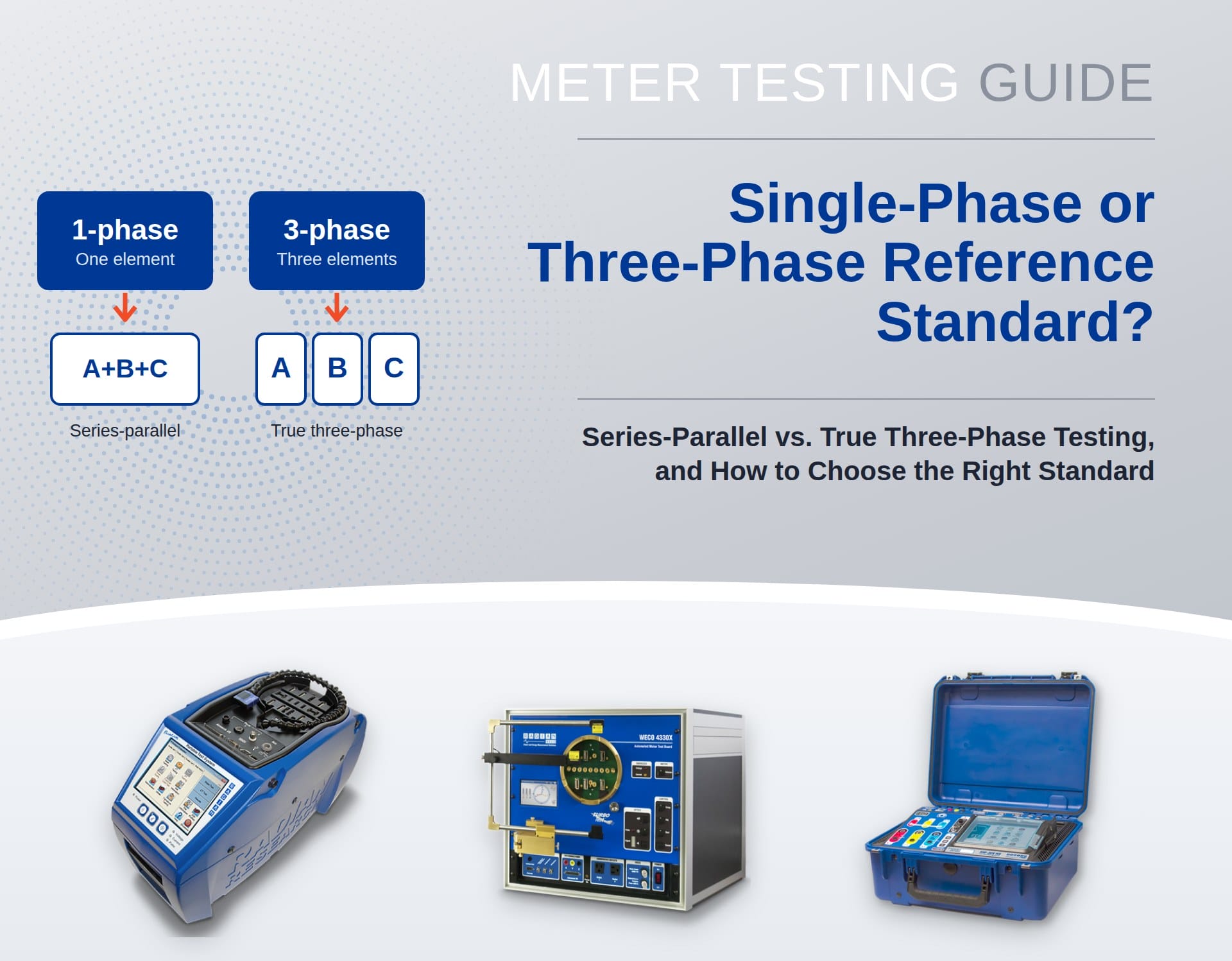
A single-phase reference standard measures one voltage and one current. A three-phase reference standard measures all three phases at the same time. If you test single-phase meters, or test polyphase meters series-parallel, with every element carrying the same test current, a single-phase standard does the job. If you need to test polyphase meters the way they work in service, with three separate phases, or analyze three-phase sites, choose a three-phase standard. Accuracy is a separate choice: Radian Research offers both types in ±0.04%, ±0.02%, and ±0.01% classes.
What the difference actually is
A reference standard measures energy by measuring voltage and current together over time. (For how that works, see What Is a Watthour Reference Standard, and How Does It Work?)
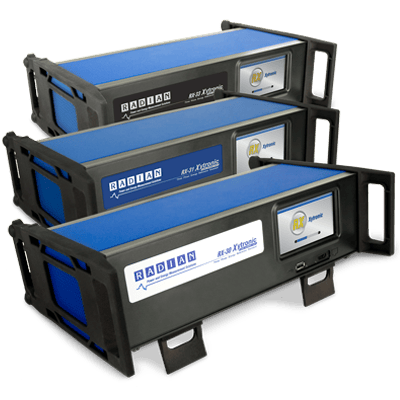
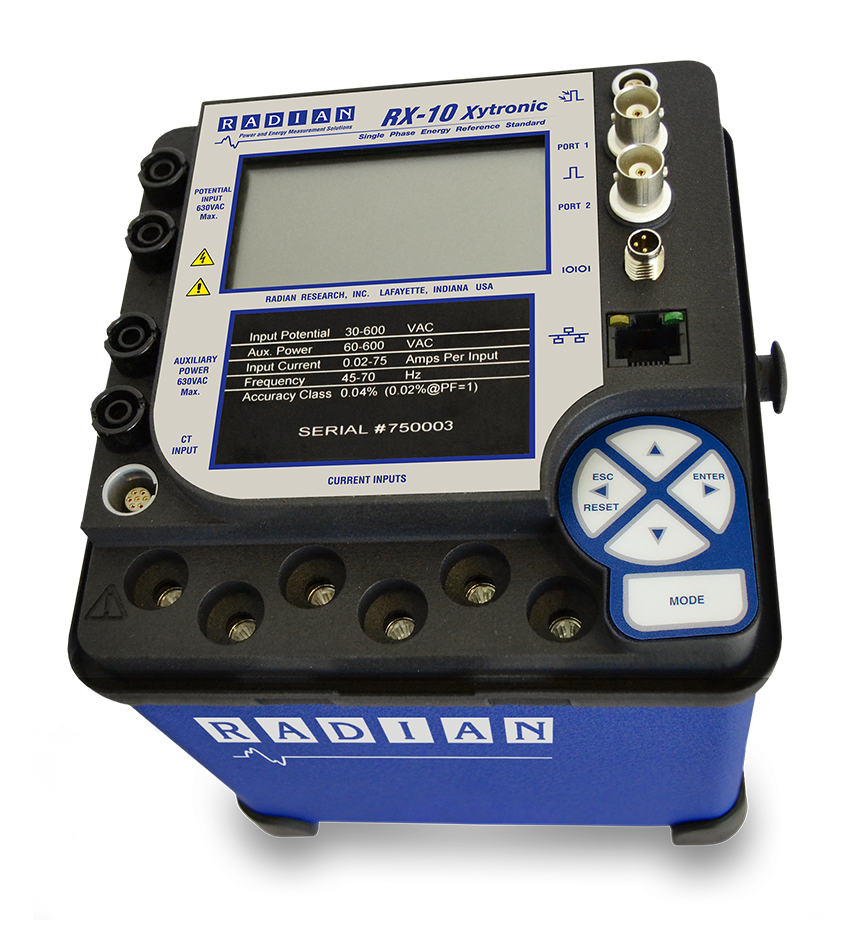
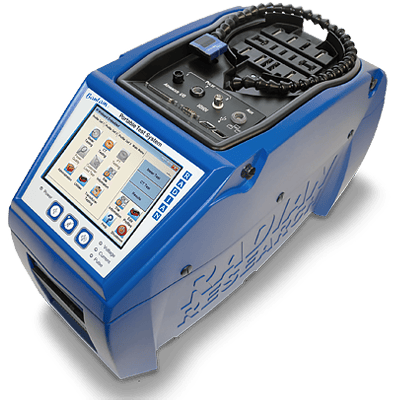
- A single-phase standard has one measuring element: one voltage input and one current input. It measures one circuit at a time. The RADIAN RX-10, RX-11, RX-15 family are single-phase standards.
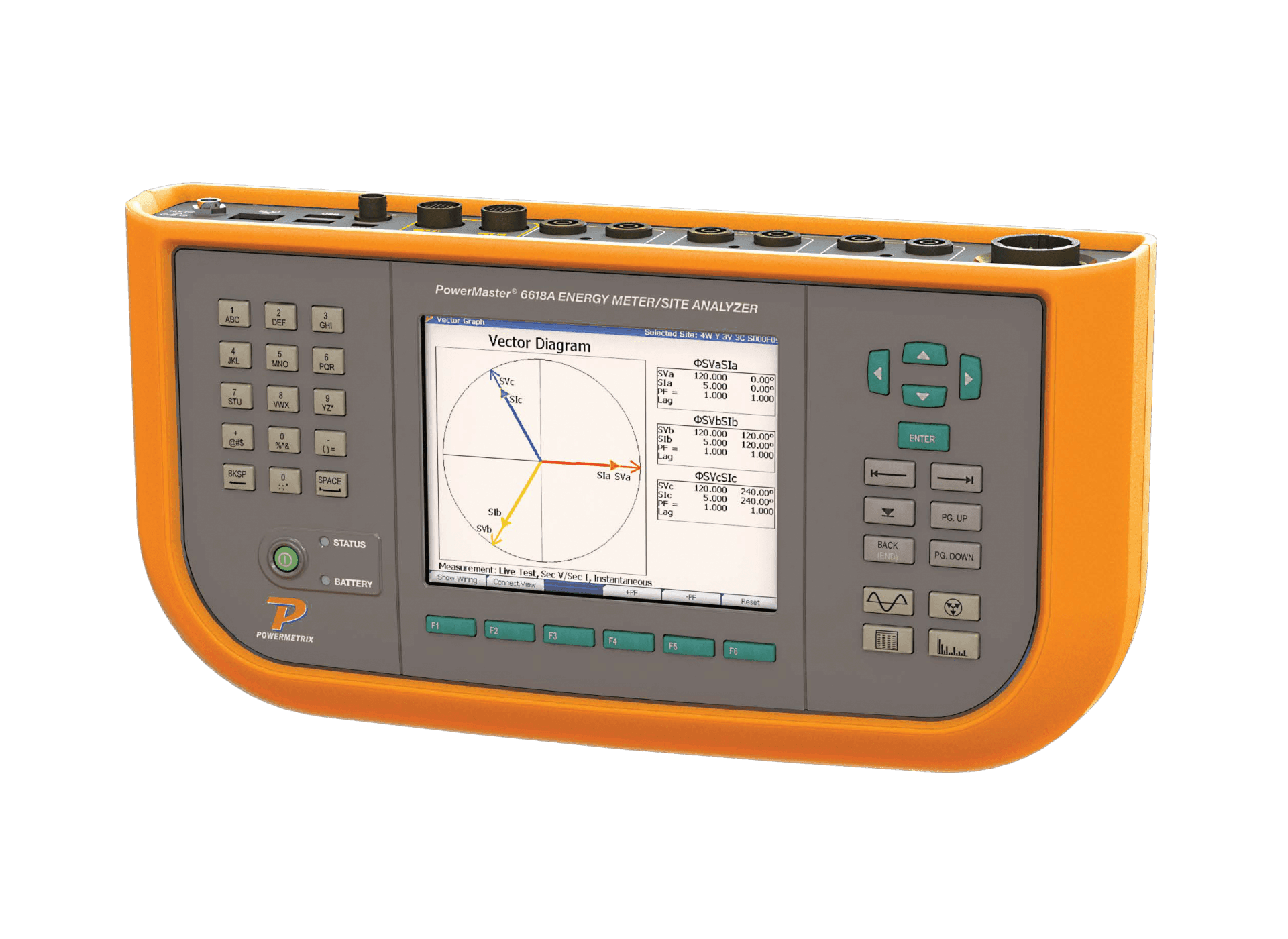
- A three-phase standard has three measuring elements, one for each phase. It measures all three phases at once, including each phase’s voltage, current, and phase angle, and the total. The RADIAN RX-30, RX-31, RX-33 family are three-phase standards, and they can also be set up for single-phase tests.
The meters you test, and how you want to test them, decide which one you need.
Two ways to test a polyphase meter
Most of the decision comes down to how you test polyphase meters.
Series-parallel testing (single-phase standard)
The meter’s voltage coils are connected in parallel to one test voltage, and every current element carries the same test current at the same time, in phase with that voltage. The meter adds its elements together, so the test checks the meter as a whole.
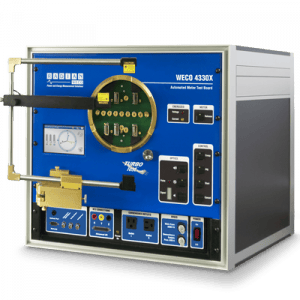
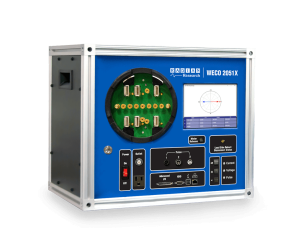
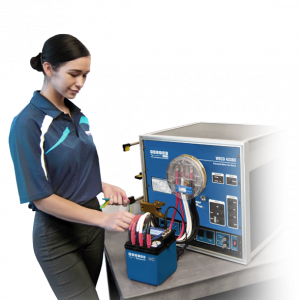
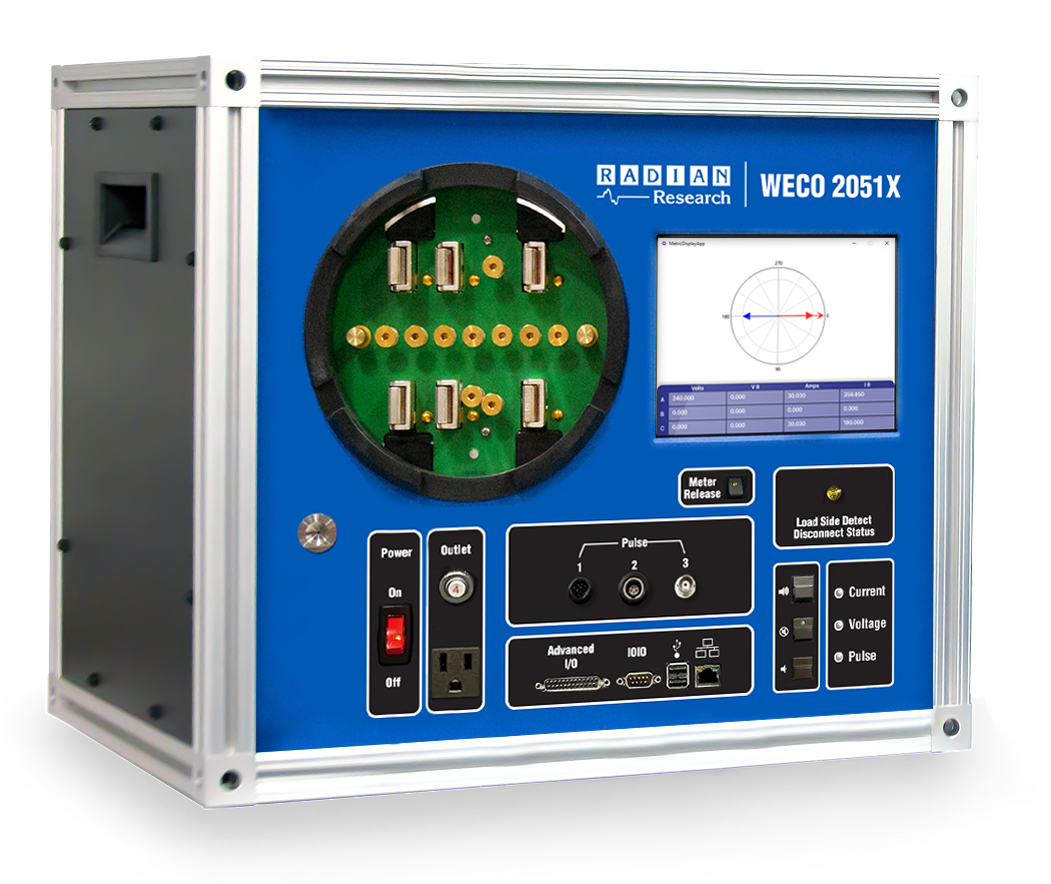
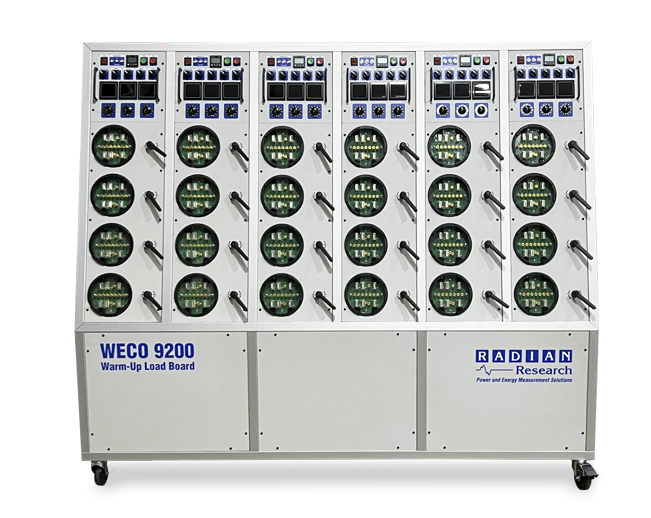
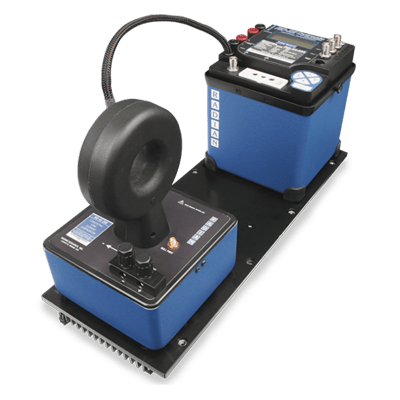
Series-parallel testers include the RADIAN Bantam Plus, the UTEC 430, the WECO 2051X Test Board, and the WECO 8000 Multi-Position Test Board. Each one drives every current element from its own isolated current source:
- One isolated source per element. Each of the meter’s current elements (A, B, and C) gets its own isolated current, all at the same value and phase angle.
- The meter’s current circuits stay separate. Because the sources are isolated, the elements don’t have to be wired together in series, and each current circuit stays electrically separate.
- The single-phase standard sums the currents. The same isolated currents are brought together into the single-phase reference standard, which adds them. The standard measures the combined energy of every element in the test.
- The meter is compared with the total. The meter’s registration is compared with the standard’s summed reading. The test procedure accounts for how many meter elements, and how many standard current inputs, are included in the test.
Series-parallel is an accepted method for accuracy testing a polyphase meter. It needs simpler equipment and fits compact test setups, including portable meter testers. It is not a method for type testing, the full set of tests a meter design must pass before it is approved.
What it can’t show is how the meter behaves with three separate phases: different currents on each phase, phase angles 120° apart, or unbalanced loads.
True three-phase testing (three-phase standard)
Each phase gets its own voltage and current, as it would in service, and the three-phase standard measures every phase at the same time. You can test the meter with balanced or unbalanced loads, check each element’s performance, and confirm the meter adds the phases correctly.
What the two methods look like as vectors
A vector (phasor) diagram shows the difference at a glance. Both sides below are at unity power factor.
- Series-parallel: there is one test voltage, and the three isolated currents are all in phase with it. Added head to tail, they form one larger current. That sum is what the single-phase standard measures.
- True three-phase: the three voltages are 120° apart, and each phase has its own current. A three-phase standard measures each phase separately and adds the results.
The energy formula behind each method
Energy is power over time. For one meter element, energy is voltage times current times the power factor (the cosine of the phase angle θ between them), times time.
Because a series-parallel test uses one voltage and one phase angle for every element, the single-phase standard can measure the whole meter with a single voltage input and the summed current. In true three-phase testing, each phase can have its own voltage, current, and phase angle, so the standard has to measure each phase separately and add the three results.
Either way, the result is compared the same way: percent registration is the energy the meter registered divided by the energy the standard measured, times 100.
Why some utilities are moving to true three-phase
Meter manufacturers are required to type test three-phase meters under true three-phase conditions. Some public utility commissions (PUCs) recommend that utilities test meters in the same way the manufacturer does. Where a commission takes that view, series-parallel accuracy testing may no longer be enough, and the meter shop needs true three-phase testing. Check what your own commission recommends.
It also matters more as meters do more. Modern polyphase meters often record demand, reactive energy, and power quality data, and they are installed on services where the phases rarely carry equal load. For one example of how unbalanced conditions affect billing, try the Blondel vs. Non-Blondel Meter Calculator.
When a single-phase standard is the right fit
- You mainly test single-phase meters, such as residential meters.
- Series-parallel testing meets your test procedure for polyphase meters.
- You want a compact standard for the field, a small shop, or a test cart.
- You need a lab standard to check other standards. The RX-15, at ±0.01%, is built for lab use and checking other reference standards. For the highest accuracy in the lab, the RADIAN RD-22 is a single-phase primary transfer standard.
When a three-phase standard is the right fit
- Your commission recommends testing the way the manufacturer does, which for three-phase meters means true three-phase conditions.
- You test polyphase meters under true three-phase conditions, with separate phases and unbalanced loads.
- You test commercial and industrial meters where per-phase performance matters.
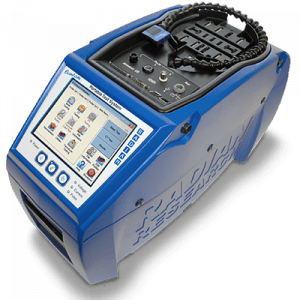
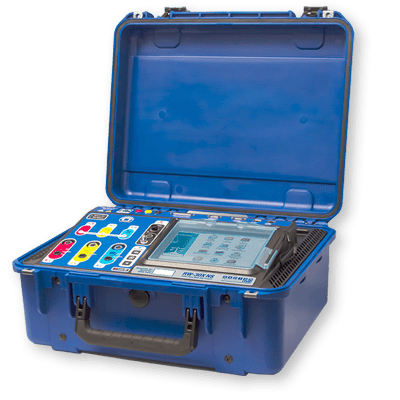
- You test three-phase metering sites in the field. A site analyzer such as the RADIAN RW-30X / RW-31X tests the meter, the wiring, and the instrument transformers at the metering site.
- You want one standard for both. A three-phase standard can also be set up for single-phase testing.
Accuracy is a separate decision
Choosing single-phase or three-phase doesn’t lock you into an accuracy level. Both RADIAN families come in the same three classes:
| Energy accuracy at 0.5 power factor | Single-phase | Three-phase | Typical use |
|---|---|---|---|
| ±0.04% | RX-10 | RX-30 | Everyday meter testing in the field and the meter shop |
| ±0.02% | RX-11 | RX-31 | Testing that needs a tighter uncertainty |
| ±0.01% | RX-15 | RX-33 | Calibration labs and checking other reference standards |
Accuracy is stated in percent of reading. Pick the class from the accuracy of the meters you test and the margin your procedure requires. For how to work that out, see How Accurate Does Meter Test Equipment Need to Be?
Where each type shows up in RADIAN test equipment
Many utilities meet these standards inside a test system rather than on their own:
| Equipment | Standard inside | How it tests polyphase meters |
|---|---|---|
| WECO 2051X Test Board | RADIAN RX-10 (single-phase) | Series-parallel (isolated current sources) |
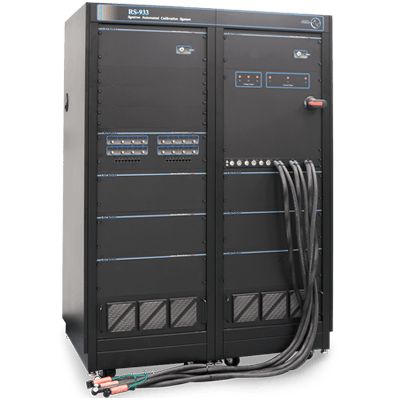
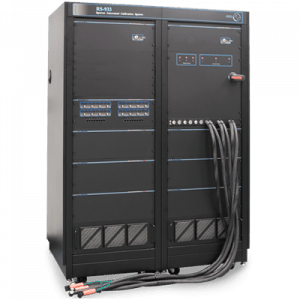
| WECO 4050X Test Board | RADIAN RX-30, RX-31, or RX-33 (three-phase) | True three-phase |
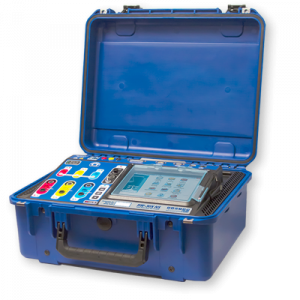
| RADIAN Bantam Plus portable meter tester | RADIAN RD-20 or RD-21 (single-phase) | Series-parallel (isolated current sources), in the field or the shop |
| RADIAN RW-30X / RW-31X | RADIAN RX-30 or RX-31 (three-phase) | Testing the meter, wiring, and instrument transformers at a metering site |
The same idea applies to Test Boards: the WECO 2051X and the WECO 8000 are built for series-parallel testing, and the WECO 4050X for true three-phase and more advanced testing.
A quick way to decide
Work backward from the test you need to run:
- What meters do you test? Single-phase only, or polyphase too?
- How does your procedure, or your commission, say to test polyphase meters? Series-parallel accuracy testing, or true three-phase, the way the manufacturer tests them?
- Where will the standard work? Field, meter shop, or lab? (The RX-33 is rated for 0 to 40 °C, for lab conditions. The RX-30 and RX-31 are rated for -20 to 65 °C.)
- What accuracy class do you need? Match it to the meters you test.
- Will it stand alone or sit inside a Test Board or field system?
Whichever you choose, the standard needs regular calibration back to NIST. See How Often Should Reference Standards Be Recalibrated?
Frequently Asked Questions
What is the difference between a single-phase and a three-phase reference standard?
A single-phase standard measures one voltage and one current. A three-phase standard measures all three phases at the same time, including each phase’s voltage, current, and phase angle.
Can I test a polyphase meter with a single-phase standard?
Yes, by series-parallel testing. The meter’s voltage coils are connected in parallel, and every current element carries the same test current. In series-parallel testers such as the Bantam Plus, UTEC 430, WECO 2051X, and WECO 8000, each element is driven by its own isolated current source, and the single-phase standard sums those currents to measure the meter as a whole. It is an accepted method for accuracy testing, but not for type testing, and it doesn’t show how the meter behaves with separate or unbalanced phases.
Can a three-phase standard test single-phase meters?
Yes. The RADIAN RX-30, RX-31, and RX-33 can be set up for single-phase as well as three-phase testing.
Is a three-phase standard more accurate than a single-phase one?
Not by itself. Accuracy class is a separate choice. RADIAN offers both types in ±0.04%, ±0.02%, and ±0.01% classes.
Which standard is used in a lab to check other standards?
Labs typically use a ±0.01% class standard such as the RX-15 or RX-33. For the highest accuracy, the RADIAN RD-22 is a single-phase primary transfer standard.
Why are some utilities moving to true three-phase testing?
Manufacturers must type test three-phase meters under true three-phase conditions, and some public utility commissions recommend that utilities test meters the same way the manufacturer does. Where that applies, the meter shop needs a three-phase standard.
What is true three-phase meter testing?
Testing a polyphase meter with a separate voltage and current on each phase, as in service, while a three-phase standard measures every phase at once. It allows balanced and unbalanced load tests and per-element checks.