






Blondel vs Non-Blondel Meters
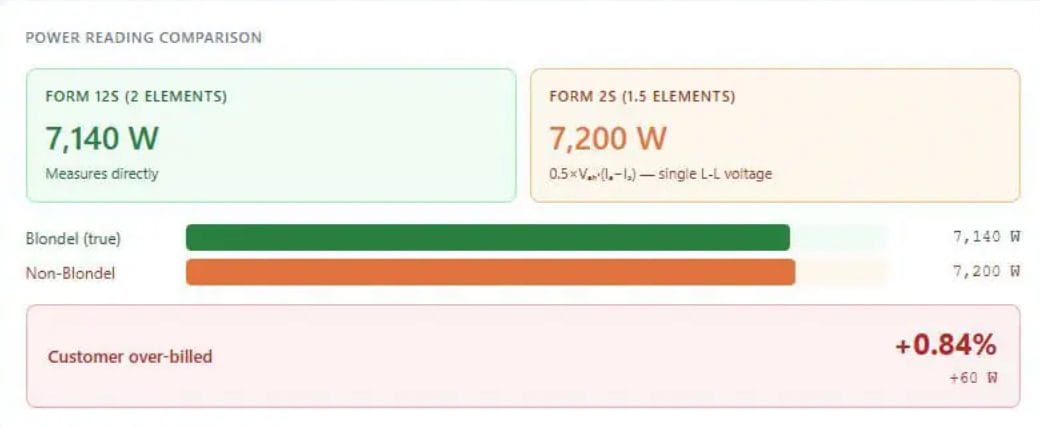
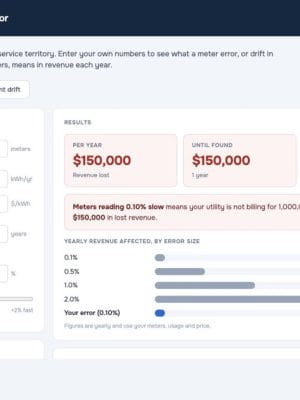
Not every electricity meter measures every wire. This free calculator shows how far a non-Blondel meter can drift from the true reading when a service’s voltages and currents are unbalanced, and what that error adds up to on a customer’s monthly bill.
Prefer a full screen? Open the calculator in its own window.
What Blondel’s Theorem Says
In 1893, French engineer André Blondel showed that the true power on a service with N wires can be measured with N − 1 measuring elements, using one wire as the common reference. A meter built this way is called Blondel-compliant. It measures correctly however unbalanced the voltages, currents or power factor become.
A non-Blondel meter uses fewer elements and assumes the voltages are balanced. That makes the meter simpler, but it reads accurately only while that assumption holds.
| Service | Blondel meter | Non-Blondel meter |
|---|---|---|
| Single-phase, 3-wire | Form 12S (2 elements) | Form 2S |
| Three-phase, 4-wire wye | Form 9S / 16S (3 elements) | Form 45S / 14S |
| Three-phase, 4-wire delta | Form 9S (3 elements) | Form 8S |
When a Non-Blondel Meter Reads Wrong
The error needs two things at the same time: unbalanced voltages and unbalanced currents. If either one is balanced, the error is zero. On a real service both can happen together, for example when a transformer tap problem lowers the voltage on one leg while a heavy load such as a dryer or water heater sits on the other.
The error can go either way. Depending on which leg has the lower voltage and which carries more current, the customer can be over-billed or under-billed. Small percentages add up over a month, and over thousands of meters.
How to Use the Calculator
- Choose the service type: single-phase 3-wire, three-phase 4-wire wye or three-phase 4-wire delta.
- Enter the voltages, currents and power factor, or start from one of the load presets.
- Compare the Blondel and non-Blondel readings and the percentage error.
- Enter hours per day, days per month and your energy rate to see the monthly billing error.
Finding Unbalanced Sites in the Field
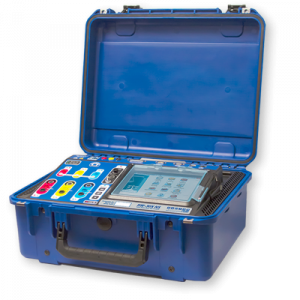
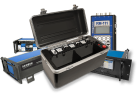
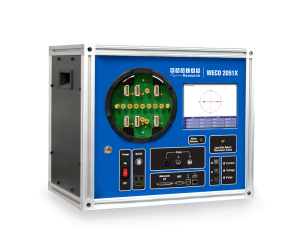
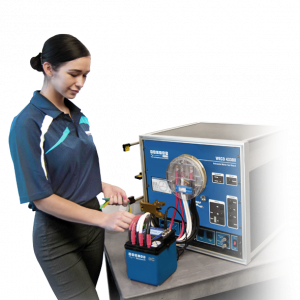
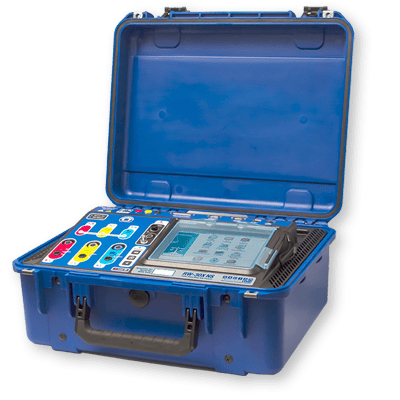
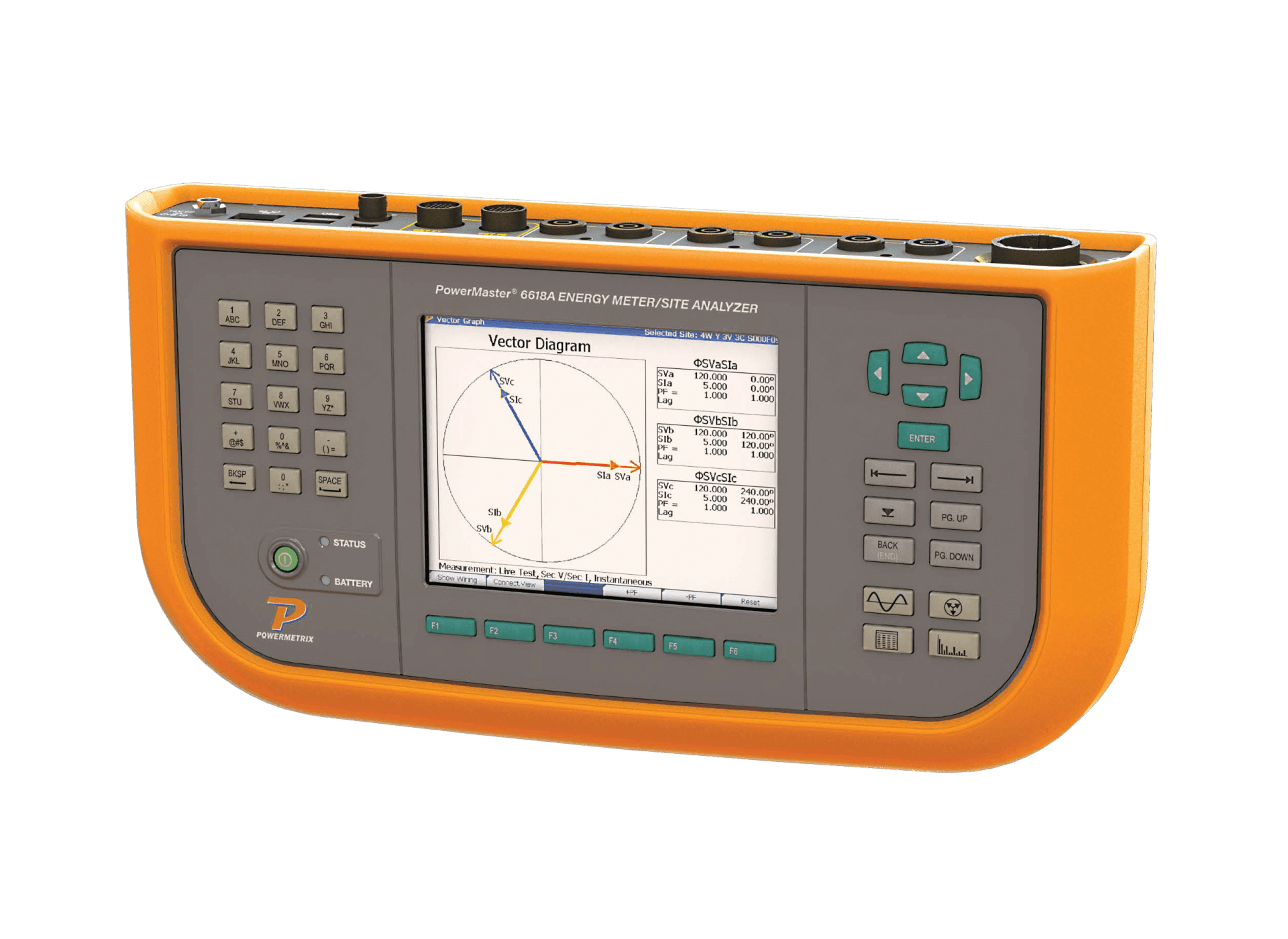
Unbalanced conditions are hard to spot by looking at a meter. A meter site analyzer such as the RW-30X measures the voltage, current and phase angle on each phase at the installed meter, so you can see whether site conditions could cause a metering error. See our field test equipment and the Revenue Protection white paper for more on field-based site analysis.