








What Is a Watthour Reference Standard, and How Does It Work?
The short answer
A watthour reference standard is a highly accurate instrument for measuring electrical energy. Other equipment is checked against it. Think of it as the ruler you use to check a meter. The standard and the meter measure the same energy at the same time. The difference between their readings is the meter’s error.
Reference standards are how a utility proves its meters bill correctly, and how a meter shop proves its own test equipment is accurate.
What a reference standard does
A revenue meter’s job is to measure energy and bill for it. A reference standard has the same basic job, but does it with much higher accuracy and a documented record of where that accuracy comes from.
In a meter test, the reference standard and the meter are connected to the same voltage and current. Both measure the energy that flows. If the meter registers 10.000 watthours while the standard measures 10.020, the meter is reading slightly slow. Because the standard is much more accurate than the meter, any error the test finds belongs to the meter, not to the standard.
Where it sits in the traceability chain
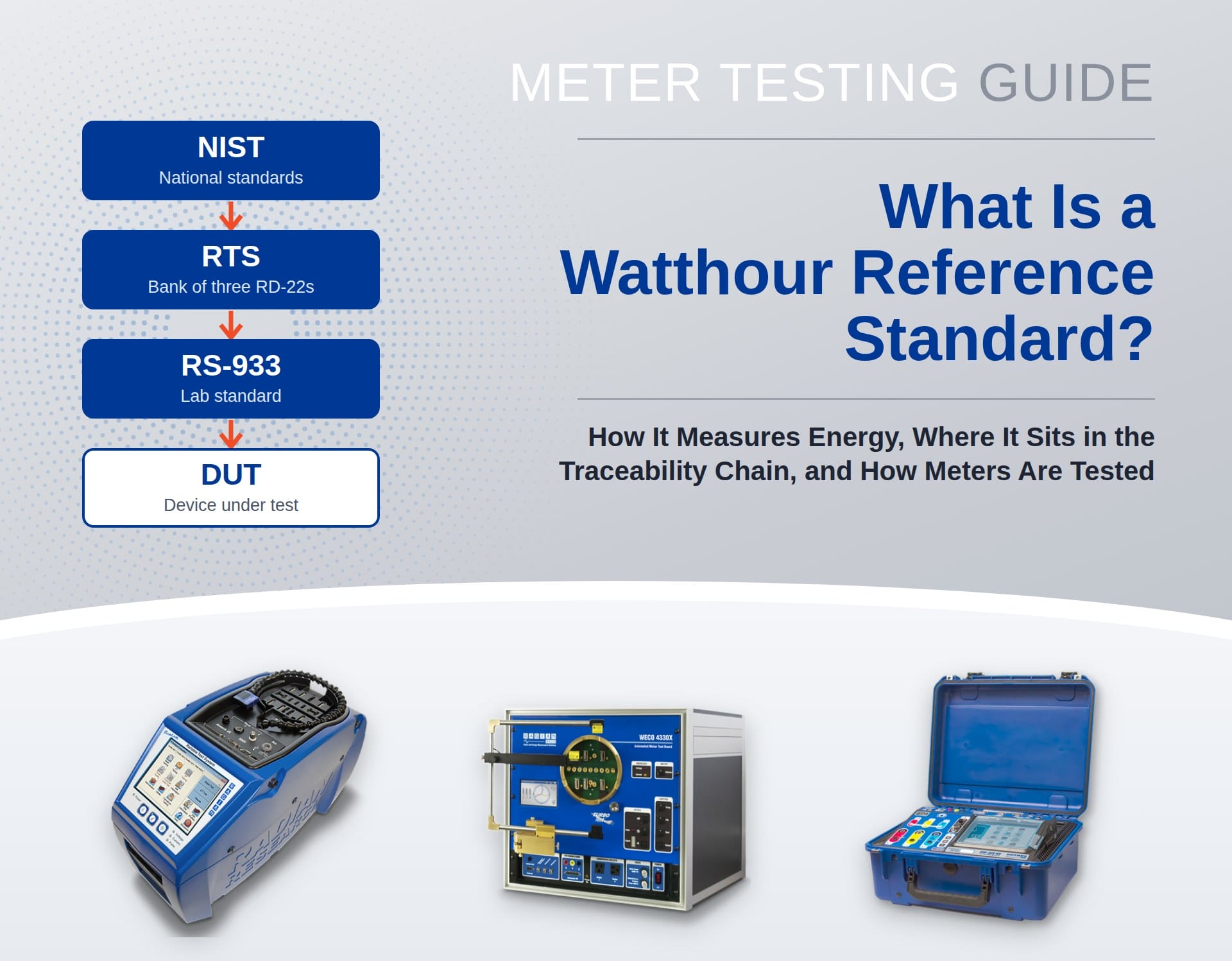
A reference standard is only trustworthy if its own accuracy can be traced back to the national standards. At Radian Research, the chain looks like this:
- NIST. The National Institute of Standards and Technology maintains the national measurement standards for the United States.
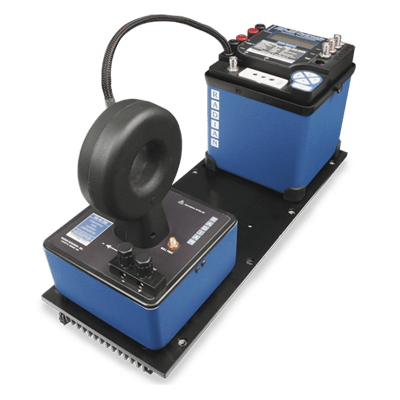
- RADIAN Transfer Standards (RTS). The RTS is a bank of three customized, high-performance RD-22s, engineered to keep their own errors as small as possible. They are calibrated against NIST and used together as one reference, which reduces uncertainty further. The RTS carries that accuracy into RADIAN’s ISO/IEC 17025-accredited calibration lab. Our white paper, Strength in Numbers, explains how the three-standard bank works.
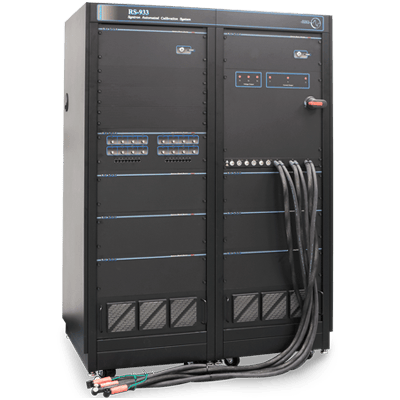
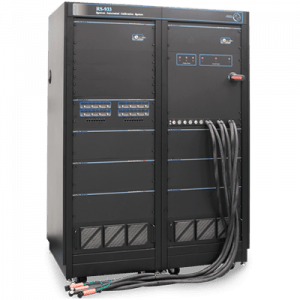
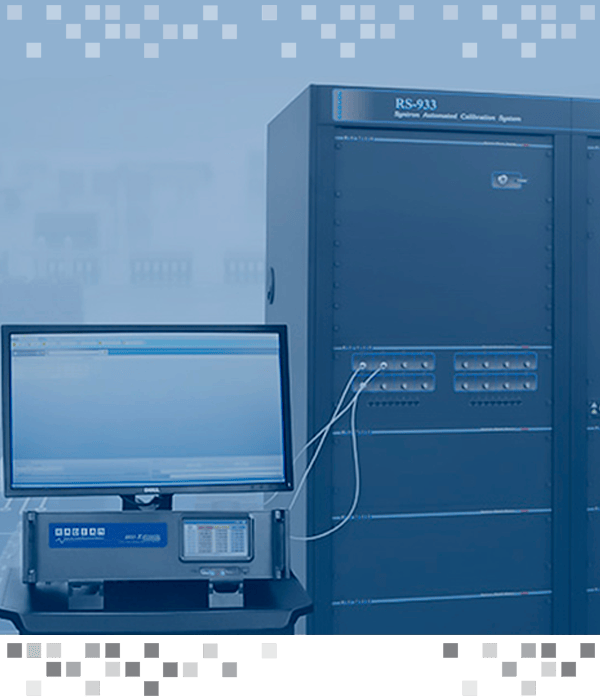
- RADIAN RS-933 lab standard. The RS-933 is an automated calibration system, calibrated against the RTS. It generates precise voltage and current, then compares the device under test against its own measurement. RADIAN’s ISO/IEC 17025 calibrations are performed on the RS-933. Its energy uncertainty is ±0.0009% at unity power factor and ±0.0016% at 60°, as listed on RADIAN’s accreditation scope.
- Device under test (DUT). The DUT is the piece of equipment being checked against the standard. In a RADIAN calibration, the DUT might be a reference standard, a Test Board, or a field tester: anything used to test meters, or to calibrate the equipment that tests them.
Once calibrated, the DUT goes back into service. It either tests revenue meters directly or checks the equipment that does. Each calibration produces a certificate showing the result and its uncertainty. That unbroken, documented chain is what auditors and regulators mean by traceability. You can see what one looks like in our sample calibration reports.
How a reference standard measures energy
Energy is power added up over time. Power, in turn, is voltage multiplied by current, adjusted for the timing between them (the phase angle). A reference standard does this in three stages.
- Scale the inputs. Input transformers safely bring the line voltage and current down to small, precise signals. RADIAN uses electronically compensated transformers, which hold their accuracy across the whole operating range. The inputs are fully autoranging, so a lead connected to the wrong tap can’t damage the standard.
- Measure and multiply. A converter turns those signals into numbers, and the standard multiplies voltage by current many times a second to get power.
- Add it up. The standard adds power over time to get energy in watthours. It shows the result on its display and sends it out as a stream of pulses, where each pulse stands for a fixed amount of energy.
Power and energy are not the same thing
Electricity meters bill for energy, not power, and the difference matters when you choose test equipment.
- Power is the rate at which electricity is used at a given moment, measured in watts (W) or kilowatts (kW).
- Energy is power added up over time, measured in watthours (Wh) or kilowatthours (kWh). A 1,000-watt load running for one hour uses 1 kWh.
A simple way to picture it: power is a car’s speedometer, and energy is its odometer. The speedometer tells you how fast you’re going right now. The odometer tells you how far you’ve actually gone, and that’s what the bill is based on.
That’s why a revenue meter has to be tested against an energy standard. A power meter, or a power analyzer, shows watts at a moment in time. Multiplying a power reading by an estimated test time doesn’t match what the meter does. The load can change between readings, and any error in the timing becomes an error in the result.
A watthour reference standard adds up energy continuously, over exactly the same interval as the meter’s pulses. It measures the same quantity the meter bills for, in the same way the meter measures it. The test result then shows the meter’s own error, not the limits of the test method.
How a meter is tested against a standard
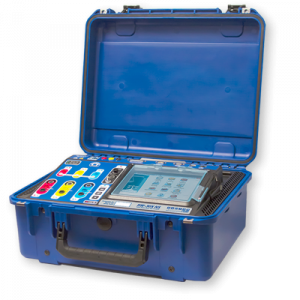
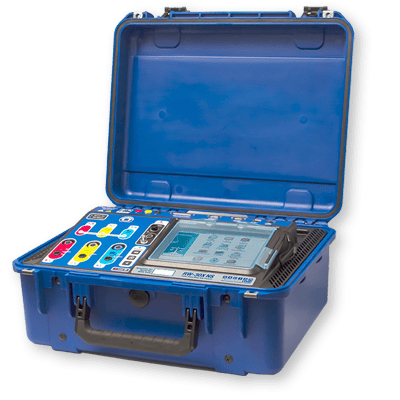
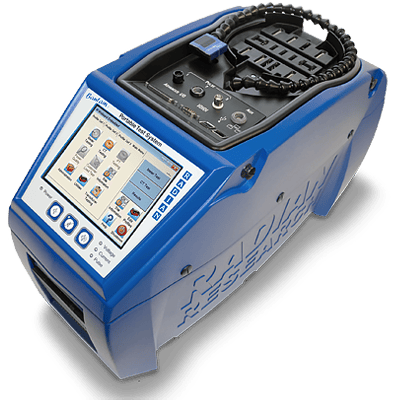
Take the RADIAN Bantam Plus portable test system as an example. It has a RADIAN reference standard built in. That is an RD-20 in the RB-20 model (±0.04%) or an RD-21 in the RB-21 model (±0.02%). When the Bantam Plus is manufactured, RADIAN tests that internal standard against the RS-933, the lab standard in the chain above. In that test, the internal standard is the device under test. In service, the Bantam Plus is calibrated with a standards compare: its internal standard is checked against an external reference standard, so it doesn’t need to be taken apart. When it tests a meter, the internal standard is the reference, and the meter is the device under test.
- Connect. The meter plugs into the Bantam Plus socket. The Bantam Plus supplies the voltage and current, so the meter and the built-in standard see exactly the same energy.
- Count the meter’s pulses. The meter puts out a pulse (an LED flash, or a revolution on older meters) for each fixed amount of energy. That amount is the meter’s Kh value, in watthours per pulse. An optical sensor on the Bantam Plus counts the pulses.
- Compare over the same interval. For a set number of meter pulses, the built-in standard measures how much energy actually flowed.
- Calculate the result. Percent registration is the meter’s energy divided by the standard’s energy, times 100. Percent error is the registration minus 100. The Bantam Plus does this math and shows the result.
Worked example:
| Value | |
|---|---|
| Meter Kh | 1.0 Wh per pulse |
| Meter pulses counted | 10 |
| Energy the meter registered | 10.000 Wh |
| Energy the Bantam Plus measured | 10.020 Wh |
| Percent registration | 10.000 ÷ 10.020 × 100 = 99.80% |
| Percent error | 99.80% − 100% = −0.20% (the meter reads slightly slow) |
Each step in this example leans on the one above it. The meter’s result is trustworthy because the Bantam Plus’s internal standard was tested against the RS-933 and is checked against an external standard in service. In turn, the RS-933 is calibrated against the RTS, and the RTS traces to NIST.
The Bantam Plus, Test Boards, and field testers all run this comparison automatically, at several test points such as full load, light load, and lagging power factor.
The main types of reference standards
| Type | Where it’s used | RADIAN examples |
|---|---|---|
| Transfer standard | Carries accuracy from NIST into a calibration lab | RADIAN RD-22 (in RADIAN’s lab, three customized RD-22s work as the RADIAN Transfer Standards bank) |
| Lab standard (automated calibration system) | Calibrates other standards and test equipment under ISO/IEC 17025 | RADIAN RS-933 (energy uncertainty ±0.0009% at unity power factor) |
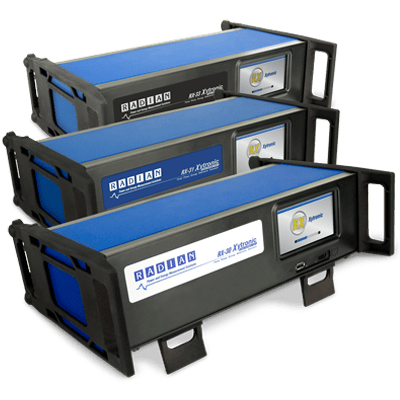
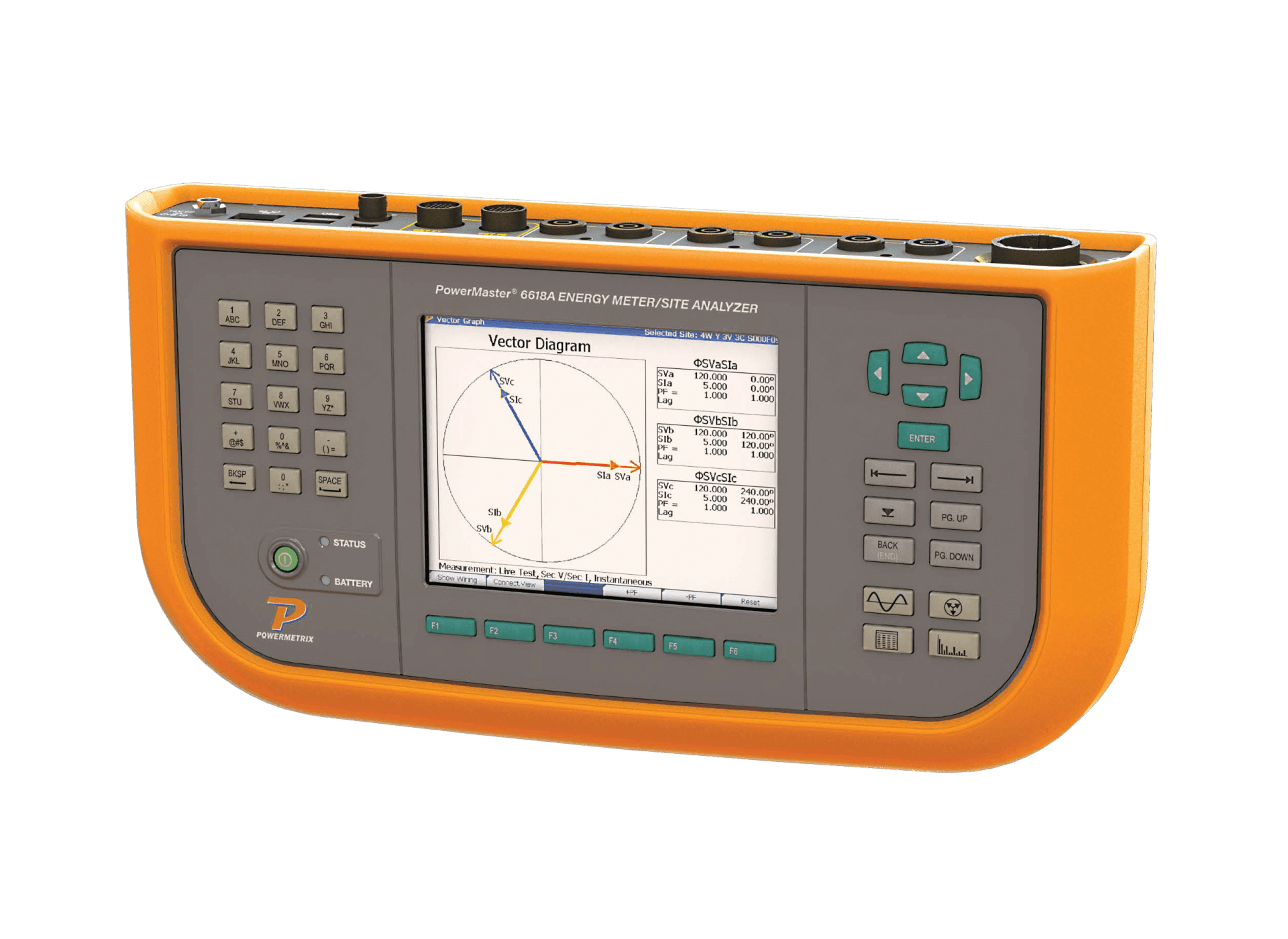
| Portable three-phase reference standard | Meter shops, labs, and field sites; tests three-phase meters and calibrates test equipment | RADIAN RX-30, RX-31, RX-33 (±0.04%, ±0.02%, ±0.01%) |
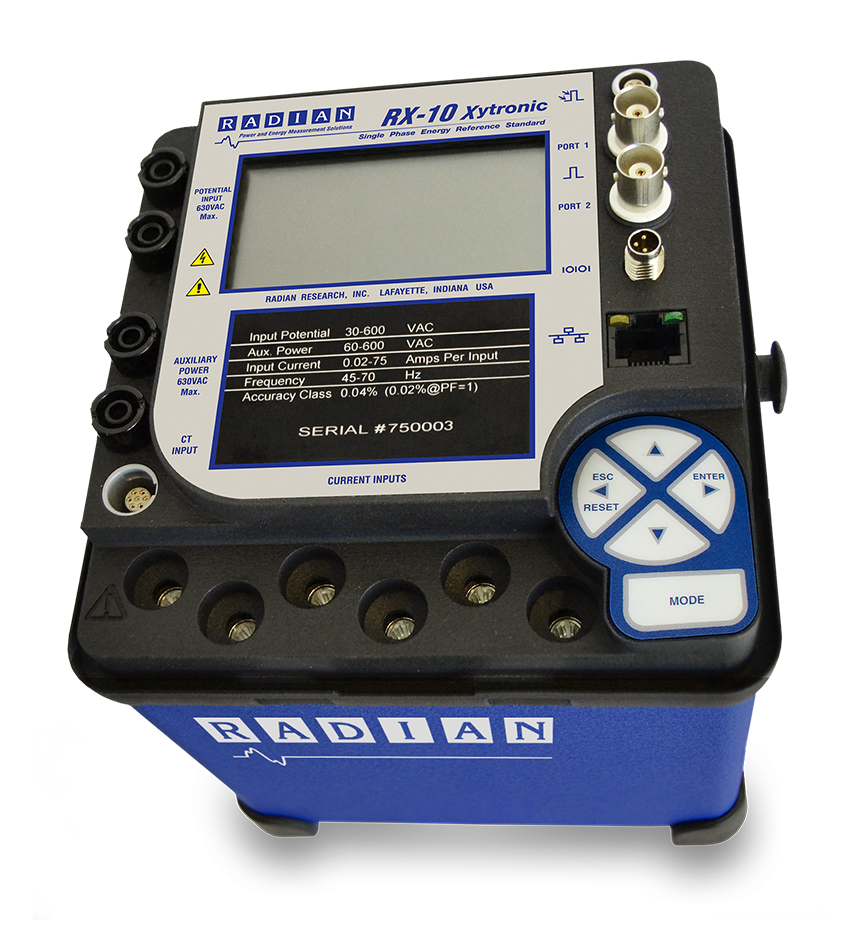
| Portable single-phase reference standard | Single-phase meter testing and calibration | RADIAN RX-10, RX-11, RX-15 (±0.04%, ±0.02%, ±0.01%) |
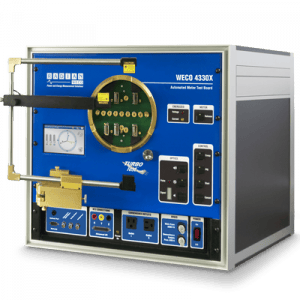
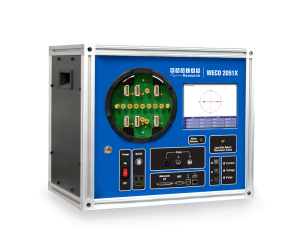
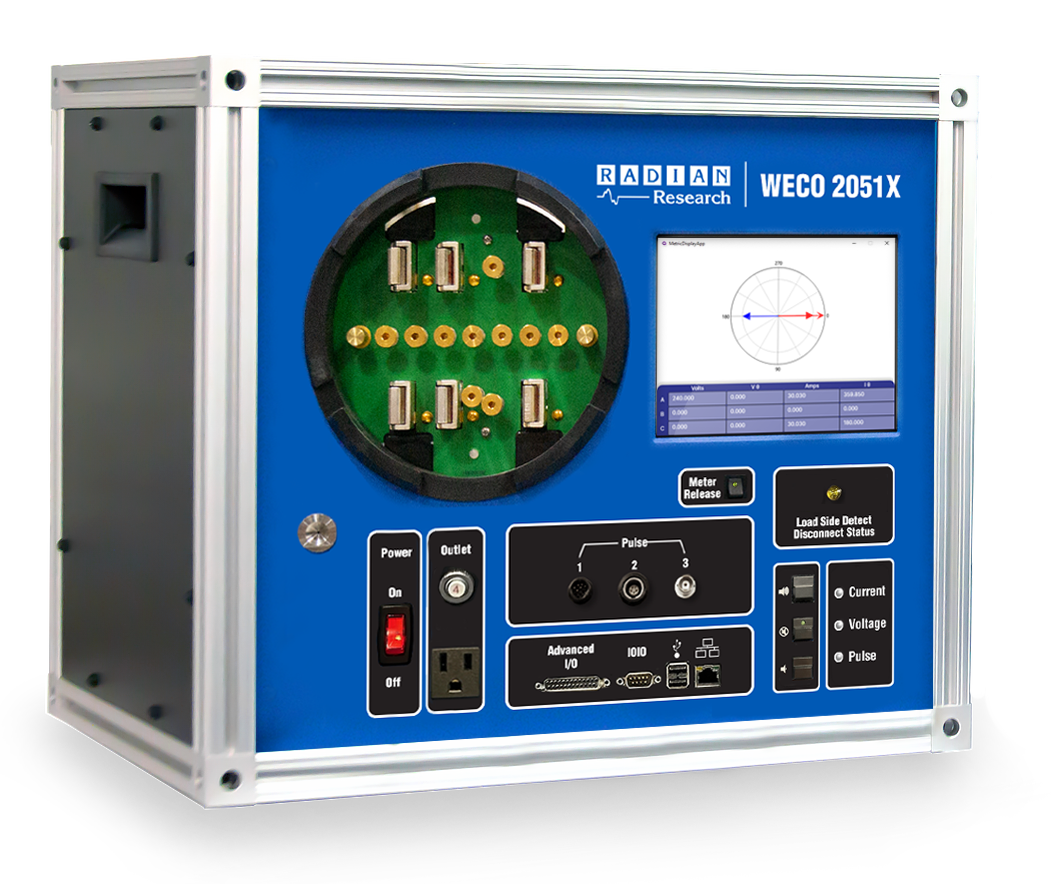
| Standard built into test equipment | Test Boards and portable test systems, which hold the meter and run the test | RADIAN Bantam Plus (RD-20 or RD-21 inside), WECO 4050X Test Board (removable RADIAN RX-30, RX-31, or RX-33), RADIAN RW-30X / RW-31X (RX-30 or RX-31 inside) |
Single-phase or three-phase? A three-phase standard measures each phase separately and adds them together, so it can test polyphase meters and three-phase test equipment. A single-phase standard covers single-phase meters and equipment.
Portable means the standard is built to be carried to a test site or between benches. Lab systems such as the RS-933 are installed in place.
How accurate does it need to be?
The widely used rule is that a reference standard should be at least four times more accurate than whatever it tests, so its own error barely affects the result. That is why each step up the chain is more accurate than the one below it. To match equipment accuracy to meter accuracy classes, see our white paper, How Accurate Does Meter Test Equipment Need to Be?
Keeping a reference standard accurate
A reference standard is only as good as its last calibration:
- Recalibrate on schedule. RADIAN recommends calibrating its reference standards once a year. Treat that as the longest interval, not a fixed rule. Some regulators require more frequent checks, and some utilities test their standards as often as every three months. Follow whichever interval is shorter: ours or your regulator’s.
- Use an accredited lab. ISO/IEC 17025 accreditation means the lab’s calibration process and uncertainty have been independently assessed. RADIAN Calibration Services calibrates RADIAN standards in our accredited lab. Typical turnaround is 3 to 5 days.
- Know how your built-in standards get checked. A standard built into test equipment still needs calibrating. Some can come out: the RX-30, RX-31, or RX-33 in a WECO 4050X Test Board can be removed and calibrated on its own. Others stay put: in the Bantam Plus and the RW-30X / RW-31X, the standard isn’t easily removed. Any of these can be checked in place with a standards compare against an external reference standard. The RW-30X / RW-31X can also be tested directly on an RS-933.
- Keep the records. Each calibration certificate is a link in your traceability chain. Auditors will ask to see it.
Frequently Asked Questions
What is a watthour reference standard?
It is a highly accurate energy-measuring instrument that other equipment is checked against. It measures the same energy as the meter or device under test, and the difference between the two readings is that device’s error.
What does “device under test” (DUT) mean?
The DUT is the equipment being checked against the standard. In a RADIAN calibration, the DUT might be a reference standard, a Test Board, or a field tester: anything used to test meters, or to calibrate the equipment that tests them.
Is a reference standard the same as a Test Board?
No. A reference standard measures energy. A Test Board holds the meter, supplies voltage and current, and runs the test. Most Test Boards have a reference standard built in to make the measurement.
What is the difference between power and energy?
Power is the rate of electricity use at a moment, in watts. Energy is power added up over time, in watthours or kilowatthours. Electricity meters bill for energy, so they are tested against a watthour (energy) reference standard.
Can a power meter be used to test an energy meter?
It isn’t the right tool. A power meter shows watts at a moment in time, while a revenue meter adds up energy over time. A watthour reference standard measures energy over exactly the same interval as the meter’s pulses, so the result reflects the meter’s own accuracy.
What is the difference between percent registration and percent error?
Percent registration is the meter’s energy divided by the standard’s energy, times 100. A perfect meter reads 100%. Percent error is the registration minus 100, so a meter at 99.80% registration has an error of −0.20%.
How often should a watthour reference standard be recalibrated?
RADIAN recommends once a year. Your regulator may require more frequent checks. Some utilities test their standards every three months, so follow whichever interval is shorter.