






Why Train on a Metering Bench?
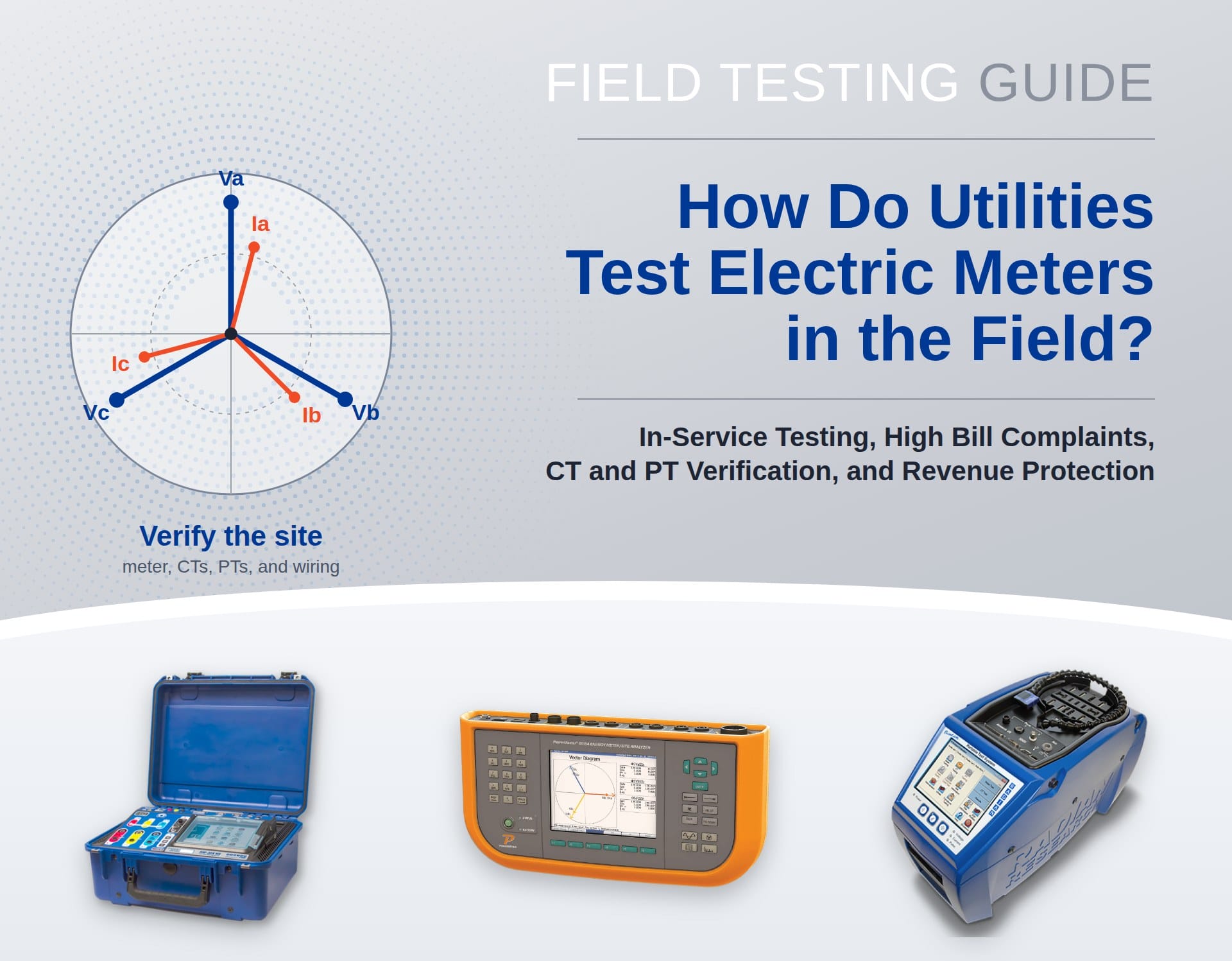
Because the costly errors are the quiet ones. A missing phase current, a reversed CT, or a reversed PT can leave a meter registering 100% on a meter test while the site bills for less energy than it uses. A technician who only runs a meter test will walk away from it. Finding these problems takes vector diagrams, waveforms, and CT and PT ratio tests, and that takes practice.
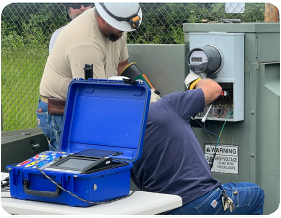
Because the field is no place to learn. You can’t stage a reversed CT on a live customer service, and real faults don’t wait for a trainee to be on site. The 8803A brings those faults into the classroom, energized and repeatable, with safety built into every step.
Because experience has to be passed on. When seasoned technicians retire, what they know about bad sites goes with them. A bench gives every new technician the same scenarios and a consistent standard, so they reach the field ready sooner.
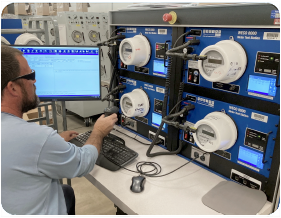
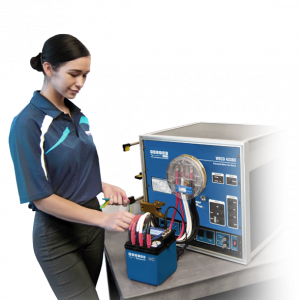
Real metering on one bench. Four self-contained sockets (1S, 2S, 12S, and 16S, up to 300 V phase-to-neutral and 30 A) and a 9S transformer-rated socket wired through three 200:5 window-type CTs and three 2:1 PTs. A built-in three-phase source supplies 30 to 480 V and 100 mA to 30 A per phase, with phase angles adjustable in 0.1° steps.
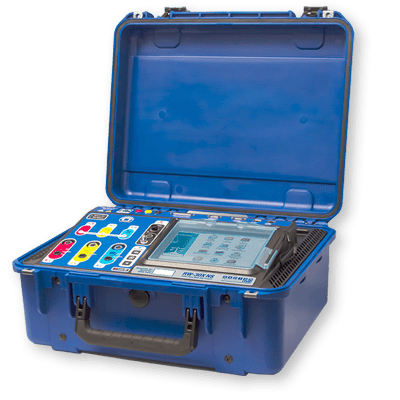
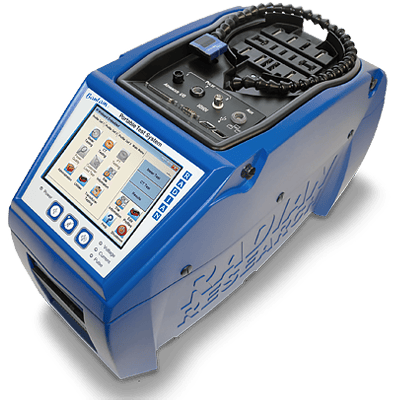
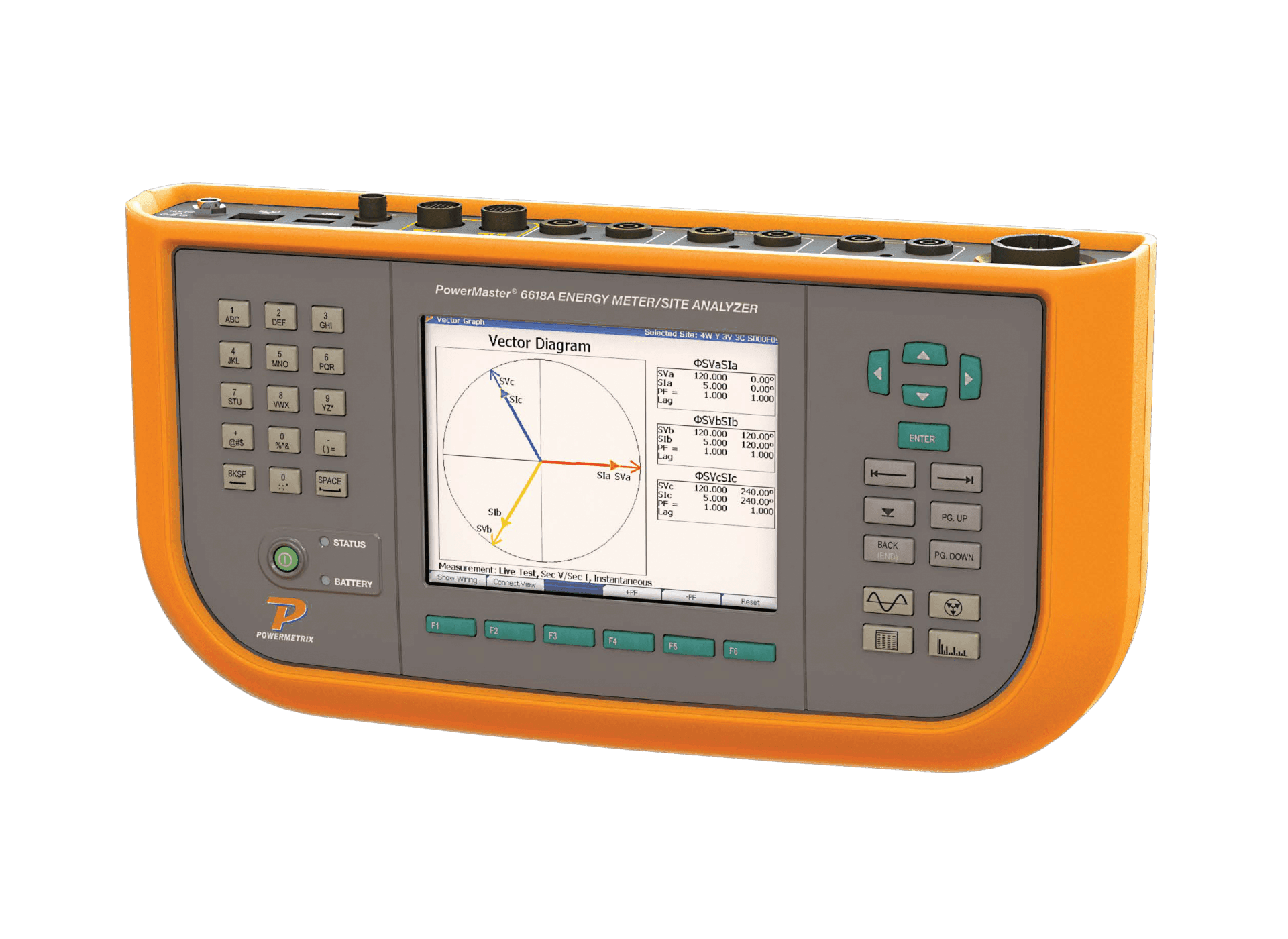
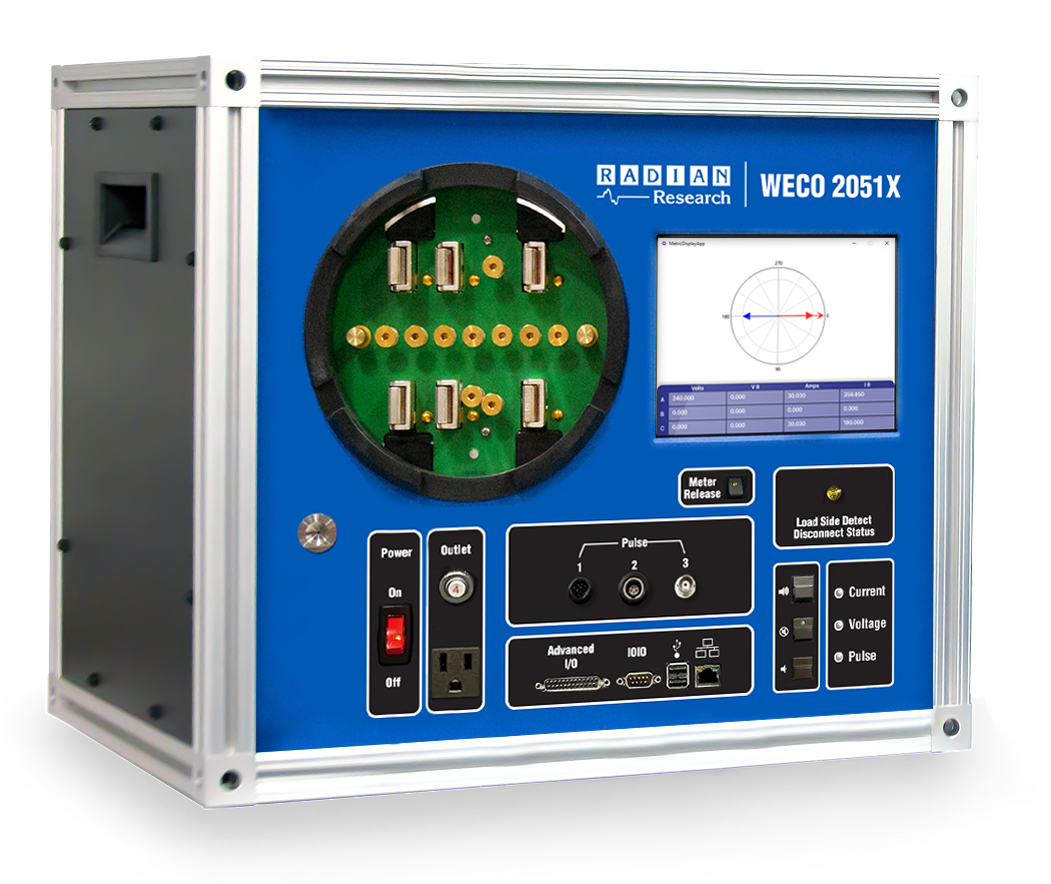
Real test methods. Technicians test meters under customer load (passive) or apply an artificial load (active) from RADIAN test equipment. Each CT has an open window for flexible, clamp-on, or Amp/Volt LiteWire probes, so trainees run CT ratio and PT tests with a Powermetrix 3302, Powermetrix 6618A, or RADIAN RW-30X/31X.
Easy to place. The bench runs on one standard 120 V, 15 A outlet, rolls on locking casters, and has lockable drawers and a shelf for analyzers and probes. It is a budget-friendly alternative to the Powermetrix 8833.

Features
- Self-contained and transformer-rated training on one bench: 1S, 2S, 12S, and 16S sockets plus a 9S socket with three 200:5 CTs and three 2:1 PTs
- 30+ predefined field errors, created by the bench with no wiring changes, and instructor overrides for amplitude and phase angle
- Built-in three-phase source: 30 to 480 V and 100 mA to 30 A per phase, 0.1° phase steps, 60 Hz
- Passive (customer load) or active (artificial load) meter testing with RADIAN test equipment
- CT and PT testing with open CT windows for flexible, clamp-on, and Amp/Volt LiteWire probes
- Windows-based touchscreen on an articulating arm, with administrator, trainee, and technician logins and your own header and logo
- Safety by design: resettable 5 mA GFI on each energized point, active-bench beacon, energized lights on each meter, CT, and PT, PPE check before every test, and E-Stops on the bench and screen

Running a Training Scenario, Step by Step
- Log in on the bench touchscreen as an administrator, trainee, or technician.
- Select the meter socket you want to train on: 1S, 2S, 12S, 16S, or 9S.
- Choose a scenario, from a normal installation to a reversed CT or a missing phase.
- Confirm that PPE is in place, then start the test. The beacon and energized lights come on.
- Test the site with a Powermetrix 3302, Powermetrix 6618A, or RADIAN RW-30X/31X: check the vector diagram, waveforms, and values, then run a meter test and CT or PT ratio test.
- Use Manual Drive to change voltage and current amplitude or phase angle on one phase or all phases, then press Stop when the exercise is complete.
Which Training Bench Fits Your Program?
Powermetrix offers three metering training benches. The 8803A covers both self-contained and transformer-rated metering on one bench. The Powermetrix 8813 focuses on self-contained meters, and the Powermetrix 8833 focuses on transformer-rated meters with the widest range of field errors.
For a classroom with several benches, the Powermetrix 8843 Training Administrator Station controls up to four 8813 and 8833 benches from one tablet and records each trainee’s results.
| 8803A | 8813 | 8833 | |
|---|---|---|---|
| Metering | Self-contained and transformer-rated |
Self-contained | Transformer-rated |
| Meter forms | 1S, 2S, 12S, 16S, 9S |
1S, 2S, 12S, 16S | 3S, 4S, 5S/45S, 6S/36S, 9S/8S |
| Field errors | 30+ | 28+ | 130+ |
| CTs and PTs | 200:5 CTs, 2:1 PTs |
None | 200:5 CTs, 2:1 PTs (600:5 and 2.5:1 optional) |
| Instructor tablet control |
No, controlled at the bench |
Yes, up to 4 benches |
Yes, up to 4 benches |
| Best for | One bench for both meter types |
Self-contained meter training |
Advanced CT/PT troubleshooting |
Field Errors Your Trainees Will Practice
Each service starts with a normal scenario, so trainees learn what a correct site looks like before they look for a fault. The bench then creates the error, and the trainee works it the way they would on a service call.
Look at the middle column. Many of these errors pass a meter registration test, or give no test at all, while the site bills wrong. Only a technician who checks the vector diagram and runs CT and PT ratio tests will find them. That is the skill the 8803A is built to teach.
| Scenario | Meter test shows | Found by |
|---|---|---|
| 1S: phase A current reversed 180° |
−100% registration | Vector diagram |
| 2S: phase A or B current reversed 180° |
No pulses (near-zero Wh) |
Vector diagram |
| 16S delta: burned-out C phase voltage element |
Correct registration, but not accurate |
Missing C phase voltage on the vector diagram |
| 9S: missing phase A current |
100% registration, site under-bills |
CT ratio test |
| 9S: missing phase B voltage |
100% registration, site under-bills |
Vector diagram and PT test |
| 9S: reversed CT polarity, phase A |
100% registration | CT ratio test (180° error) |
| 9S: reversed PT polarity, phase B |
100% registration | PT ratio test (180° error) |
| 9S: CT secondaries swapped, A and B |
No pulses (balanced load) |
CT ratio test (120° error) |
| 9S: current rotation error |
No test (negative energy) |
Vector diagram |
| 9S: mislabeled or wrong-ratio CT |
Accurate meter test | CT ratio test |
Powermetrix 8803A FAQ
Why train on a simulator instead of in the field
Which meters can trainees work on
How does the bench create field errors without rewiring
Can trainees test CTs and PTs on the bench
What safety features does the 8803A have
Related Resources
Can't Find What You're Looking For?