






What Does NIST Traceability Mean for Meter Testing?
The short answer
NIST traceability means a measurement can be linked back to the national standards kept by the National Institute of Standards and Technology. The link is an unbroken, documented chain of calibrations, and every step in that chain has a known uncertainty. For a meter shop, it is what turns a test result into evidence: proof that a meter was checked against equipment whose accuracy can be shown, step by step, all the way to NIST.
What NIST is, and why it matters in commerce
The U.S. Constitution gives Congress the power to “fix the standard of weights and measures.” Congress created the National Bureau of Standards in 1901 to do that work, and it became NIST in 1988. NIST is part of the U.S. Department of Commerce.
The reason is commerce. Every sale of a measured product depends on both sides trusting the measurement: a gallon of fuel at the pump, a pound of food at the scale, a kilowatthour on an electric bill. NIST maintains the national reference for those measurements. When a utility’s meter and a customer’s expectations both trace to the same national standard, a kilowatthour means the same thing in every state.
What “traceable” actually requires
NIST describes metrological traceability as a result that can be related to a reference through “a documented unbroken chain of calibrations.” Each calibration in the chain adds to the measurement uncertainty. In practice, that means three things:
- Unbroken. Each instrument was calibrated against a more accurate one, step by step, all the way back to NIST. A gap anywhere breaks the chain for everything below it.
- Documented. Each step has a calibration certificate showing what was measured, against which standard, and when.
- Uncertainty known at each step. Every calibration adds a small amount of doubt. A traceable result states how much, so you know the measurement is good enough for the job.
Traceability also has a shelf life. A calibration is current only until its due date, so a chain stays unbroken only if every standard in it is within its calibration interval.
Who stands behind a traceability claim
NIST doesn’t certify anyone else’s “NIST-traceable” claim. Its policy puts the responsibility on the provider, the lab that calibrates the equipment, to support the claim with documentation. The user of the result is responsible for judging whether the claim holds up.
That is why the calibration lab matters as much as the label. A traceability claim is only as strong as the lab’s records, methods, and stated uncertainties.
Traceability as proof in a billing dispute
When a customer disputes a bill, the meter test is the evidence. Its value depends on whether the test equipment can be shown to be accurate, and traceability to NIST is how that is shown.
Many state utility commissions write NIST traceability directly into their meter testing rules. New York’s rules for meter service providers are one example. They require:
- NIST-traceable test equipment: all equipment used to measure meter accuracy must be calibrated and traceable to NIST.
- Defined calibration intervals: standards must be calibrated at least as often as the manufacturer recommends, and at least once a year.
- Weekly checks: standards used to calibrate customer meters must be point-checked against a standard every week.
- A complaint test on request: the test is scheduled within days, the customer may witness it, and commission staff can perform a referee test.
Rules differ from state to state, so check your own commission’s requirements. The principle is the same everywhere: a meter test settles a dispute only if the utility can show its equipment is traceable to NIST. That means certificates for each standard, current calibrations, and records tying the meter test to the standard that was used.
NIST traceability and ISO/IEC 17025 accreditation
These two things work together:
- NIST traceability establishes where a standard’s accuracy comes from: an unbroken chain back to the national standards.
- ISO/IEC 17025 accreditation means an independent accreditation body has assessed the lab’s calibration methods, its competence, and the uncertainty it reports. Because NIST doesn’t certify traceability claims, accreditation is the independent check that a lab’s claim holds up.
An accredited calibration report states the measurement uncertainty for each result. A regulator or auditor can then see how close to the true value each measurement is, not just that it passed.
RADIAN Calibration Services offers both. Standard calibration is NIST-traceable. ISO/IEC 17025 accredited calibration, with stated uncertainties, is available as an option. RADIAN’s accreditation scope lists an energy uncertainty of ±0.0009% at unity power factor and ±0.0016% at 60°.
Why the number of steps matters
Every calibration between NIST and your equipment adds a little uncertainty. Each step inherits the uncertainty of the step above it and adds its own. The fewer steps between NIST and your standard, the smaller the uncertainty you can claim, and the stronger your evidence.
That is why where you calibrate matters as much as whether the certificate says “NIST traceable.” Two certificates can both claim traceability to NIST while sitting at very different distances from it.
RADIAN’s short path to NIST
Radian Research keeps the chain as short as it can:
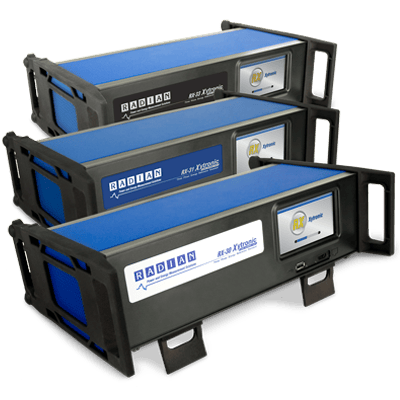
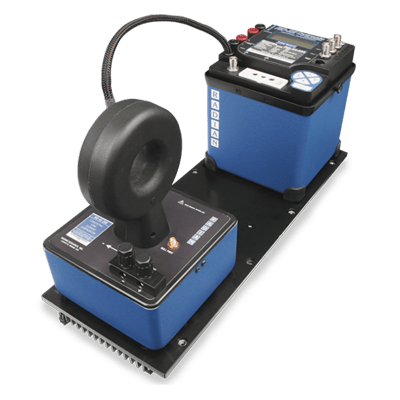
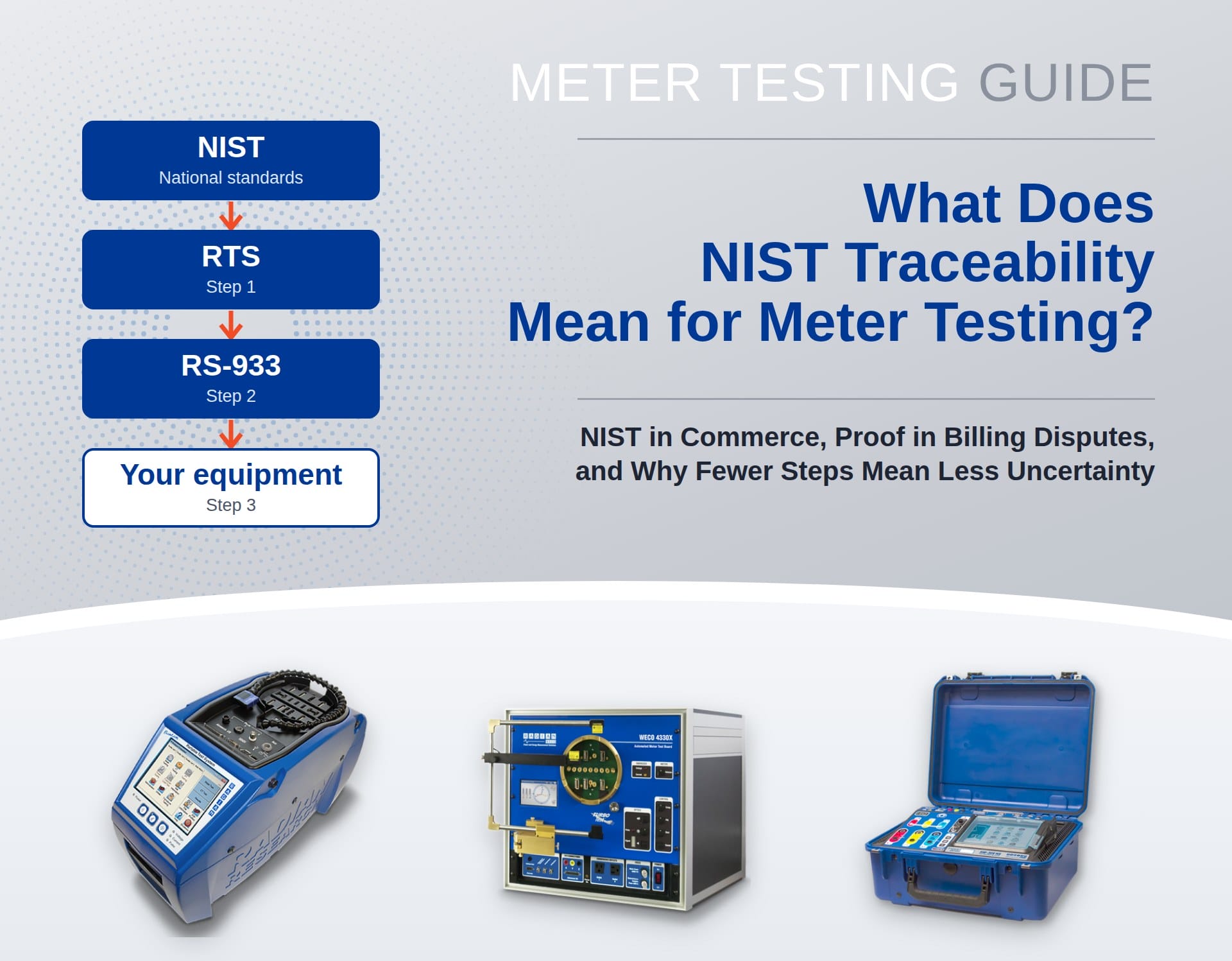
- NIST calibrates the RADIAN Transfer Standards (RTS) directly. The RTS is a bank of three customized, high-performance RD-22s. Using three standards as one reference lets the lab detect drift and reduce uncertainty.
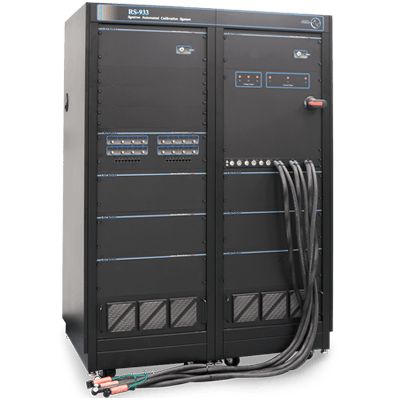
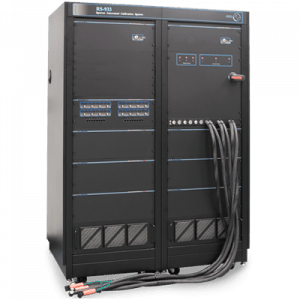
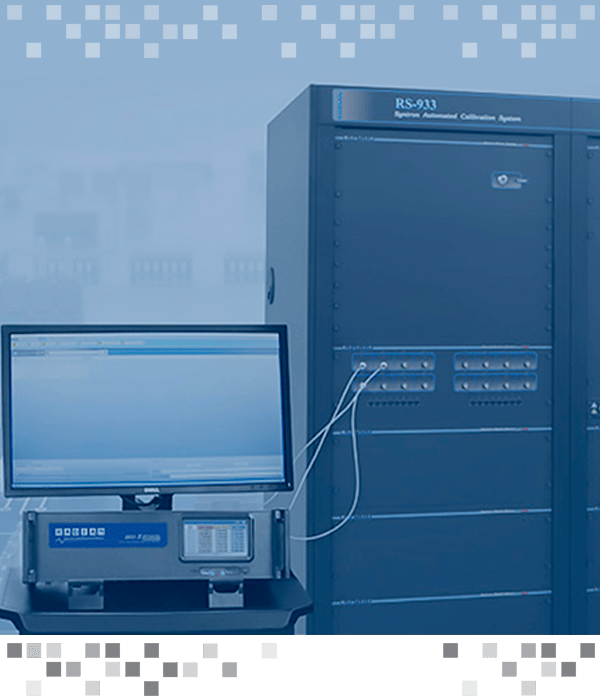
- The RTS is used to calibrate the RADIAN RS-933, the lab standard for RADIAN’s ISO/IEC 17025 calibrations.
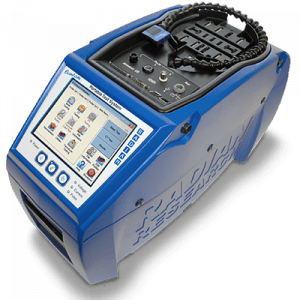
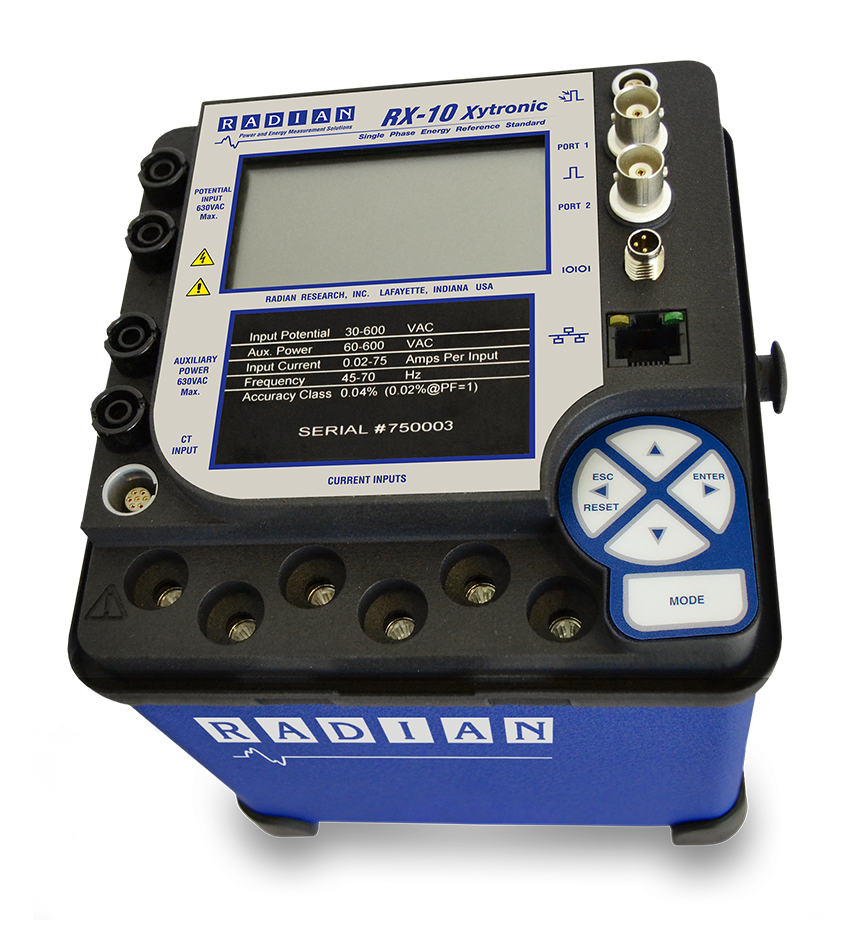
- The RS-933 calibrates your reference standard, Test Board, or field tester.
Your equipment is three calibration steps from NIST, and the last step can carry ISO/IEC 17025 accredited uncertainty.
Because RADIAN sends its own transfer standards directly to NIST, other calibration and testing companies use RADIAN as their traceability hub. They calibrate their standards with RADIAN, then use those standards to calibrate their customers’ equipment. That works, but it adds a step:
| Where your equipment is calibrated | Steps from NIST |
|---|---|
| Directly by RADIAN | 3: NIST → RTS → RS-933 → your equipment |
| By a lab that uses RADIAN as its traceability hub | 4 or more: NIST → RTS → RS-933 → the lab’s standard → your equipment |
Calibrating directly with RADIAN puts your equipment as close to NIST as a commercial calibration gets. Combined with ISO/IEC 17025 accredited uncertainty, that is the strongest evidence a meter shop can put in front of a regulator.
For how the chain works in a meter test, see What Is a Watthour Reference Standard, and How Does It Work? For how the three-standard bank works, see our white paper, Strength in Numbers.
What to keep on file
- A calibration certificate for every standard in your chain, with the standard used and the due date.
- Your calibration intervals, in writing. RADIAN recommends calibrating its reference standards once a year. Your regulator may require more often; some utilities check their standards every three months.
- Interim checks if your rules require them, such as weekly point checks of the standards that test customer meters.
- Meter test records that name the standard used, so each result ties back to a certificate.
You can see what a RADIAN calibration report looks like in our sample calibration reports.
Frequently Asked Questions
What does NIST traceable mean?
It means a measurement can be linked to the national standards kept by NIST through an unbroken, documented chain of calibrations, with the uncertainty known at each step.
Does NIST calibrate my meter test equipment directly?
Usually not. NIST calibrates high-level reference standards, such as the RADIAN Transfer Standards. Those standards carry the traceability through an accredited lab to your equipment.
Does NIST certify “NIST-traceable” claims?
No. NIST’s policy places responsibility for supporting a traceability claim on the lab that provides the calibration. ISO/IEC 17025 accreditation is the independent check that a lab’s claim and stated uncertainties hold up.
Is NIST-traceable calibration the same as ISO/IEC 17025 accredited calibration?
No. NIST traceability shows where the accuracy comes from. ISO/IEC 17025 accreditation means an independent body has assessed the lab, and the report states the measurement uncertainty for each result. RADIAN offers NIST-traceable calibration as standard and ISO/IEC 17025 accredited calibration as an option.
Why does NIST traceability matter in a billing dispute?
The meter test is the evidence in a dispute, and many state rules require the test equipment to be traceable to NIST. Certificates showing an unbroken chain to NIST are what make the test result stand up.
Why does the number of steps from NIST matter?
Each calibration step adds uncertainty to the one above it. The fewer steps between NIST and your equipment, the smaller the uncertainty you can claim.
How many calibration steps is a RADIAN-calibrated standard from NIST?
Three: NIST calibrates the RADIAN Transfer Standards, the Transfer Standards calibrate the RS-933 lab standard, and the RS-933 calibrates your equipment. Equipment calibrated by a lab that uses RADIAN as its traceability hub is at least one step further away.