






WECO SMART AMI Meter Farm

How Utilities Use Controlled Test Environments to De-Risk AMI Deployments, Validate Firmware, and Future-Proof Grid Operations.
Featuring a real-world implementation at a large community-owned electric utility on the West Coast.
The SMART Meter Farm Advantage
The transition to Advanced Metering Infrastructure (AMI), or AMI 2.0, is one of the most significant capital investments a utility makes. Deploying hundreds of thousands of smart meters into the field introduces new variables that didn’t exist with electromechanical meters: firmware versions, communication protocols, network configurations, cybersecurity requirements, and Distributed Energy Resource (DER) compatibility. A single firmware defect or configuration error, discovered after mass deployment, can trigger costly truck rolls, customer complaints, and regulatory scrutiny.
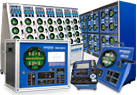
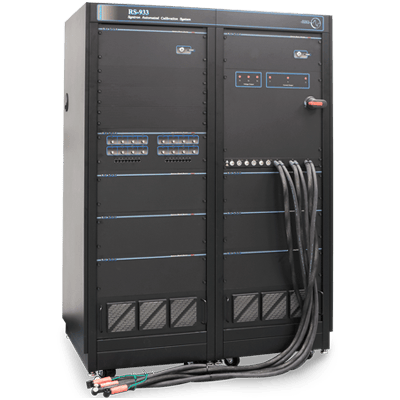
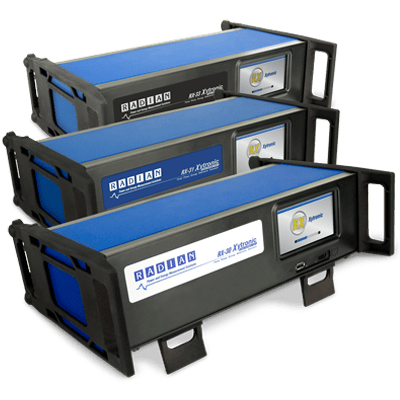
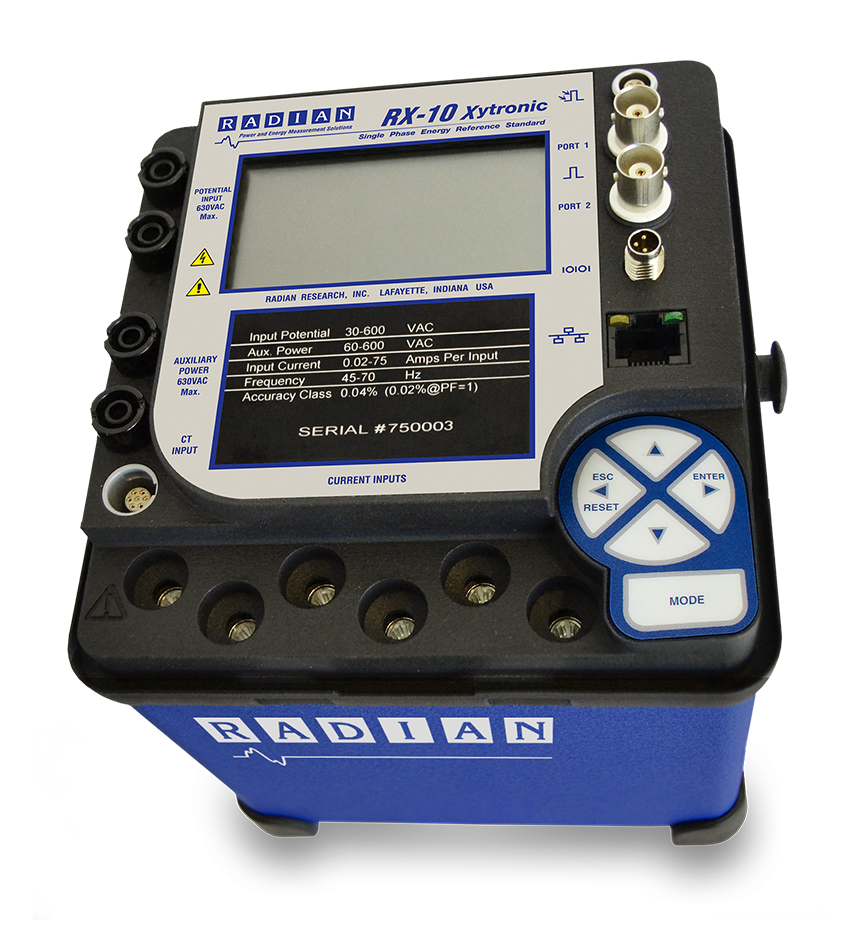
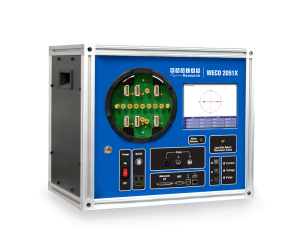
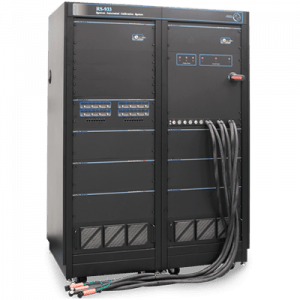
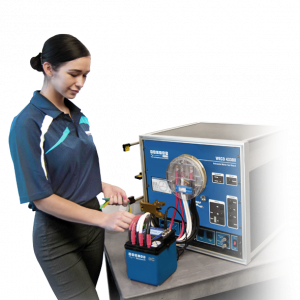
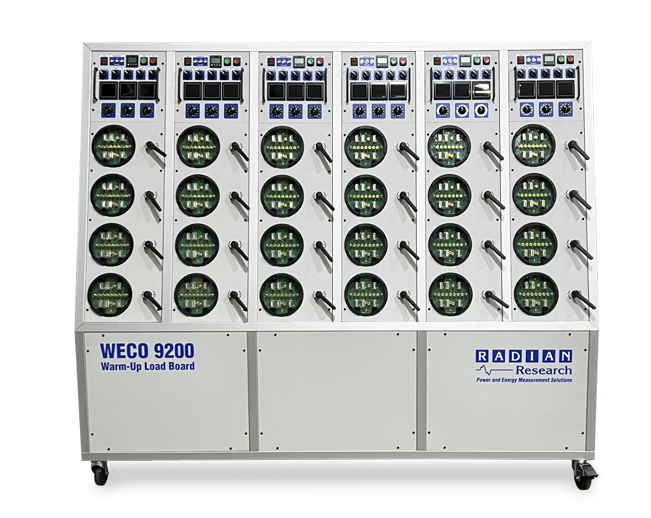
The WECO SMART AMI Meter Farm gives utilities a controlled test environment to validate and monitor AMI meters before and during deployment. The Meter Farm allows utilities to rack meters in a dedicated facility, energize them with real power, validate firmware behavior, test head-end system integration, and monitor meter performance over time—all without touching the distribution network. Physical solar, EV charging, and other real-world applications can be installed directly on the farm for testing under actual operating conditions. WATT-Net™ controls the Meter Farm itself. Over XBee™ wireless or Ethernet, it sets the voltage, current, and direction of energy flow for each meter row, and shows the status of the whole farm from one computer. The meters communicate through the utility’s own AMI network and head-end system.
This guide walks through the core use cases for the WECO SMART AMI Meter Farm and how one large community-owned utility on the West Coast is putting them into practice.

WECO SMART AMI Meter Farm Capabilities
• Rack-mounted AMI meters in a controlled test environment with real power applied
• WATT-Net interface for remote control and management of the Meter Farm
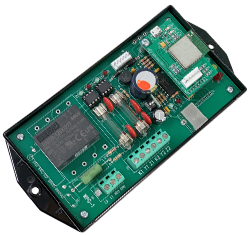
• XBee wireless or Ethernet control of the Meter Farm: voltage, current, and energy flow direction for each meter row
• Firmware validation testing before mass deployment
• Head-end system integration testing in an isolated environment
• Long-duration burn-in and acceptance testing for new meter shipments
• Physical DER and solar installations for real-world interconnection testing
• Physical EV charging installations for load profile validation
• Side-by-side comparison of meters from different manufacturers
Utility Spotlight
A large community-owned electric utility on the West Coast serves more than 600,000 customer accounts across a diverse service territory that includes urban, suburban, and rural areas.
The utility is in the midst of a full AMI deployment—replacing legacy meters across its entire customer base—while simultaneously preparing for rapid growth in rooftop solar adoption, electric vehicle charging, and time-of-use rate structures.
The metering team recognized that deploying AMI at this scale, in a grid environment changing this quickly, required more than traditional acceptance testing. They needed a permanent, always-available controlled test environment where they could validate every aspect of their metering infrastructure before any change reached a customer.
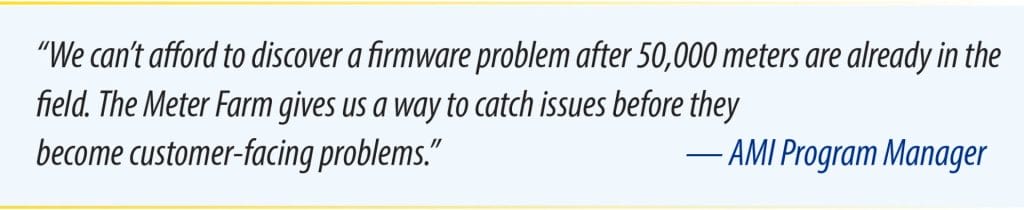
The utility chose the WECO SMART AMI Meter Farm to serve as the foundation of their AMI validation program. Their planned use cases span the full range of Meter Farm capabilities—from pre-deployment acceptance testing through firmware validation, head-end integration, solar interconnection, EV charging, and long-term reliability monitoring. The following sections describe each of these use cases and how the Meter Farm supports them.
Use Case 1:
Pre-Deployment AMI Meter Validation
The Challenge
Before deploying AMI meters to the field, utilities need confidence that the meters meet accuracy specifications, communicate reliably with the AMI head-end system, and handle the load profiles they’ll encounter in service. With large deployments, meter shipments arrive on a regular basis—each requiring acceptance testing before installers can take them to customer premises.
Traditional approaches—testing meters individually on a bench, then hoping AMI communication works correctly once installed—leave too much to chance at scale. Utilities need a validation layer that tests the complete system: meter accuracy, AMI communication, and head-end integration, all at once.
How the Meter Farm Helps
The Meter Farm provides that validation layer. Utilities rack a sample from each incoming shipment, energize the meters with real power, and verify AMI communication with the head-end system—all while the meters are simultaneously communicating over the AMI network.
This catches manufacturing defects, communication failures, and configuration errors before a single meter reaches a customer premise.
The standard workflow is straightforward: sample meters from the shipment, rack them in the Meter Farm, energize, and monitor. Only after a batch passes both performance monitoring and communication validation does it get released for field deployment. Technicians use the WATT-Net interface to control the Meter Farm, setting voltage, current, and energy flow direction for each meter row over XBee wireless or Ethernet. Communication with the meters themselves runs through the utility’s AMI head-end.
What This Means for the Utility
Expected Benefits
• Every meter batch validated for accuracy and communication before field deployment
• Manufacturing defects and communication failures caught before installation
• Acceptance testing streamlined through organized Meter Farm workflows
• Permanent test population available for ongoing reliability benchmarking
• Full audit trail of pre-deployment testing for regulatory inquiries
Use Case 2:
Firmware Validation
The Challenge
AMI meter manufacturers release firmware updates regularly—addressing security vulnerabilities, adding features, improving communication reliability, or adjusting measurement algorithms. Each update carries risk. A firmware change that works perfectly in the manufacturer’s test environment may behave differently on a utility’s specific AMI network configuration, with their specific head-end system, and under their specific load conditions.
Without a dedicated test environment, utilities face an uncomfortable choice: deploy the update to the field and hope for the best, or delay the update and accept the security or performance risks of running outdated firmware.
How the Meter Farm Helps
The Meter Farm creates a staging environment for firmware testing. Utilities load the new firmware onto Meter Farm meters, run them under representative conditions, and compare accuracy and communication behavior against the previous firmware version—all in isolation from the production network. Only after the firmware passes validation in the Meter Farm does it get approved for field deployment.
Meter Farm meters running the new firmware operate side by side with meters on the previous version, making it easy to compare behavior and identify any regressions. Extended monitoring over days or weeks catches intermittent issues that short-duration testing would miss.

What This Means for the Utility
Expected Benefits
• Firmware updates tested in isolation before approval for mass deployment
• Side-by-side comparison of firmware versions under identical conditions
• Extended monitoring catches intermittent issues before they reach customers
• Eliminates the risk of field firmware rollbacks
Use Case 3:
Head-End and System Integration Testing
The Challenge
AMI systems involve more than just meters. The head-end system, meter data management system (MDMS), outage management, and other applications all depend on reliable meter data and communication. Changes to any of these systems—software upgrades, configuration adjustments, new integration points—can affect the entire chain.
Testing these changes against production meters risks disrupting customer service. But testing without live meters producing real data doesn’t give engineering teams confidence that the results will hold in production.
How the Meter Farm Helps
The Meter Farm serves as a non-production test bed for system-level changes. Utilities can upgrade their head-end software, modify polling schedules, test new data collection intervals, or validate MDMS integrations against live meters producing real data—without risking disruption to customers or operational systems. The Meter Farm meters behave exactly as field meters would, giving engineering teams high confidence in their results.
What This Means for the Utility
Expected Benefits
• Head-end system upgrades validated against live meters before production rollout
• New polling and data collection configurations tested without customer impact
• MDMS integration changes verified in a non-production environment
• Engineering teams gain confidence in system changes before field deployment
Use Case 4:
Solar and DER Interconnection Testing
The Challenge
As rooftop solar, battery storage, and other Distributed Energy Resources (DERs) proliferate, utilities face new metering challenges. Bidirectional power flow, net metering calculations, power factor behavior under inverter loads, and real-time generation monitoring all require meters to behave correctly under conditions that are fundamentally different from traditional one-directional consumption.

How the Meter Farm Helps
Physical solar generation equipment is installed directly on the Meter Farm, creating real bidirectional power flow through the metered positions. With actual solar panels and inverters connected, meters experience the same conditions they would at a customer premise—variable generation from cloud cover, ramp rates, and power factor behavior under real inverter loads.
Multiple meter models and firmware configurations can be tested side by side under identical DER conditions to determine which combinations produce the most accurate and reliable results before installing them at solar customer sites.
What This Means for the Utility
Expected Benefits
• Solar and DER metering configurations validated before field deployment
• Bidirectional power flow accuracy verified under real solar generation conditions
• Multiple meter manufacturers compared under identical test conditions
• Optimal meter and firmware combinations identified before customer installation
Use Case 5:
EV Charging and TOU Rate Validation
The Challenge
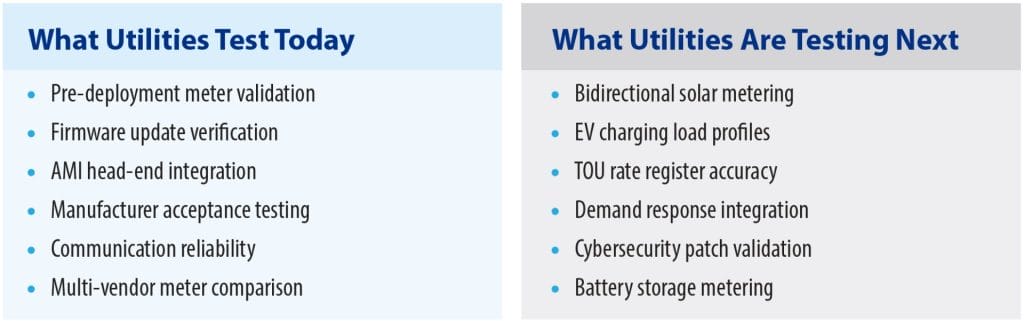
Electric vehicle adoption is driving rapid changes in residential and commercial load profiles. Level 2 home chargers can draw 7–20 kW, while DC fast chargers may demand 50–350 kW. These loads create high-current, variable-duration demand patterns that are unlike anything traditional meters were designed to measure.
Time-of-use (TOU) rate structures designed for EV charging add another layer of complexity. Meters must precisely record consumption within specific time windows—errors in register switching or clock synchronization can directly affect customer bills.

How the Meter Farm Helps
Physical EV charging equipment is installed directly on the Meter Farm, with dedicated metered positions connected to actual Level 2 chargers. The chargers produce the same sustained high-current draws, start/stop cycling, and load transitions that meters would encounter at a customer premise—because they are real chargers, not simulated loads.
For TOU validation, Meter Farm meters are programmed with proposed rate register configurations and run through day/night, peak/off-peak, and seasonal scenarios. By monitoring the register values over time, the team can verify that every kWh lands in the correct rate register—and that the meter’s internal clock synchronization maintains the accuracy needed for time-based billing.
The Meter Farm also supports multi-vendor evaluation. By racking different meter models side by side and subjecting them to the same EV and TOU test profiles, utilities build an objective performance dataset to inform procurement decisions.
What This Means for the Utility
Expected Benefits
• EV charging load profiles validated across Level 2 and fast-charging scenarios
• Time-of-use rate register accuracy verified before customer-facing programs launch
• Multi-vendor meter comparison conducted under controlled, identical conditions
• AMI communication reliability confirmed under high-current sustained loads
• Data-driven meter procurement recommendations based on farm test results
Use Case 6:
Long-Duration Burn-In and Reliability Monitoring
The Challenge
Short-duration acceptance testing catches obvious defects, but some problems only show up over time. Intermittent communication failures, slow accuracy drift, component aging, and firmware-related memory leaks can take days, weeks, or months to manifest. Utilities need a way to monitor meter behavior over extended periods before committing to large-scale field deployment.
How the Meter Farm Helps
Meters can remain racked and energized in the Meter Farm for extended periods—weeks, months, or even years—providing continuous visibility into accuracy, communication performance, and any anomalies. This extended monitoring catches intermittent defects, drift patterns, and aging behavior that short-duration acceptance testing would miss.
Some utilities maintain a permanent reference population in the Meter Farm for benchmarking field performance. When questions arise about how a particular meter model behaves under specific conditions over time, the Meter Farm provides objective, long-duration data to answer them.
What This Means for the Utility
Expected Benefits
• Intermittent defects caught before meters reach customer premises
• Long-term accuracy drift patterns identified early
• Permanent reference population for benchmarking field performance
• Objective data for evaluating meter longevity and lifecycle costs
Why Every Utility Needs a Meter Farm
The use cases above illustrate a consistent pattern: utilities that invest in a controlled test environment make better deployment decisions, experience fewer field issues, and adapt faster to emerging grid requirements. But the reasons for investing in a WECO SMART AMI Meter Farm go deeper than any single use case. The Meter Farm changes how a utility approaches AMI operations—shifting from reactive troubleshooting to proactive validation across every stage of the meter lifecycle.
Eliminate Deployment Risk
AMI deployments are among the largest capital investments a utility makes. A single firmware defect or communication misconfiguration, discovered after tens of thousands of meters are already installed, can trigger mass truck rolls, delayed billing, customer complaints, and regulatory scrutiny. At an average cost of $150–$300 per truck roll, even a 1% failure rate on a 200,000-meter deployment can cost $300,000–$600,000 in field corrections alone—not counting the reputational damage and operational disruption.
The Meter Farm catches these problems before they reach the field. Every meter batch, every firmware version, and every configuration change can be validated in a controlled environment where issues are cheap to find and easy to fix.
Accelerate Deployment Timelines
Paradoxically, adding a validation step before deployment often accelerates the overall rollout. Without a Meter Farm, utilities discover problems in the field—which means stopping the deployment, diagnosing the issue, coordinating with the manufacturer, testing a fix, and then resuming. Each field-discovered issue can delay a rollout by weeks or months.
With a Meter Farm, firmware updates are validated in parallel with ongoing deployment. New meter shipments are tested while installers are still working through the previous batch. Head-end system changes are verified against live Meter Farm meters before going into production. The Meter Farm creates a continuous validation pipeline that keeps the deployment moving forward without interruption.
Protect Revenue Integrity
Metering accuracy directly affects revenue. A meter that under-registers consumption costs the utility money on every billing cycle. A meter that over-registers creates customer disputes and regulatory exposure. Multiply even a small accuracy deviation across thousands of meters and the financial impact grows quickly.
The Meter Farm gives utilities a way to monitor meter behavior under real-world conditions over extended periods. This ongoing visibility helps utilities identify drift patterns, manufacturing inconsistencies, and firmware-related accuracy changes before they affect customer bills.
Make Data-Driven Procurement Decisions
When it’s time to select a meter vendor or evaluate a new meter model, utilities typically rely on manufacturer specifications and short-duration bench tests. The Meter Farm enables a fundamentally different approach: rack meters from multiple manufacturers side by side, run them under identical conditions for extended periods, and let the data speak for itself.
Utilities using the Meter Farm for multi-vendor comparison gain objective, real-world performance data—communication reliability under various conditions, firmware stability over time, accuracy consistency across production batches, and compatibility with the utility’s specific AMI network. This evidence-based approach to procurement reduces vendor risk and gives utilities leverage in contract negotiations.
Validate Before Every Change
AMI systems are not static. Head-end software gets upgraded. Meter firmware gets patched. Communication network configurations change. New MDMS integrations come online. Polling schedules get adjusted. Every one of these changes carries the potential to disrupt meter communication, affect data quality, or introduce unexpected behavior.
The Meter Farm serves as a non-production staging environment for all of these changes. Utilities can test every update against live meters producing real data—without any risk to customers or operational systems. The Meter Farm meters behave exactly as field meters would, giving engineering teams high confidence before any change goes into production.
Stay Ahead of the Changing Grid
Rooftop solar, battery storage, electric vehicles, microgrids, time-of-use pricing, demand response programs—the grid is changing faster than at any point in the past century. Each of these trends creates new metering requirements: bidirectional measurement, high-current load profiles, precise time-based register accuracy, DER monitoring, and more.
Without a controlled test environment, utilities are forced to discover whether their meters can handle these new demands after the meters are already deployed at customer sites. The Meter Farm reverses this equation. Utilities can proactively test how their metering infrastructure handles each emerging requirement—before it reaches a single customer. When the next technology shift arrives, the utility is ready.
Build Institutional Knowledge
Over time, the Meter Farm becomes a living repository of metering intelligence. Performance data accumulates across meter models, firmware versions, manufacturers, and operating conditions. This institutional knowledge—captured in data rather than in individual employees’ heads—helps utilities make better decisions year after year. When a question comes up about how a particular meter model performs under specific conditions, the answer is already in the data.
This data also supports regulatory compliance. When a commission inquiry asks how the utility validates metering accuracy, the Meter Farm provides a documented, auditable process with a complete data trail.
Reduce Total Cost of Ownership
The cost of operating a Meter Farm is a fraction of the cost of a single large-scale field remediation. Consider the full cost of discovering a problem after deployment: truck rolls, meter replacements, re-programming, customer communication, billing adjustments, regulatory filings, and the engineering time spent diagnosing the root cause. A single avoided field event can pay for years of Meter Farm operation.
When utilities look at the Meter Farm as a long-term investment rather than a one-time testing tool, the economics are compelling. The Meter Farm supports every phase of the meter lifecycle—from initial acceptance through firmware updates, ongoing monitoring, and end-of-life evaluation—delivering value continuously across the entire AMI program.
Getting Started
The WECO SMART AMI Meter Farm is available to any utility looking to bring a controlled test environment to their AMI operations. RADIAN’s engineering team works with each utility to configure the Meter Farm for their specific meter types, AMI network, and testing requirements.
A typical deployment includes:
• Hardware: WECO SMART AMI Meter Farm rack(s) with XBee wireless or Ethernet control
• Software: WATT-Net interface for Meter Farm control and management
• Control: XBee wireless or Ethernet control of the Meter Farm (row-level voltage, current, and energy flow direction)
• Integration: Configuration to work with your specific AMI head-end system and meter types
• Support: RADIAN and WECO Software Solutions (WSS) engineering support for installation and configuration
To learn more about the WECO SMART AMI Meter Farm, visit our website.