


Pulse-to-Modbus Converter

PMC-1

The SSI PMC-1 Pulse-to-Modbus Converter is designed to read, record, and store pulses from two 2-wire KY pulse inputs and make energy use and power demand information accessible via the Modbus TCP protocol over a standard Ethernet connection. Upon receiving each pulse from a connected meter, the PMC-1’s microcontroller converts it to a kWh value and adds it to the energy use register — capturing cumulative energy, instantaneous demand, average demand, and peak demand for each channel in non-volatile memory.

The PMC-1 functions as a Modbus TCP server, responding to client requests from energy management systems, dashboards, software applications, or web clients using a unique static IP address. It is programmed via a USB connection using a terminal program, and can be expanded up to 8 total input channels using optional EXP Expansion Boards. Typical applications include utility submetering, M&V measurement and verification, demand response monitoring, and interval data generation.

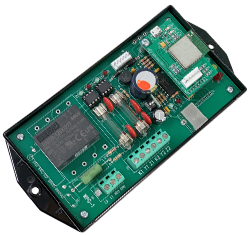
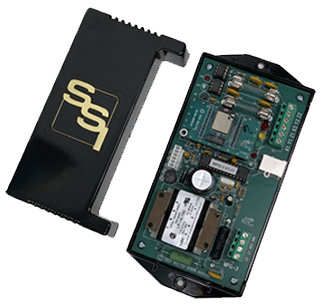
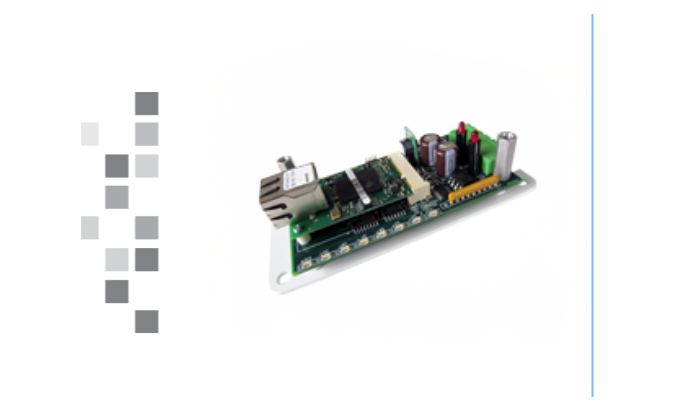
The PMC-1 Pulse-to-Modbus Converter on a white background.

Product Highlights

The PMC-1’s six readable registers per channel — cumulative energy, instantaneous demand, average demand, peak demand, time since power-up, and raw pulse count — make it a comprehensive data source for any system that speaks Modbus TCP. Registers are stored in non-volatile memory and survive power loss, and each channel’s cumulative energy, peak demand, and pulse count registers can be independently reset as needed.

With a pulse value range of .001 to 655.35 kWh per pulse and support for both 2-wire and 3-wire pulse constant entry, the PMC-1 accommodates virtually any meter configuration. Eight diagnostic LEDs on the side provide a sequential connectivity checklist, allowing field technicians to quickly identify and resolve network communication issues.

Features

The SSI PMC-1 reads, records, and stores pulses from two KY inputs and delivers energy use and demand data via Modbus TCP over Ethernet — expandable to 8 channels with EXP boards.
  • Two 2-wire KY pulse inputs — +13VDC wetting voltage; compatible with dry contact and open-collector transistor outputs; up to 10 pulses per second.
  • Modbus TCP over Ethernet — RJ-45 connection; unique static IP address per device; responds to standard Modbus client queries.
  • Six registers per channel — cumulative energy (kWh), instantaneous demand, average demand, peak demand, elapsed time, and raw pulse count.
  • Non-volatile memory — all register values stored through power loss; registers independently resettable per channel.
  • 15-minute demand averaging interval — average and peak demand calculated on a 15-minute basis per channel.
  • Expandable to 8 channels — compatible with EXP2, EXP4, and EXP6 expansion boards (PMC-1 V5 required).
  • Eight diagnostic LEDs — sequential connectivity checklist for power, processor, configuration, Ethernet link, and Modbus communication status.
The PMC-1 Pulse-to-Modbus Converter

Two-Channel Pulse-To-Modbus Converter

world leader

Can't Find What You're Looking For?

Let our teams of qualified professionals help you make the right choice.
A team of meter technicians using the RW-30X in the field on a meter.
A close up of a hand using the WECO RW-31X NS.
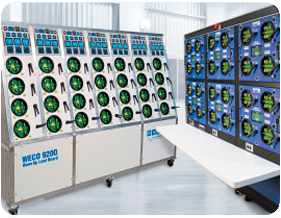
A side by side of the WECO 9200 and the WECO 8030
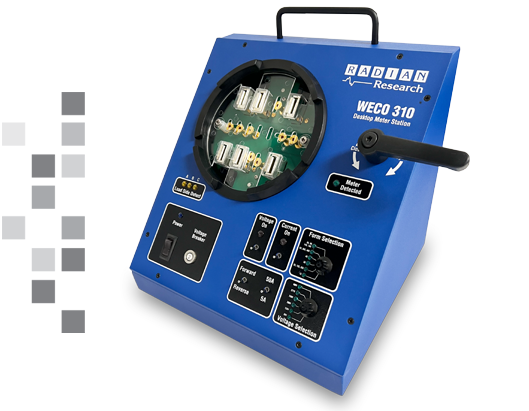
The WECO 310 on a transparent background (feature).
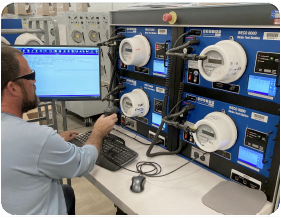
A meter tech using the WECO 8030 in a shop.
WECO SMART AMI Meter Farms installed at a site.
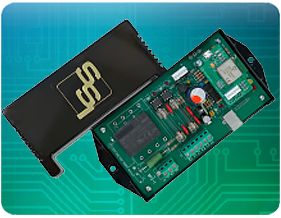
SSI equipment over a blue green background.
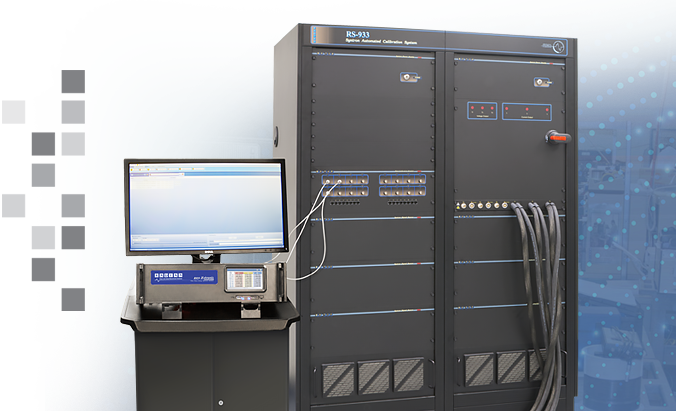
The Radian Research RS-933 on a semi-transparent background.
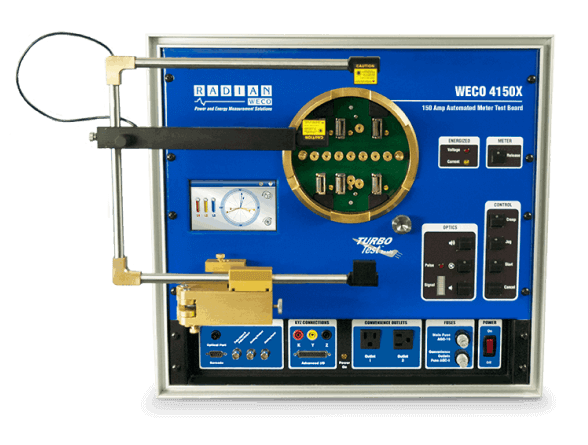
The WECO 4150X with optics arm on a transparent background.